Have you discovered the Adrianna Trigiani universe of books? If you have, you know her wonderful stories and are probably like me waiting for her next book. If you do not know this author, you are about to make a new friend with Adrianna. I envy you a bit to have the opportunity to discover this masterful storyteller’s tales.
Adrianna Trigiani is an author who writes about her Italian heritage from Big Stone Gap in the Appalachian Mountains of Virginia to Greenwich Village in New York City to New Jersey and Italy. The heroine of her books are often women finding themselves and are on the verge of blooming into the strong women they were meant to be. Their journeys unfold in small towns to big cities, and Trigiani will frequently tell the stories in trilogies, so you really get to know the characters well. You kind of grow with them too. If you know Italian families, you will appreciate the dialog and biting humor of the families. Trigiani captures it all in her novels.
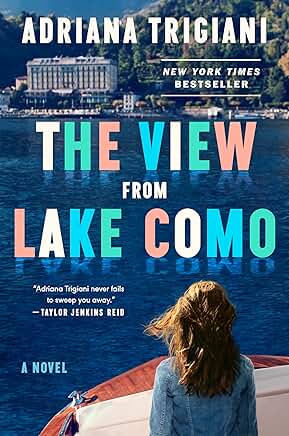
Since 2000, she has written 19 books – mostly fiction but she does do some nonfiction. Her most recent book from 2025 is The View from Lake Como, the Jersey version, not the Italian lake; however, Italy becomes a main character in this story. Giuseppina (Jess) Capodimonte Baratta, the heroine, is a woman who is finding herself. Jess has endured several hardships with a death of a beloved uncle, a divorce, a controlling family, an unfulfilled career, and the other ups and downs of life. She wants more from her small life in Lake Como, so she goes to Italy to find herself and what a new life could bring. Jess is spreading her wings, and you get to join her on the flight! We all see ourselves in Jess’s transformation, and you may learn a little about yourself as you accompany Jess on her adventure.
I know that once you read one of Adrianna Trigiani’s stories, you will seek out her other books to be part of her one big Italian family throughout the world. More importantly, you will be part of her big literary family as well enjoying her tales that are full of heart and soul!
The panic on my PA’s face said it all. My cholesterol is way too high. She all but said I would die any minute if I didn’t get on a statin. I smiled and told her I was first diagnosed with high cholesterol when I was 40. Now, thirty years later, I still have high cholesterol.
Then, as now, the “doctor” tells me to avoid fried food. Cut out red meat. Eliminate carbs. Really?! I have been a vegetarian most of my life. The “avoid” list will not help me because I already “avoid” those foods. Doctors are not educated in nutrition. Their advice says what not to do without suggestions on what to do; other than take pharmaceuticals.
“A cholesterol diagnosis is not just about numbers on a lab report. It challenges how you see your body, your habits, and your future. It can quietly undermine your confidence, making you feel as though control has slipped out of your hands.” *
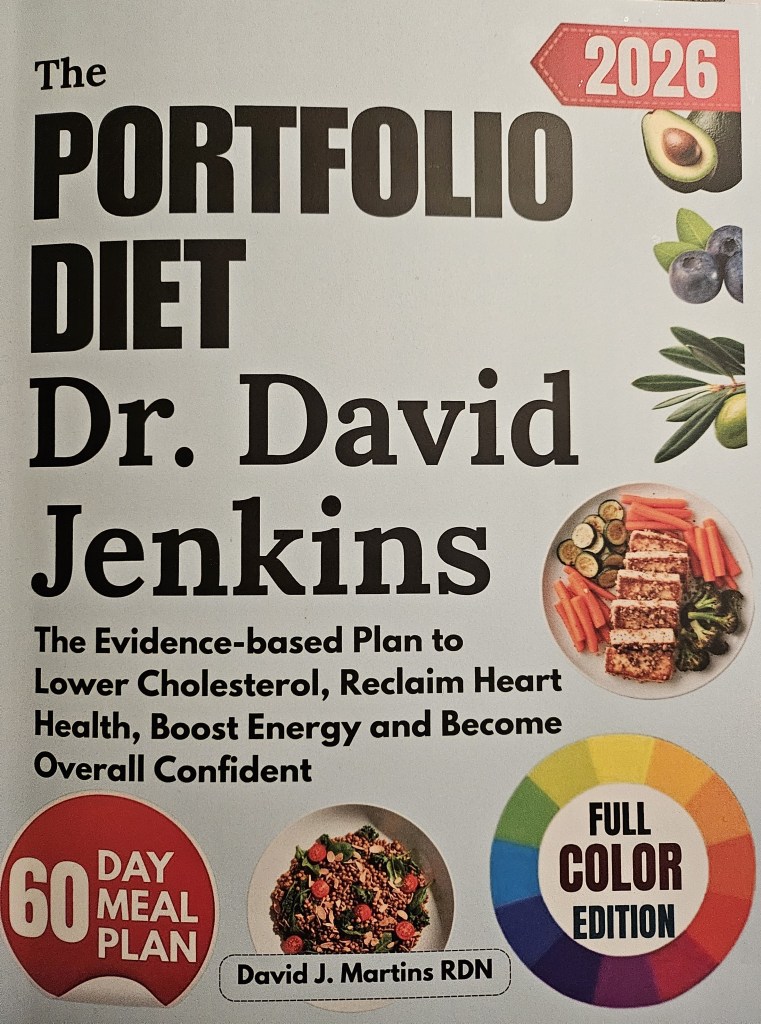
Every time I get the blood test results, it is the same advice. So I continue to watch YouTube videos, read articles, and research potential “cures.” Recently, I came across the Portfolio Diet, developed by Dr. David J. A. Jenkins, the nutrition scientist and physician who developed the glycemic index. Dr. Jenkins has what seems to be a “formula” for cholesterol reduction. His approach “combines four categories of cholesterol-lowering foods into a daily ‘portfolio’, much like diversifying investments to achieve a stronger overall result.” *
Statins do not cure high cholesterol; they simply inhibit the liver from creating it. I wonder what makes my liver create so much? Hmmm.
The Portfolio approach combines four cholesterol-lowering components. They are viscous fiber, plant sterols, plant protein, and nuts. Each of these components work with LDL in different ways. They block absorption, increase excretion, and help clear cholesterol from the blood.
Interestingly, this diet was first published about 25 years ago. Why am I just now hearing about it? When I went in search of spread with plant sterols added, the manager at Natural Grocers had never heard of the diet, either.
For my approach to living, the protein (legumes, beans), fiber (grains, vegetables), and nuts are easy. Plant sterols are in fruits and vegetables but according to Dr. Jenkins, one needs 2 grams per day – more than one could get just through eating. So, I will continue to research.
Meanwhile, I will eat my almost vegan diet and hope the next blood test turns out a little better. At the least, it is fun to have a research quest to fill the days of snow and cold, all while knowing I am doing the best I can for my internal health. Stay tuned!
*Quote is from *The Portfolio Diet dr. David Jenkins* by David J. Martins RDN. Printed in Coppel, Texas, January, 2026.
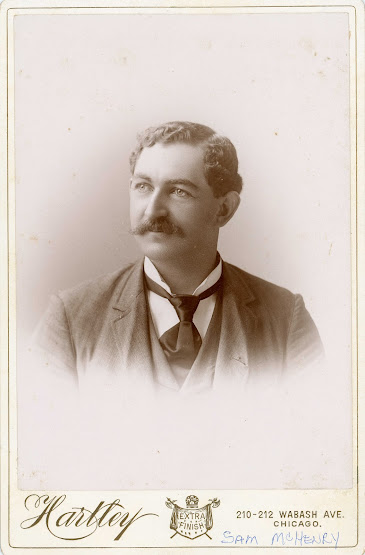
My father grew up in Benton, a little town in Northeastern Pennsylvania. That little town produced some very exceptional individuals who changed the world. One was my uncle, Samuel B. McHenry. He was an inventor with 43 patents that included brooms and brushes that paid the bills, but he also patented several alternative energy inventions like a wave machine and using stream currents to generate electricity – a man ahead of his time. At one point in his career, he got in trouble with a society lady in Chicago. My Great-Grandfather, his brother Abram, had to go get him and bring him home to Benton. He was “madly” in love with a young woman he never met – there is a thin line between genius and insanity.
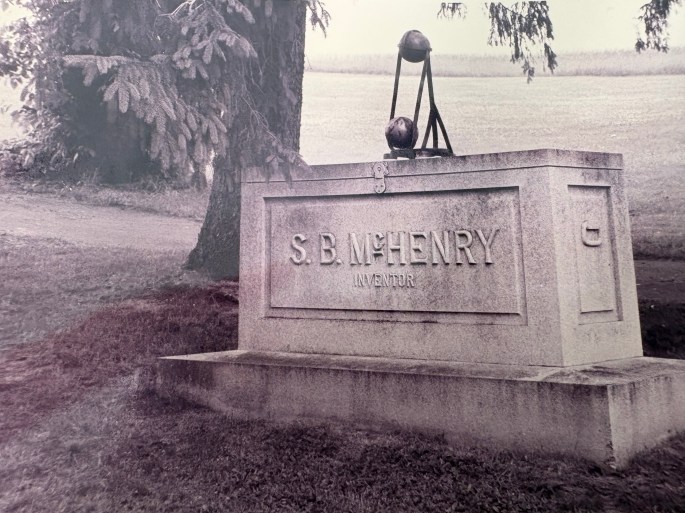
I included a photo of his memorial at the cemetery where he is buried. It was a representation of a craftsmen’s chest where tools were kept with the word Inventor engraved on it. I always thought it was a treasure chest. On top of the block of granite is a gizmo that Samuel invented called an Astronomical Demonstrating Device. According to my father the top sphere represented the sun, and the bottom sphere was the Earth. The device rested on a figure-eight base that had the months of the year engraved. As the earth revolved around the sun, the device would move settling on the current month of the year. Every time I visited the cemetery, the earth sphere was in the correct month of the year – almost like magic. Apparently, the tilt of the Earth as it moved through space initiated the movement of the device to the correct month.
The second person was Dr. Frank Laubach. He was a missionary and travelled the world using the Bible to teach reading. The premise was that “each one, teach one.” I would teach you to read then you would teach someone else to read and so on. His work was Nobel Prize worthy. However, he was honored in 1984 with a stamp commemoration. The Laubach Literacy Program and the Laubach Method, developed with his son, Dr. Robert Laubach, is still helping illiterate people learn to read. Today, the programs have merged with ProLiteracy Worldwide and have touched people in 103 countries.
When I was little, my grandmother took me to the Laubach house in Benton to meet Dr. Laubach when he was home from his travels. It was a rare moment. I remember seeing him from afar as I was too shy to greet him. I had no idea who he was. He seemed to glow. Maybe his gentle soul was shining through. I never forgot that encounter.
Finally, the third person was Winton Laubach. He was a childhood friend of my father’s. Winston was legally blind and had to count the streetlights to find his way home after a day of play. He studied math at Penn State and Columbia University and later taught the subject at Penn State and the Colorado School of Mines. His book A Mathematical Medley illustrates his love for numbers.
I once asked my father how a small town in the mountains of Pennsylvania could produce such noteworthy individuals. He said that they were all trying to get out! I am not sure that is true. However, it was a close-knit community where everyone knew everyone. When you went out to play, wherever you were at lunch time, you had lunch there. The community collectively raised all the children. Their grandparents and aunts and uncles and cousins all lived in the same little town. These extended families always supported the children, and they knew they were supported. They all had long childhoods which allowed their imaginations to grow.
The world is so different today with families far flung across the country and more recently around the world. Families must work hard to develop such communities of the past. I am thankful that my family roots run deep in this little community of Benton. It has helped to create the person I have become. America should have more small towns like Benton to help shape the future of the world in a positive way.
I recently came across an article on Exercise Snacks. Now, the definition of a snack is a small amount of food eaten between meals. Exercise snacks reflect the same philosophy with activity, as snacks do to food. Exercise Snacks are doing a small amount of movement from 30 seconds to 5 to 10 minutes of activities. It can be as simple as climbing the stairs to walking around the house to dancing to a favorite song. It can also be gardening or housework – all activity counts!
Dr. Howard Hartley, a cardiology, in 2007 coined the term Exercise Snacks. These little burst of exercise or movement help elderly people to mitigate physical decline as they age. The small amount of movement can have an impact on chronic conditions like heart disease, high blood sugar, and even dementia. Every little bit of activity can make a difference in your overall health.
Exercise Snacks can be done by all of us of a certain age. We can take the stairs a time or two more a day. We can walk around the neighborhood or around your house. You can hop on a stationary bike for a five-minute ride and if that is too much than do it for two minutes. Start out with baby steps and work your way up to longer sessions. These small changes have big rewards and can support behavioral changes that develop habits. It is hard to get started and to keep going when exercising.
I have been kind of doing Exercise Snacks without knowing what it was called. You probably have too. However, since reading the article, I have been more conscientious regarding every movement I am making and that they will add up to better results if I keep doing them. The bottom line is not to be sedentary. Every household chore that I do adds up to more movement.
Of course, it takes me a week to get my Christmas decorations up and then down rather than a weekend as in the past. I am slowing down, but I am still moving. That movement is making me healthier physically and mentally. I need to celebrate that, and the little victory dance that I am doing now is yet another kind of movement. If I miss a day because I have low energy, there is always tomorrow. You can always begin again. Piggyback on regular daily activity by adding a little exercise – an example, while washing dishes, do some heel raises. When watching TV, do chair exercises. Sitting is passive so adding some movement changes everything making you more active and being active makes you healthier. It is time to begin Exercise Snacking – Bon Appetite for better living!
Driving down the street today I noticed a neighbor had several items sitting on the ground next to his garbage bins. I smiled to myself. Ah. It’s the new year and people are thinking about cleaning up and weeding out items that are no longer of value. I do that year around, although as I am putting away holiday décor, I have started a box of give-away items. And I am filling my garbage can with things no longer useful.
One of my goals for 2026 is to read 24 books. Some of you are thinking, “big deal” and others are thinking “that many!” Underlying this goal is a different motivation. I have too many books in shelves – not only in my office but on shelves throughout my home. Some have never been read; others are waiting for a second or third reading. Regardless, it is time to begin honing the collection to those tomes that are especially important to me.
Cookbooks are my friends. For Christmas I displayed four Christmas-inspired cookbooks. When I went to put them away, the cookbook shelves had expanded into another bookcase. I needed to make room. In doing so, I came across some old “Who’s Who” publications. Some of these have moved around the country with me and sat on bookshelves since the 1980s! It was definitely time to part with these encyclopedias of peoples’ identities and accomplishments.
Of course I had to take one last look at my entry before tossing the [very heavy] books into the recycling bin. Imagine my dismay when I read my full name (including my maiden name), my birthdate and birth location, parents names, children’s names, and places I worked. Immediately I tore out those pages and ran them through the shredder, as if somehow that would hide these personal details.
It is naïve to think that would be the end of it. What have the hundreds or thousands of other people done with my information – and theirs?! The thought trail took me back to that time – a simpler life when we were more trusting; more open with strangers. When one would think nothing of picking up a hitch-hiker to help them to the next destination. A time when everyone knew their neighbors as they were not hidden away behind camera doorbells and gated communities. It was a time when we celebrated others’ accomplishments instead of trying to “one-up” them. Ah. The good ol’ days.
Maybe we can start with ourselves and one-by-one expand our private worlds to others – at least by reaching out to neighbors or people at church or the grocery store. A simple smile to a stranger goes a long way and just may instill in them a sense that life is worth living.
I’m glad to be reminded that people are important. Things are not. I am going to reach out to some acquaintances; then resume the cleaning and organizing to begin a new year fresh and happy.
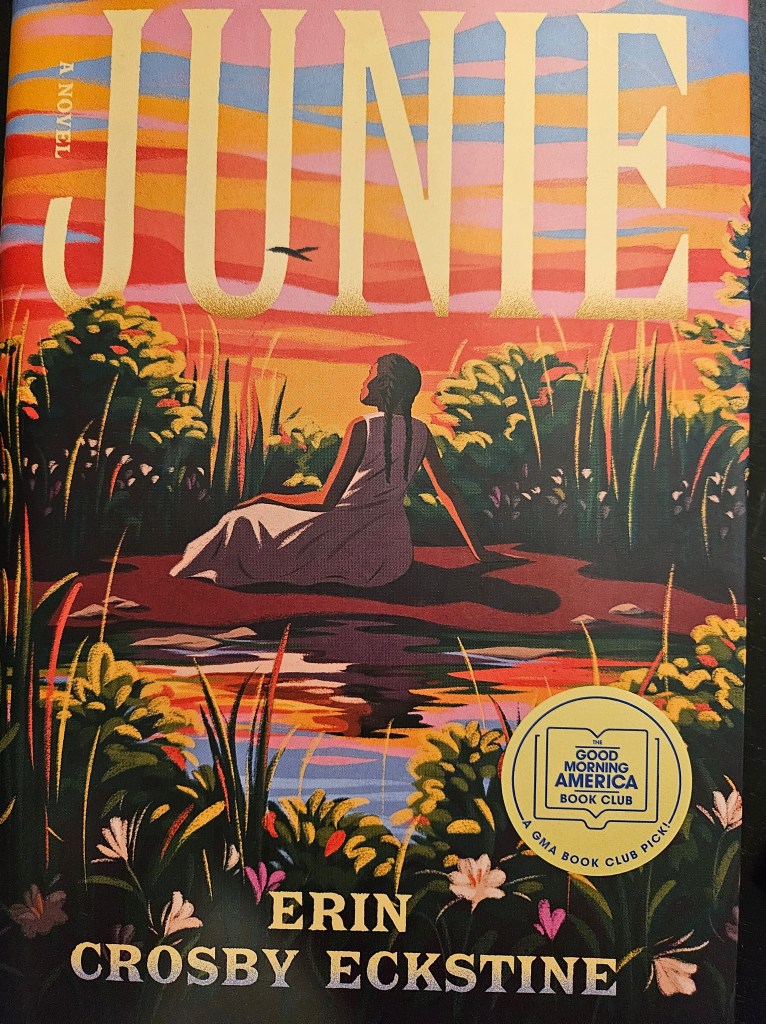
“JUNIE,” by Erin Crosby Eckstine, is a compelling literary work of historical fiction that delves into the complexities of family ties, personal identity, and the enduring spirit of its protagonist. With a narrative that is both heartfelt and evocative, Eckstine creates a world that is at once intimate and universally relatable, drawing readers into the emotional journey of Junie herself.
The story centers around Junie, a young woman navigating the turbulent waters of slavery, adolescence, and early adulthood. Set primarily on a struggling plantation, the novel explores themes of belonging and alienation as Junie grapples with family secrets, shifting relationships, and the challenges of self-discovery. Eckstine masterfully weaves together past and present, allowing readers to uncover layers of Junie’s history and the factors that have shaped her worldview.
Eckstine excels in this novel with her character development. Junie is portrayed with remarkable depth, her vulnerabilities and strengths both realistic and endearing. Supporting characters—family members, friends, and romantic relationships —are equally well-drawn, each contributing to Junie’s growth in meaningful ways. Eckstine’s empathetic approach ensures that even secondary characters feel authentic, their interactions with Junie serving as catalysts for pivotal moments in the narrative.
Eckstine’s prose is lyrical yet accessible, balancing poetic descriptions with straightforward dialogue. Some reviews felt the first of the novel moved too slowly, however, the novel’s pacing allows for reflection, giving readers space to consider the emotional weight of Junie’s experiences. The pacing allows for deeper characterization. Central themes include the search for identity, the importance of forgiveness, and the resilience required to overcome adversity. Eckstine also touches on issues such as generational trauma and the power dynamics within families, offering thoughtful commentary without becoming didactic.
The book excels in its emotional resonance and authenticity. I found myself rooting for Junie, invested in her struggles and triumphs. Eckstine’s ability to evoke empathy is notable, making the narrative both moving and memorable.
Overall, “JUNIE” by Erin Crosby Eckstine stands out as a beautifully rendered exploration of family, identity, and resilience. The novel’s introspective tone, strong character work, and nuanced handling of difficult themes make it a rewarding read for those who appreciate literary historical fiction with heart and substance. Eckstine’s debut marks her as a promising voice, and “JUNIE” is certain to resonate with readers long after the final page is turned.
If you are walking down the street in New York City, you may see just about anything. It may stop you in your tracks. However, if you are looking around, no one else seems to be very interested. Everyone in NYC is unique, so no one stand out as you might imagine. There are characters everywhere, and we are going to meet some in this blog.
In Time Square, there is a host of characters trying to charm the tourists. You will find Elmo and Cookie Monster and Spiderman. There is also the Naked Cowboy with a strategically placed guitar, so he remains PG for the children. These characters are famous, but they do not even begin to capture the real characters of the city.
As the fashion capital of the world, designers share their collections a few times a year during Fashion Weeks. These creative individuals find inspiration everywhere, but in the streets of NYC, unique treasure can be discovered. Sometimes on the subway, you will spot a young girl impeccably dressed in vintage clothes or sporting timeless accessories in a new way. They are living fashion. When I first got to NYC, long summer scarves were worn everywhere. I believe, Jennifer Amastin, was big on them at the time. So, of course, I had to get some in every color. Even though they were light weight, they were hot in the humid NYC summer. This trend was somewhat short-lived, and I have a box of the scarves to prove it. However, you see how a look becomes fashion. I also love the girls who wear short skirts and stilettos. It is not easy walking miles on concreate in 4-, 5-, or 6-inch heels, and Lower Manhattan has cobblestone streets. They are kind of urban mountain climbers. How do they do it? If I were young when I worked there, I would have done it too!
The first December I was working in NYC, I had to go into the city for a work event. As I sat on the subway train, a Santa Claus entered the train. I thought, Santa must be on the way to work to spread a little Christmas cheer for children. Then a second Santa got on the next stop, and by the time, I got to New York from Jersey City, the whole car was full of Santas. Something was going on. I apparently did not get the memo that the world was dressed as Santa Claus today. I found out that it was SantaCon, an event held in early December where everyone dresses like Santa, and they do a bar crawl from Mid-town to Greenwich Village for charity and FUN! There are all kind Christmas characters – lots of elves and a particularly cute group of eight pretty girls dressed as reindeers. SantaCons are held throughout the country, but as with everything, NYC does it in a big way!
There are two other events that are also full of characters. Each March, there is a reverse migration of characters from New York to Hoboken, NJ, where St. Patrick’s Day is celebrated. There are lot of leprechauns on the subways and ferries. There is a parade, lots of green everywhere, and bar crawls ensues. During Pride Week in June, people are everywhere in costumes. Again, there is a parade with floats full of very good-looking men – always fun to watch and see how creative everyone is.
Still, the most-memorable character I ever saw and who is my all-time favorite, even beating Santa Claus, is a tall, stately, African American gentleman. I would see him on the PATH as we were both commuting between NYC and Jersey City. He was one-of-the -kind. The first time I saw him, he was dressed entirely in chartreuse, green shag fur. From the top of his head down to his shoes, he was green. He wore a green top hat which was exaggerated in size and carried a walking stick. No one seemed to notice him, but I couldn’t take my eyes off him.
The next time I saw him, he was dressed entirely in dalmatian print – white with black spots. Again, he was wearing a large top hat and strutting with his walking stick. I loved his panache. His fashion flair just made me happy. The last time I saw him he was crossing the street in Jersey City. This time he was dressed in red fake fur. It was the same outfit just a different color. I can imagine what his closet looked like and how he must muse each day what to wear. I never saw him again. I was always on the lookout for him. I would have loved to talk to him. He optimized what it means to be a unique NYC character. Isn’t it wonderful that there is a place where you can be who you are, and no one seems to be concerned?
New York City is the fashion capital or the business capital or finance capital or the publishing capital or the entertainment capital of the world. It is also the character capital of the world. Full of unique people just living their lives.
Drew, one of the ladies in my book club frequently mentions her father, Van, who also loves to read. Occasionally, we select a book to read based on his recommendation. As with our members, Van enjoys reading from multiple genres. At one meeting we suggested Van may like to visit – or even join – our book club discussion.
What a delight it was this month when Drew and Van walked into our Barnes and Noble coffee shop a few minutes before we began. Van was tall, moved with precision, and sported the kindest expression on his face when I approached them. I couldn’t help myself. I told him Drew had talked fondly of him and asked if I could hug him. He graciously allowed me to gently embrace him.
We ordered coffee drinks. They selected seating in the corner where it might be a little quieter. At 95, Van has lost some of his ability to hear well. As soon as everyone was seated, Van jumped in to begin discussing Junie, our January selection. He mentioned how much he enjoyed the book. He was impressed that the author, Erin Crosby Eckstine was able to write her first novel with such aplomb. Van commented on a hopeful ending to the story for one of the primary characters, Caleb.
I listened with awe as Van recalled characters’ names, authors and titles of additional books he had read. His memory and recall were sharp and his diction clear. He told us a little about being in Alabama when even the military base was segregated (relating to the story line of our book discussion.) Van was a valued participant in our discussion.
He asked if we were looking for additional members and we responded affirmatively. We invited him to return any time; even to join if he would enjoy conversing with this female-dominated club.
Spending this short time with Van, I am reminded of the value of including our elders. Here in the United States of America we fail to honor our senior citizens. With age one gains wisdom along with experience. There is much to learn and appreciate from others, especially from those who have walked the path before us.
At the same time, we help our older citizens live life more fully. Getting older can be emotionally and socially challenging. Our friends and family may pass before us, leaving us without someone with whom to share time.
Look for Vans in your life. The mutual benefit will bring happiness to you both.
Wealth, as a concept, is often narrowly construed as a matter of finances—a sum of assets, investments, and monetary resources. However, true prosperity is multidimensional. Over the years, scholars, thought leaders, and personal development experts have increasingly recognized that wealth comes in various forms. Sahil Bloom (whom we have previously reviewed) looks at wealth in terms of time, mental, physical, financial and social.
Social Wealth, so to speak, relates to one of my goals for 2026. I aim to make at least one new friend this year. An article on relationships I recently read indicated that most people have five close friends and about 150 others. Those 150, I call acquaintances. I enjoy their company but likely would not call upon them if I needed something. Although if truth be told, I would gladly come to their rescue if they called me. Go figure!
Social wealth is the fabric of relationships and connections that enrich an individual’s life and empower communities. Unlike financial wealth, which is measured in currency, social wealth is measured by the quality, quantity, and depth of human interactions, networks, and communal bonds. Social wealth is built on trust, reciprocity, and shared values.
Strong social ties can buffer adversity, provide emotional support, and offer opportunities that might not be accessible otherwise. People with robust social wealth tend to experience greater happiness, resilience, and longevity.
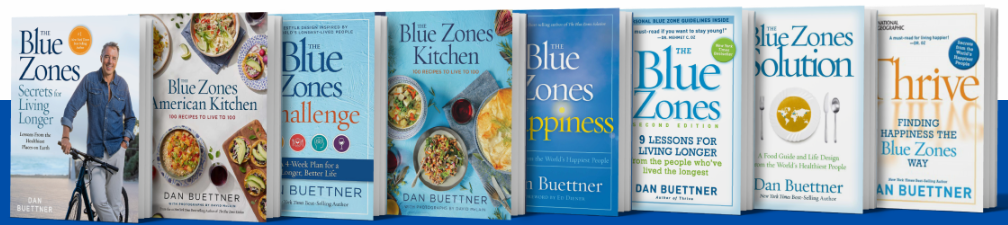
Dr. Ezekiel Emanuel recently appeared on CBS Sunday Morning, talking about wellness. Interestingly, he identified social interaction as essential to wellness and longevity. Dr. Dan Buettner of “Blue Zones” fame similarly identified relationships having a positive impact on people’s lives. Dr. Emanuel suggested one should not eat alone. Even if you don’t a have someone to eat with, you could strike up a conversation with someone sitting near you at a restaurant. (Personally, this would be difficult for introverts, but I understand his motivation.)
Building social wealth takes time and requires intentionality. Most people want to have others in their lives.A friend and I were discussing relationships, and we both agreed that nurturing them takes time and effort. She expressed frustration with a friend who regularly joined her for dinners, either out or at her place, but never reciprocated the invitations. Sometimes, it might be necessary to be the “instigator” in such a relationship. Some people simply don’t put in the extra effort, perhaps because they don’t know how. However, that’s a topic for another conversation.
In today’s digital era, social wealth extends beyond physical boundaries. Online communities, professional networking platforms, and global connectivity offer new ways to forge relationships and build influence. Mary Ann and I have Zoom conversations a couple of times a month. Although we live 1500 miles apart, we can continue a connection by seeing each other on our computer screens. We have virtual “coffees” which are just as effective and meeting at a local coffee shop.
Research consistently finds that social wealth is a major determinant of well-being. People with strong social connections have lower rates of depression, anxiety, and chronic illness. They are more likely to recover from setbacks and achieve personal and professional success. In many societies, especially those driven by capitalism and competition, financial wealth is often celebrated as the pinnacle of achievement. Yet, as myriad studies and lived experiences show, social wealth may be the most enduring and undervalued resource. Friendships, family, and communal support can outlast fortune, status, and power. In moments of crisis, it is social wealth—not financial wealth—that most reliably sustains individuals.
So as retirees, what can we do to expand our social interactions?
Join and participate in local groups: Whether a sports league, volunteer organization, or professional association, being part of a group fosters connection.
Practice gratitude and generosity: Express appreciation for others and offer help when possible.
Develop communication skills: Honest, empathetic communication deepens relationships.
Pursue shared interests: Hobbies and passions bring people together in common purpose.
Maintain regular contact: Reach out to friends and family, even if just to check in.
Embrace diversity: Value relationships with people of different backgrounds, cultures, and perspectives.
Ultimately, to live fully is to cultivate social wealth as a guiding star. In doing so, we build lives and societies marked not just by prosperity, but by meaning, resilience, and joy. Best wishes to you; I’m on my way out to find another new friend!
Don’t we all need a White Knight who will slay our dragons or defeats a horrific troll who is under our many bridges. My White Knight is the Apple Support Team. I am an Apple fan. I can’t say enough good things about their products. I have an iPhone, an iPad, and a MacBook Pro and love the fact that all their products can be synched.
However, what I love the most about Apple is their support team. In fact, I just used it today as I was writing blogs. My curser froze, and I tried everything I could to undo whatever I did to cause the freeze. I then called Apple Support. The heavens opened and rays of light showered over me, and I was speaking to Kristen. I explained my dilemma, and she asked me a few clarifying questions. Then she began to guide me through the various steps to solve the problem. Within 5 minutes, the problem was solved, and I was singing her praises and that of the whole team. They never disappoint.
When you call, you never wait more than a few minutes, and you have a choice of music including silence to occupy you as you move quickly through the que. Upon answering, a friendly associate, male or female, greets you, and we discuss the problem. Regardless of the Apple device, they can help you. They verify you are you with a code texted to your phone. When that is done, they will come on whatever screen with a curser and begin to instruct you in correcting the problem. This is all securely done with your approval on each step. If you must use passwords or any other personal information, they leave the website until you are done with it. They return afterwards to continue to next steps. Usually, my problems only take a few minutes, but the associate will stay with you until you are satisfied. One time I had trouble with a Microsoft renewal. The associate stayed with me for a half hour until we got me up and running again. That is customer service at its best.
As a former administrator in schools, I know good teaching when I see it. Whoever is training these associates is doing an excellent job. It is hard to teach, but coaching people how to do things that do not come naturally is indeed special. The Apple Associates are well-trained individuals and are remarkable teachers. They are friendly and very helpful.
I always tell the associate how good they are. I always remark on the Apple survey sent after the session how special this help service is and how well-done it is. Apple Support has saved me several times. They are my White Knights. If you have Apple products and don’t know about this service, it is time for you to use it when you are in trouble with computer woes. (800-275-2273) If you don’t have Apple products, it might be a good time to check them out. I know the world is divided into Apple and PC people. However, I happen to be a happy Apple person, maybe you should be one too??? We all need White Knights to save us.