Next Step – Estate planning

Lisa

So what now?

Estate planning is putting together all of the pieces of the puzzle to create a plan for you and your beneficiaries’ future. Each piece represents an area or concern and the person who can help you navigate it.  The pieces can be fit together at one time or can be built over time. The goal of all of this is to create documents that are your map for how you navigate age and how you beneficiaries (people) handle your estate matters after your death.

Piece 1 – Attorney

Start with an attorney and your documents.  Try to find one that has a good experience in estate planning law. There are lots of details that they will explore with you but are not readily available or understandable from the Internet. They will also explore the particular effect of the law in your individual situation.  This includes state law and federal law. Also, each state is different in what they require to have successful estate planning documents.

The attorney should help you prepare for your life documents including but not limited to a health care power of attorney, a declaration of a desire for natural death, and do not resuscitate documents. These are primarily about your health and living conditions.  You should also have a durable power of attorney or trust which allows others to handle financial matters during your life.  A trust can touch on the financial and health related decisions both during you life and after your death. This is a very general outline of some of the available documents. Each state may have different names for some of these documents, and they are often combined in various ways. I will give more description of the documents in another blog.

Your attorney will also help you plan how different assets can pass to your beneficiaries. It may be direct, through a trust, as beneficiaries such as a life insurance policy or payable on death accounts and other ways. Mostly you will need to know when the assets will pass, to whom they will go, and what if any restriction in time or title will the assets have.

An Attorney can also talk to you about programs available to you and yours during your life such as the ins and outs of Social Security, disability, Medicare and Medicaid of you or your beneficiaries and how your plans might be affected by them. If you or beneficiaries are already in programs, they can help you handle your planning so that it does not interfere with benefits.

Be honest with your attorney. They will need to know the details about your assets, family, and beneficiaries as well as your finances. They cannot advise well if you don’t.

They can also give you direction about your assets, your end-of-life decisions, and competency issues although they would not replace a financial advisor in general.

It is important to understand these services may cost a bit. I can assure you that they cost much less than a lawsuit about you during your life or about your assets at your death.

Please note – As always, you should consult with your own local, estate-planning attorney. Concepts provided here may not be relevant in your situation.
An Introduction

Cynthia and I would like to welcome Lisa to the Silver Sage Sisters family.  I have mentioned Lisa several times as my partner in the non-fiction book club we do together. Silver Sage Sisters has tried to bring informative and entertaining blogs to you, and Lisa adds another perspective with her law background. She will also write on other topics as well. 


Hello, my name is Lisa. Once upon a time, I was a practicing probate lawyer. I have been retired for a month and a half. My friends, MaryAnn and Cynthia, have kindly invited me to share some of my experiences and thoughts about probate and estate situations.

Terms

I am starting with describing terms that are used in estate planning and probate. This can be a bit confusing.  Probate can refer to the court process by which property is passed to others on the death of someone. One’s estate refers to the same probate process; however, the estate planning refers to the planning one does during one’s lifetime. Depending on the state you live in and who you’re talking to, both terms are used in one or both of those ways. 

Real Life


Most people hate all those words in that paragraph. It seems to me that this whole process is easier if we think of it as the gift of reducing chaos for both yourself during your lifetime and your family at your death and afterwards. The goal in these processes is to have rules, structure, and function to address your family’s particular needs and to reduce the unknown and the chaos that can happen both in your lifetime and at your death.


The first thing you have to consider is who your family really is. It is important to be honest about different people’s temperament and how they are likely to respond if you need help before or after your death. Part of my job was being the bad guy in helping folks describe to their family why they picked one person over another. We often talked about geography and who was closer to you. Another factor might be in a child’s particular ability and training to handle financial matters. There also might be a situation where one child has small children, and another child has none but has the time to handle these affairs. It also may be the case that if you don’t have a spouse or children, you would rely on friends and more distant relatives to handle your affairs. It is important that they are reliable. 

These are not all the factors. Don’t engage in wishful thinking that they’ll do a good job with any of these factors.  If you have no other people available to help, your state may have services that you can hire to handle these matters for you. In certain circumstances, you may be able to engage a bank to help you.

War Stories

There was the mother and father who picked two children who hated each other to be the co-personal representatives or administrators/executors as they are known in other states. It took four hours to open the account for the probate process. The bank was so concerned that it required both parties who lived three hours apart to appear at the bank to both withdraw and deposit money. Then there are those who picked people who were dishonest and left nothing in probate for others. These cases are difficult to prosecute if there’s wrongdoing, so it is best to avoid that in the beginning if you can. All this information applies both to the probate process and estate planning. 

This is a brief introduction to terminology and some planning gone awry. As always, you should consult with your own local, estate-planning attorney. Concepts provided here may not be relevant in your situation.  In future blogs, we will investigate more about probate and estate planning. 
Keeping The Queendom Royal

Some say, “a man’s home is his castle.” Well, there is no man in this house, so I call it The Queendom. Unbelievably, it has been home sweet home for 28 years. As the second owner, you can imagine that the house is always in need of tender loving care.

I have redecorated several times and remodeled two of the bathrooms, the kitchen, family room, and deck. Still, I have been thinking it is time to upgrade again. I don’t want my house to look like the grandmother who is still living in 1960s. As I look around, all of the sudden there are many things that need to be done.

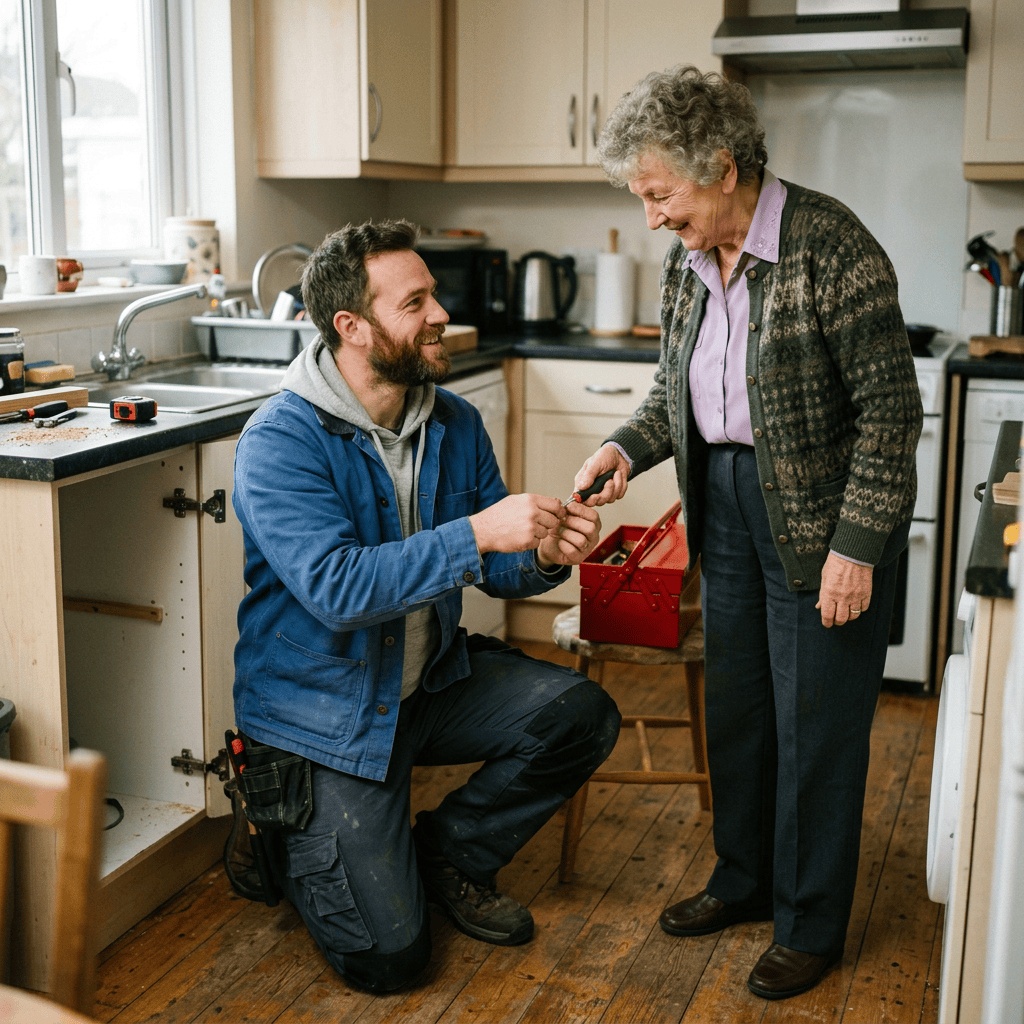
Repair professional and older woman handling a small tool in a kitchen

As Mary Ann has noted on multiple occasions, we single women often must hire someone to do the work. We are strong, independent women, yet there are just some tasks we are not skilled to complete.

Have you ever noticed that something needs repaired or upgraded; only to realize that something else has to be completed first? Setting priorities can be a challenge when one thing leads to the next. Especially when your preference is to redecorate one area, but another area is calling out for attention. Where to begin?

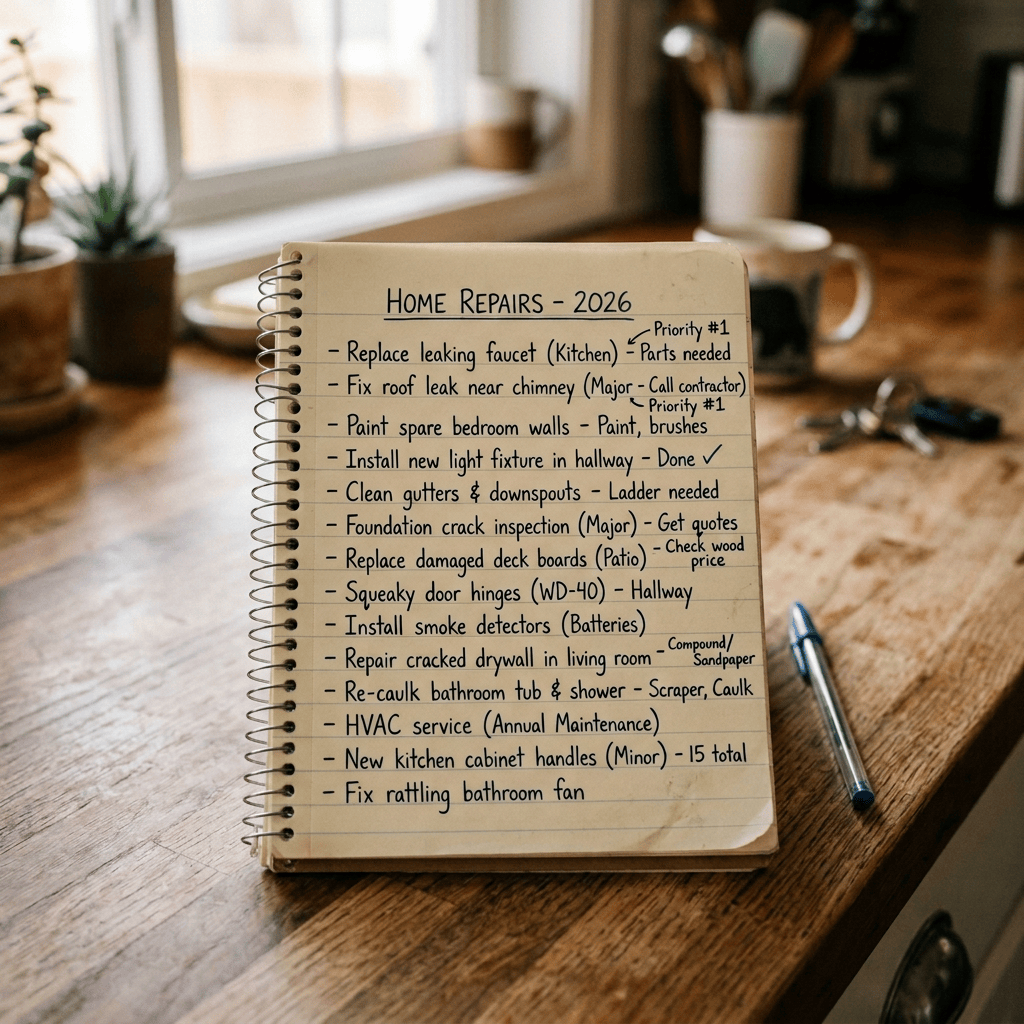
My strategy is to make a list – I’m a list-maker from way back. My daughter used to roll her eyes with all my lists – until she, too, became a list-maker. But I digress. I started a repair / remodel / redecorate list and continue to add to it. On my list, I note each project as large, medium, or small. Large will be projects that mess up the house for two or more weeks and likely cost more than $10,000. Medium projects may take a week but are less than $10,000; and small are those things that can be done within a day or two. I also make a notation if I can do part or all of the work involved.

Notebook page titled HOME REPAIRS - 2024 listing fourteen household repair tasks, priorities, materials, and one completed item

Next, I put the projects in order of priority, noting those things that have to be done before completing the project. Finally, I have begun getting estimates for the work.  Sometimes, I find the more affordable projects move up the list, simply because I can get them done quickly. Checking items off the list is quite satisfying!

Staying up-to-date with repairs and upgrades makes your home more enjoyable. I think of it in this way: if I wanted to sell the house, what would be required? Do I really want to make changes for someone else? Instead, I want to enjoy the time, effort, and money I have expended to make my home my castle.

Getting Things Done [Not]

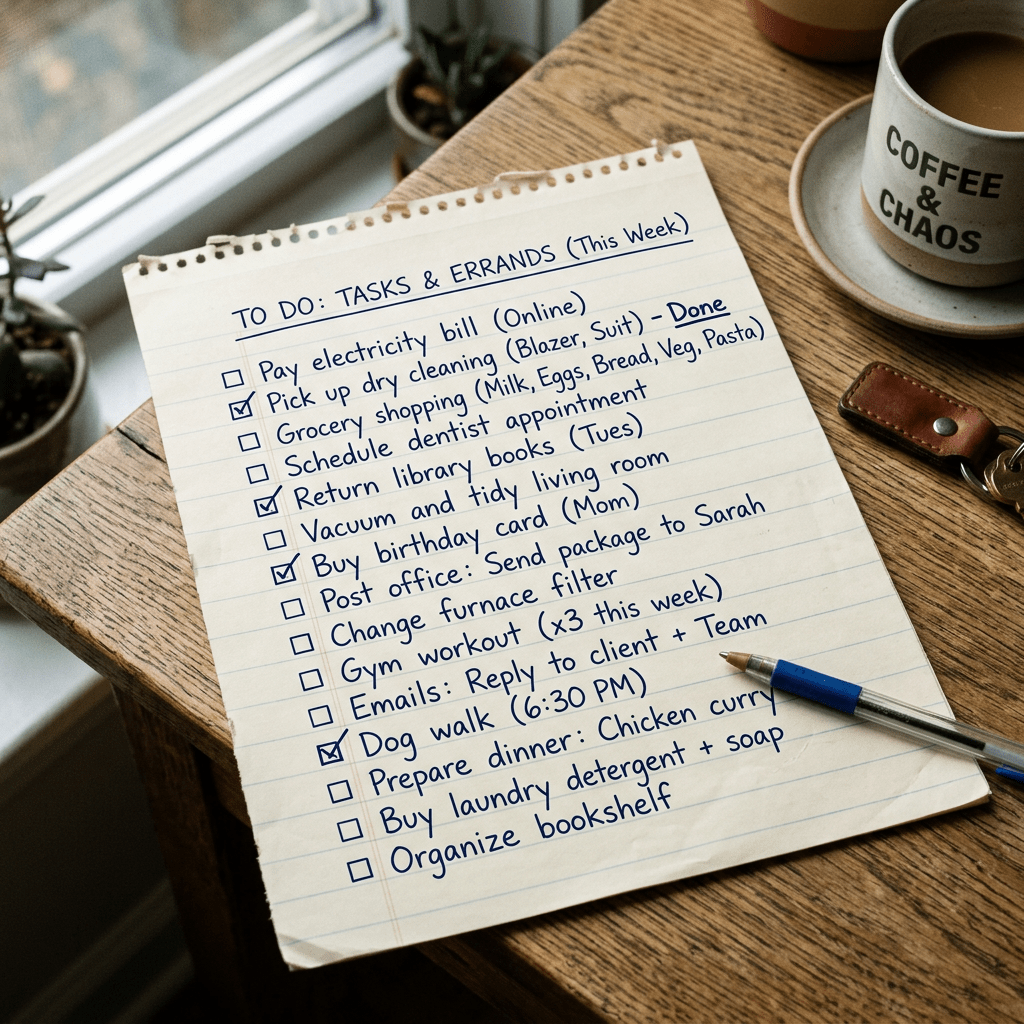
On most days I am driven to get things done. At least I was until recently. In the evening I make a list of things I want to accomplish the next day so that once I am up and dressed, I am ready to take on the world – the retirement world, that is!

Handwritten weekly to-do list on lined paper with some tasks checked off and a coffee cup on a wooden table

But lately I just feel tired. I’m guilty of staying up too late at night, into the wee hours of the morning. Then, getting moving in the morning is more difficult. I drag through breakfast and morning chores. By the time I sit down to read, I am ready to take a little snooze. I’ve learned I can lie back in the little recliner in my office, close my eyes, and let my body relax. I may power nap for fifteen or twenty minutes but over the past few weeks those minutes have turned into an hour.

At first, I felt guilty for not completing the tasks before me. But a few days ago, I realized, “Isn’t this what retirement is all about?”  After years of working twelve-hour days, have I not earned the right to rest when I want to? I have accepted, logically, that my day is mine. Except when I have agreed to meet a friend or attend a meeting, I am in charge of me. No one is checking to see if there are a few dishes in the sink or if the drawers are organized.

Overall, I am healthy. I eat fruits, vegetables, grains, and proteins. I exercise throughout the day. So why am I so tired? Oh. Now I remember. I am seventy-something and have no real obligations. Is part of lacking energy really a lack of motivation? If I am being honest with myself, my days are not as full as they once were.

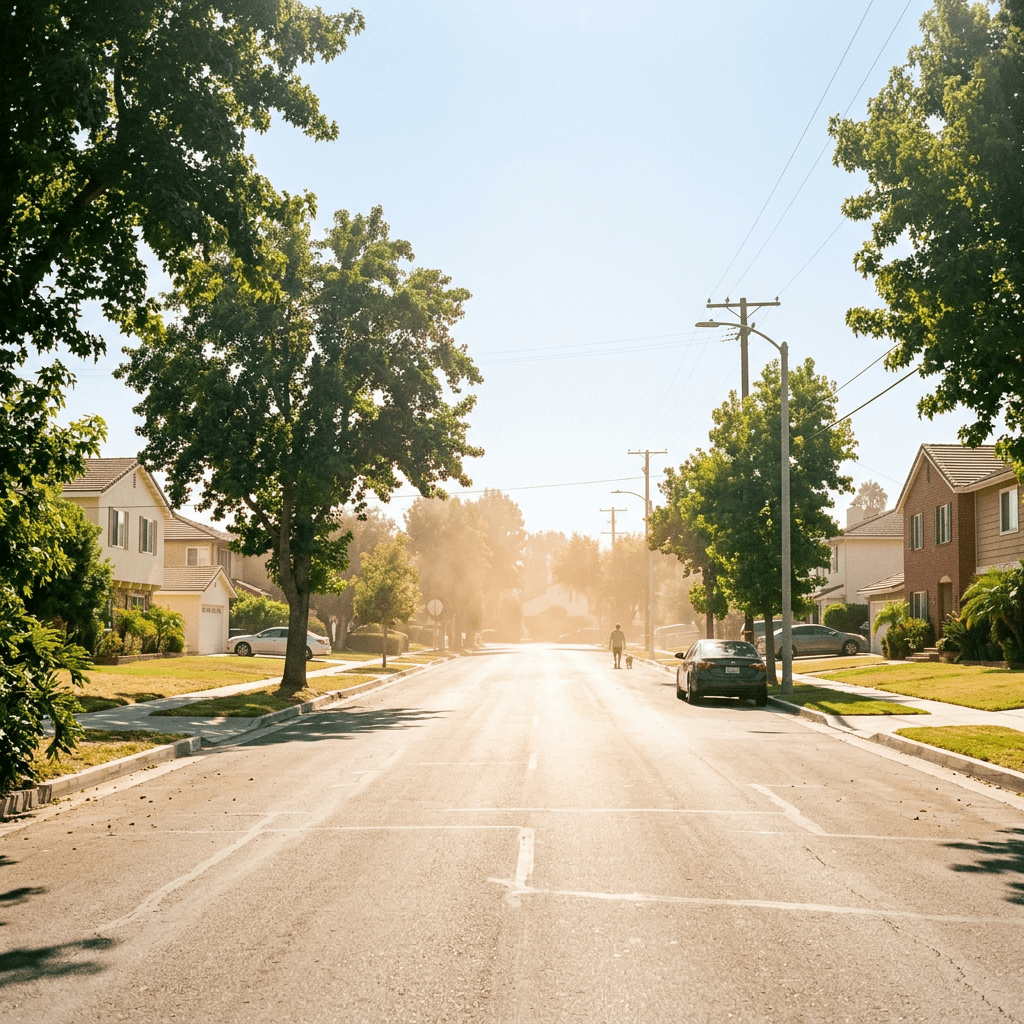
Suburban street with houses, trees, parked cars, and a person walking a dog
.

Another factor this summer is the incredible heat dome that hovers over this part of the country. Temperatures over 100 degrees, bright sunny days, and heat indexes even higher keep this former sun goddess inside. I water the flowers at 9:00 pm when temperatures drop to 90 in the impending dark of night.

Reflecting on my days and nights with concern, I finally came to the realization that not getting a list of things done every day is okay. Friends tell me I do more in a day than they accomplish in a week. Not attacking a long list of unimportant tasks is, well, not important. I let go of the need to be busy every minute and now I can savor the time I sit and read …. And should I doze off for a bit, that is fine, too. Retirement is a time to slow down and enjoy life; not worry about checking off items from the task list.

Expired

Mary Ann

Just like expiration dates on your produce and canned goods, I think we have expiration dates on other aspects of our lives.  I am not talking divorce or death, but indeed they are endings.  I think that we outgrow certain facets of our lives.  In recent years, two come to mind that were big steps for me to take to say goodbye to features that were a big part of my life in the past. 

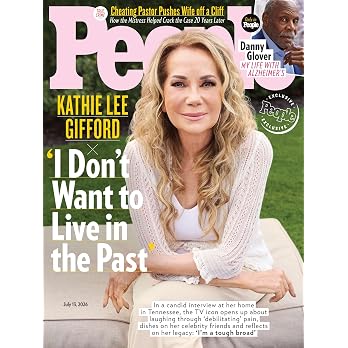
When I was young, I would read the Time Magazine, and there was a section called People. I would read it each week to see what the celebrities were up too.  Sometimes it was the only segment that I was interested in.  Then in 1974, People Magazine was launched with Mia Farrow on the cover.  I was beyond thrilled.  I got a whole magazine on famous and not so famous people.  It was a step up from the grocery store tabloids.  

I read just about every issue for over 50 years, but I did not renew it this past year.  Surprise, I haven’t missed it.  It no longer held the magic it once did for me. I still liked the reviews of movies, TV, and books, however The Find the Difference photos came to be the only thing I really liked doing.  I realize that as I have gotten older, the world of influencers or WB stars are not in my orbit anymore.  You can hardly keep up with who is in and who is out.  However, I just don’t find the articles interesting anymore.  I don’t really need true crime stories or features highlighting people who do not have sterling characters.  So, it doesn’t seem worth the $100 plus just to play a photo game.  Bye-Bye, People!

Another goodbye that I thought I would never say is Saturday Night Live!  When it began in the fall of 1975, it was the most original piece of comedy ever produced.  Not Lucille Ball or Carol Burnett that I watched in my youth, but it had political satire and clever skits about slices of American life.  I could hardly wait for the next episode.  The original cast with Chevy Chase or John Bulshi or Gilda Radner and company were hysterical.  It was funny without being cruel.  Remember Cone Heads?  SNL was a launching pad for so much comedy talent, and I admire the show for that.

I watched for nearly 50 years but in the last few years, SNL was becoming mean – I guess reflecting the general society.  Frankly, I was bored.  I am old, but I like to laugh.  I still enjoyed Weekend Update and the cold openings especially during Presidential election years.  Then it became cruel as well.  I have a hard time watching Colin Jost say crude things about his wife, Scarlett Johansen.  You lose respect for those individuals. I don’t really need that in my life anymore.  So goodbye Saturday Night Live!   

There are a few things that I wish I could say goodbye to now.  However, they don’t seem to be fading in popularity. I don’t like crypto currency.  Call me old fashion, but I want to see my money.  It seems like a Ponzi scheme to me with the people at the top getting rich and the people at the bottom losing their life’s savings.  

I hate naked dressing.  Maybe it is my mother whispering in my ear that I needed to wear a slip because my dress was sheer, and you could see the outline of my legs.  Remember the scandal when this happened to Lady Di before she became a princess?  I love to see an awards show and see the participants dressed in beautiful clothes as they walk the Red Carpet.   I especially love Marchese – if you could wear a fairytale, you would be wearing Marchese.  Naked dressing doesn’t leave much to the imagination.  You lose the romance of beautiful clothes, and a little mystery is always good.  

And for now, I trying to figure out if I like AI.  It is here but the jury is still out for me whether it is something I am going to unitize.  It is in my life whether I like it or not.  I have a blog coming out on my adventure with AI, so I look forward to sharing that with you. 

For now, I have expired some things in my life.  I have that power to do just that if something isn’t adding to my life.  If something is taking away from my life, it is time for it to expire!   

Goalie – Check

Okay. By the title I selected I bet you were thinking this post would be about the FIFA World Cup. If you were following the sport, I apologize for the teaser. We have arrived at the 204th day of 2026 with only 161 days to go – so we are a little past half-way through the year.  For me, that means it is time to check in with my goals and task list that were created in January.

I want to see how true I have been to completing those items that were important to me six months ago. And if they are no longer relevant, it is time to adjust. Hence, an update!

Elderly woman reading handwritten notes in a notebook at home

Overall, I have the physical aspect of my goals down to a science. My emphasis on the Mediterranean and Portfolio dietary guidelines have served me well. I feel healthy and satisfied when I stay close to those suggestions. I drink a lot of water and exercise daily. I find that, as a writer, I tend to sit too long at a time. So, I wear a smart watch that encourages me to move every hour if I haven’t done so. When I get those reminders, I jump into an exercise snack (which Mary Ann wrote about earlier this year).

My friendship circle is expanding. Yes, it takes a lot of effort yet interestingly this year the friends are reaching out to me at the same rate that I reach out to them. This seems like a first as I have always felt that I must be the one to initiate visits. Maybe it is the people with whom I am now interacting opposed to sometimes-friends of the past. My heart is warmed with the people whom I see regularly and share a few moments.

I am on target with a part of my spiritual goal. Using the Bible Recap app, I have finished 23 books of the Bible, reading in chronological order, with the goal of completing the entire Bible in one year. The Bible is not included in my goal of reading 24 books this year. So far, I have read eleven books and am currently reading four others. I know that sounds crazy but two of the books require writing, one is a weekly reflection, and the fourth is an art-related novel about which I will post a review upon completion. All that to say, I feel I am on target to complete the reading objective.

In the “occupational” or “professional” category I had but one goal – to update my estate plan.  The legal part of that is complete but the personal part is taking a lot more time. Still, I am moving forward. I think one’s “estate plan” for lack of a better moniker is really never complete. Life offers many and constant changes.

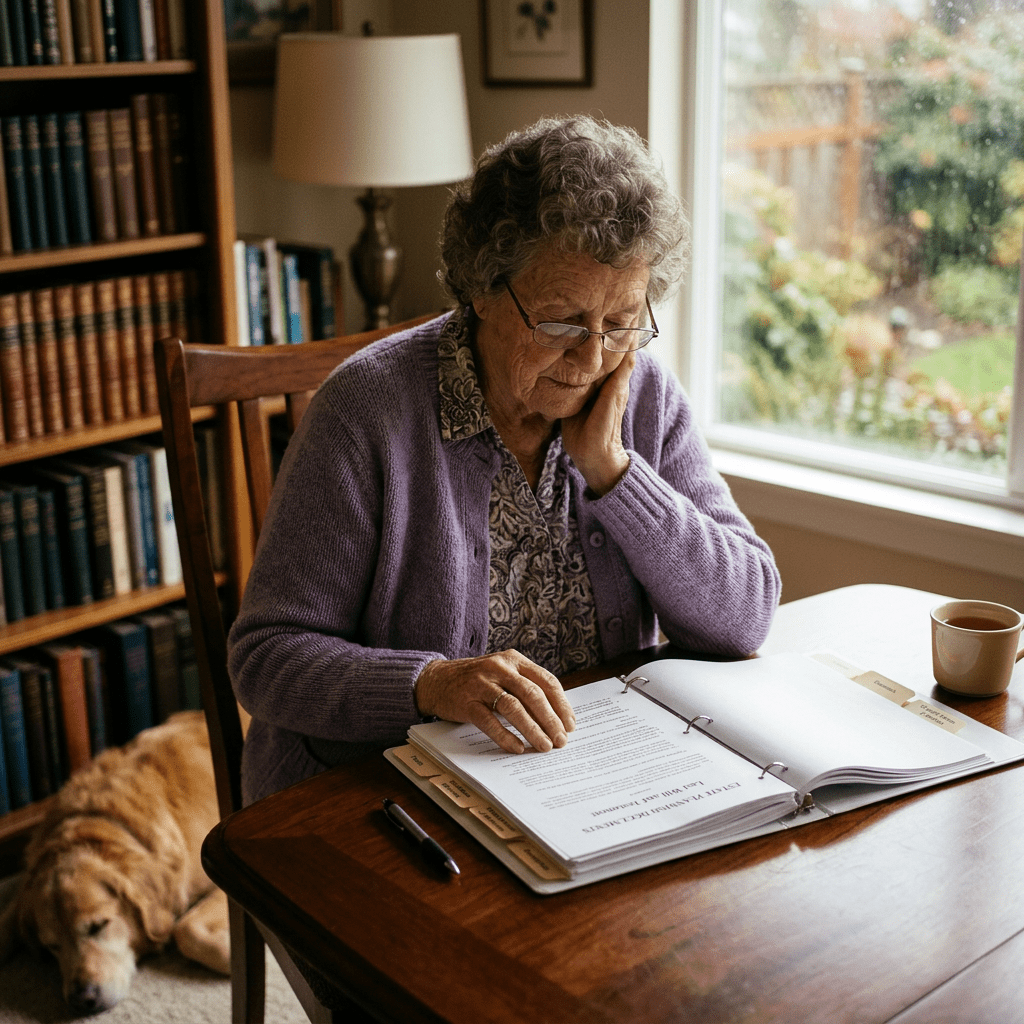
Elderly woman reading documents at a table with a dog lying on the floor

One of my creativity goals will span years, but I have made some progress. I am attempting to select the best or most relevant pictures from various time periods and events and create Shutterfly books. Those take time and are not inexpensive. Thus, I am pacing myself.  Still, I have completed a few this year.

Admittedly, the one goal for which I seem to fail is writing. I write all the time, but I want to finish at least one book! I have several chapters started for four books! I think about them frequently yet don’t sit down and work on them. I have a tendency to think I need to get the little tasks out of the way first. Doesn’t sound like this is an important goal, does it? I will reflect on that.

All in all, I feel I am accomplishing what I set out to do this year.  Did you set goals or New Year’s resolutions?  If so, how are yours coming along? Hallmark is showing Christmas movies in July as this is half-way through their year, too. Now is the perfect time to check in on things you want to complete before the year’s end.  Good luck with your goals!

Being Prepared for a Natural Disaster!

Mary Ann

I was living in Jersey City and working in New York City in 2012 when Hurricane Sandy hit the region.   Who would have thought that such a terrible storm would manifest in late October and cause as much damage in the NYC area?  This was not on my bingo card!

I lived by the Atlantic Ocean a good part of my adult life, so I was used to hurricanes and was prepared.  I was not ready in any way for Sandy to embrace my life as it did that year.  The storm itself did not damage my apartment even though I was located close to the Hudson River.  The water, however, was rising fast from the drains in the complex’s underground garage.  I had to move my car to higher ground.  As I returned to my apartment, the winds were picking up.  It was going to be a long night.  So, the cat and I cuddled up together and rode out the storm.  When the morning dawned, and Sandy went out to sea.  I began to realize how unprepared I was and that was the real storm in my life.  

Of course, the electricity was out so when you went out into the hall, it was pitch dark, no light anywhere.  I did have a headband flashlight and could use that to maneuver the building.  My phone was almost out of juice, but I could use my computer to recharge it for a while.  There was no way to get news, no idea of what was happening.  My refrigerator was beginning to defrost.  I was able to eat what was in there for a few days.  The frozen shrimp thawed out, so I had to cook it.  Thankfully, I had gas, and my stove was fully functioning.  I had to light it the old-fashion way with matches.  The bonus of having a gas water heater is having hot water for a bath even if you had to do it the dark.  Small wonder.  I was so thankful for a hot cup of tea. 

So, one day turned into another, and each day I had a mission.  I went out to find food or ice to keep what I had cold.  The hardest thing was getting money.  The ATMs were not working making it hard to buy food when it became available. Some of the local restaurants were able to make food.  They had gas so they could cook. You had to have cash because the credit card machines were not working. The local banks would only make money available for their clients, so it was a hike of a few miles to my bank for cash.

As the week progressed, the surrounding buildings got electricity.  My apartment was on a different grid, so I remained in the dark.  I found that I got up with the sun and went to bed when it set in the evening.  Electricity allows us the freedom of extending the day well into the night.  Something that we take for granted for the most part.  Eventually, the apartment management brought in trucks with giant generators that gave us light in the common areas.  They showed movies during the day to entertain and set up charging stations for our phones and computers.  If you had an extension cord, you could plug it in the outlets in the hall.  Humans are so adaptable that we immediately create systems to survive.  

What we were dealing with were inconveniences, not real problems.  No one was dying.  You had to put on an extra sweater to keep warm, you had to read rather than watch TV or play games with the family.  The cat enjoyed watching me play solitary, and I think she liked having me around all the time.  I had plenty of food for her, and she was wearing a fur coat.

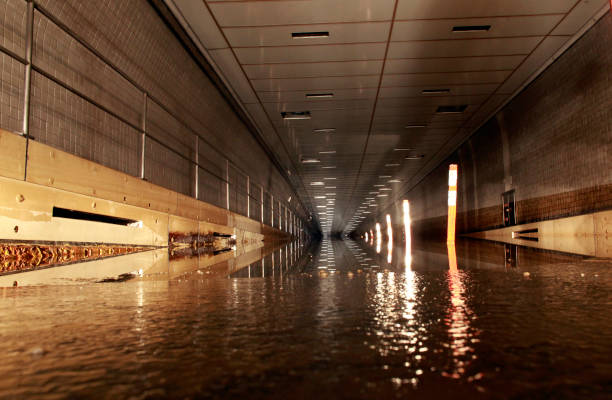
My school was in Lower Manhattan, so it was closed.  No electricity and several streets had water issues. You couldn’t get into the city if you wanted, because the subways were flooded.  The lines for the ferries were for hours long.  Upper Manhattan had electricity, and you would not know that there was a hurricane.  My boss lived there.  Life was going on as usual.  After a week, the school opened so I had to get into the city.  One of my teachers gave me a ride through the Lincoln Tunnel on Sunday.  I ended up sleeping on my boss’s couch for a week.  The show must go on or rather the school bells must ring.  I was there to greet the children. (In case you were wondering, my cat sitter was able to come to take care of my beloved cat.) 

The next several months, New York got back on its feet.  The surrounding areas did not recover as fast.  Anyone coming in from New Jersey spent double the time getting to work and double the time getting home.  My half an hour commute became an hour.  Thank God for the ferries and buses.  You never appreciated the subways as much as you did when they didn’t work. 

This was my Sandy story.  What did I learn from the whole experience?  You need to be prepared.  I bought an energy block so I could charge the phone and computer. You must make sure it is always charged so you are ready.  I bought a land line phone – a little Slimline.  When the phone towers went out, for some reason the land phone lines were working.  I am not sure if that would work now.  Many landlines are not functioning today.  I bought a battery powered TV so I could get the news.  It also had radio function.  It is an analog, so you are only getting a few channels.  I can’t seem to get any channels in PA.  I also keep a stash of money in all dominations.  I use it for emergencies sometimes, but you must replenish what you use, so you have money when you need it.  

Of course, you need to squirrel away extra non-perishable food and water. I bought a month’s worth of survival food in case there is a Zombie invasion.  Just add water!  Oh, so yummy.  I have Life Straws to use for purifying water from a creek or pond.  I also keep extra medicine in case there is a delay in deliveries.  A first aid kit is a must.  Prepare a go bag for you and your pets if you must evacuate and have your important papers organized to take with you if needed.  Have a deck of cards or other games available to play or books to read or hobbies items like yarn for knitting.  You never know what you may need or how long the ordeal may last. 

As the world heats up, we are going to experience more extreme weather. There is not much we can do about it until the Earth cools if it can.  In the future the inconveniences of what I experienced with Sandy may be real problems.  Be that good Boy or Girl Scout and be prepared.

Secure Online Accounts

For many years we have heard how to create a strong defense against cybercriminals. We have been told to change passwords every three months, at least. Never use the same password for two or more sites or accounts. Don’t tell anyone your password. Use a combination of lower case, upper case, and numbers … and maybe even special characters. As the guidelines change, so do the cybercriminals and their tools – or is it the other way around?

While I do change my passwords frequently for well-used accounts, I have random accounts that don’t get updated quite as often as they should. You know those accounts that you are forced to create when you want to order food or items online. Those annoying restaurants and stores that really just want to spam you with unnecessary coupons, advertisements, and enticements to try to get you hooked on their products.

Person creating a secure password with tips like mixed characters, numbers, symbols, and long length
A person learning how to create a strong, secure password at their computer

Going through those accounts and attempting to close them or at least to change passwords and email addresses can be a chore! Still, wading through the barrage can be somewhat satisfying, knowing that your online footprint will be a bit smaller.  Some accounts are more difficult than others. There is no clear way to close the account and have your data expunged. It takes much more time and effort.

One thing I have noticed, however, is that many of the accounts automatically add the multifactor authorization (MFA). And on those that do not, it is a good idea to add it yourself. MFA is the requirement to use more than just a password to get into the account. It may use a passkey, a code sent to the phone, or even an authentication application.

The National Institute of Standards and Technology (NIST) publishes new warnings and guidelines periodically. One of their recommendations is to move beyond passwords, stating passwords are not as secure as other methodologies. Hackers steal passwords through data breaches and through phishing attempts.

NIST suggests that if you do use passwords, make them at least 15 characters long. They also recommend to use a password manager, so you your long password will not have to be remembered; and always use MFA.

With over 3,000 data breaches in 2024, it goes without saying that some of your data has already been compromised.  Yet, if you are vigilant, you are less likely to have your data taken by those evil people who prefer to lie and steal for a living. (She said with a smile). Seriously, in this world of “everything online” do your best to protect your information. And keep smiling!

Revisiting the Estate

I have always thought of an estate as a grand residence and wealth held by a person or family over time. When I bought my home soon after a divorce, I named it The Queendom – a woman’s home is her castle, you know. Other than the home I worked for years to pay off, along with the furniture, and other personal belongings, and the car, I do not have much. Interestingly however, what little I own is my estate.

Several months ago my 94-year-old aunt was angry at her daughter when my cousin suggested she needed to start downsizing. She needed to designate the things she would like to give to children, grandchildren, great-grandchildren, and other family. She had made no plans for her estate upon her passing. Admittedly, I was somewhat surprised. I guess she thought she would live forever.

My mother, gratefully, had all her documents in place. She had designated me as power of attorney, she had a will drawn up, and I held with her the title of her home and bank accounts. My sister was listed as beneficiary of a life insurance policy. She had an advanced directive. All these documents were in place when she had a stroke, and I had to move her in with me. Immediately, I was able to help her take care of health challenges and finances. She had given me a wonderful gift.

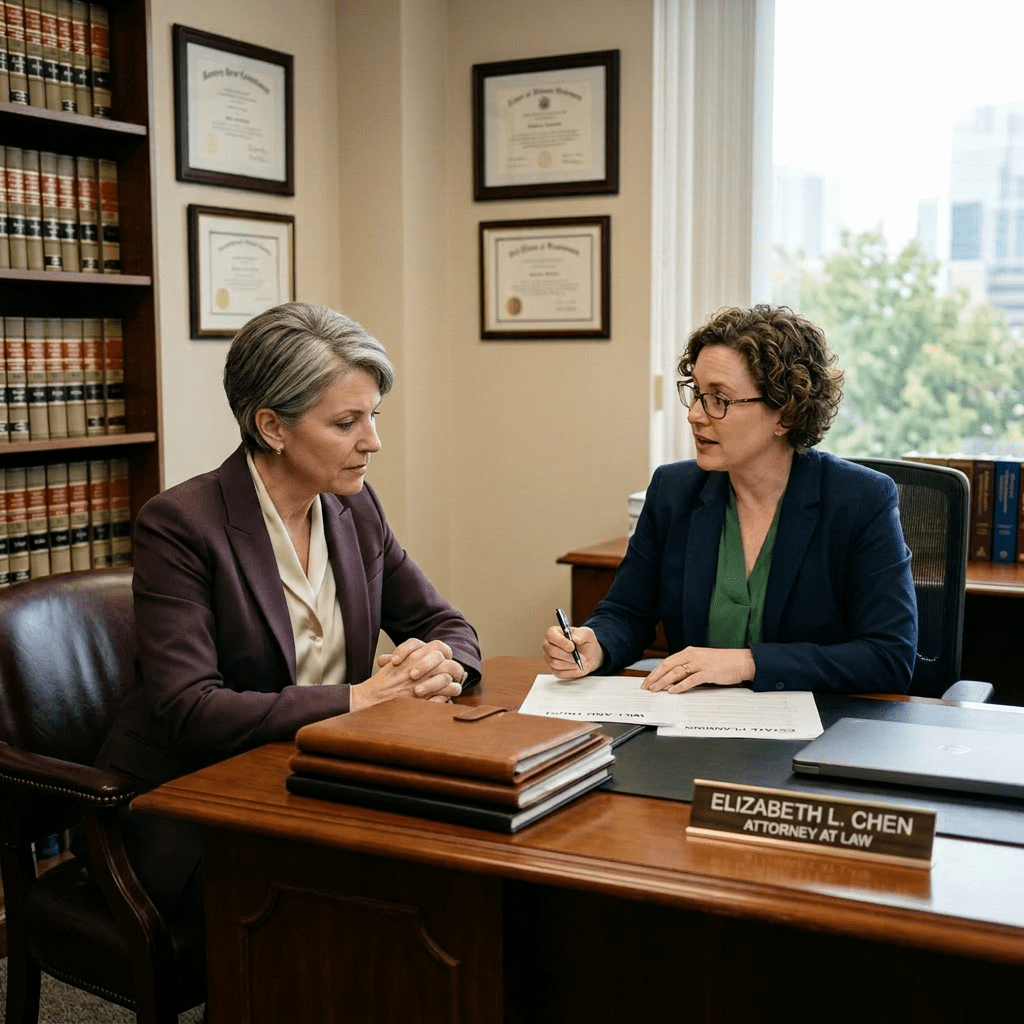
Attorney discussing legal documents with client in office

I granted my daughter power of attorney several years ago and signed an advanced directive while I was caring for my mother. But my attorney had suggested that since I have only one daughter, everything goes to her automatically (in my state), so I did not need to waste money on a will. For a while that sufficed. Yet as I navigate these seventies, I realized I want to make things easier for my daughter, and I want to leave something for my two grandchildren.

An estate attorney and I now have the ball rolling. The fee, which is quite reasonable, gives me a peace of mind that is well-worth the time and effort. Of course there is more to planning for a disabling medical condition or passing away. I have a small document that tells her my current financial status, where to find things, and who to contact and how to contact friends and family. All these instructions and legal documents are scanned to a flash drive and printed in a notebook for my family’s use.

The documents will need to be updated periodically, but having the baseline set is a purposeful message for the next generations. Hopefully, it will make an emotional time just a bit easier.

Just as “death cleaning” (which Mary Ann wrote about earlier in our blog life) is a gift to one’s children, so is estate planning. Laws and practices vary from state to state, so it is important to consult experts where you live. But be kind to those who may have to deal with things once you need help or when you are no longer with us. Take time to document your wishes. They will love you even more for it.

A Taxing Time

I never worried much about paying taxes when I was working – the payroll department took care of the deductions from my salary before I saw the net. Now that I am retired, I find that my social security income puts me into a “next” tax bracket, thus requiring me to pay quarterly taxes. Still, the time has come to “pony up” as they say, and I still have to write a check to Uncle Sam. Even with the working senior tax break, it seems I don’t qualify.  Interestingly, I make less than when I was working, but seem to pay higher taxes. It’s frustrating.

Contributing to a tax system is often viewed as a burden, but it can be reframed as a profound expression of social membership and a “subscription fee” for a functional civilization. When we pay taxes, we are essentially investing in the collective stability and infrastructure that allow individual success to flourish in the first place. From the roads that connect our commerce to the legal systems that protect our property and rights, taxes represent our shared stake in a society that is larger and more resilient than any one person could maintain alone.

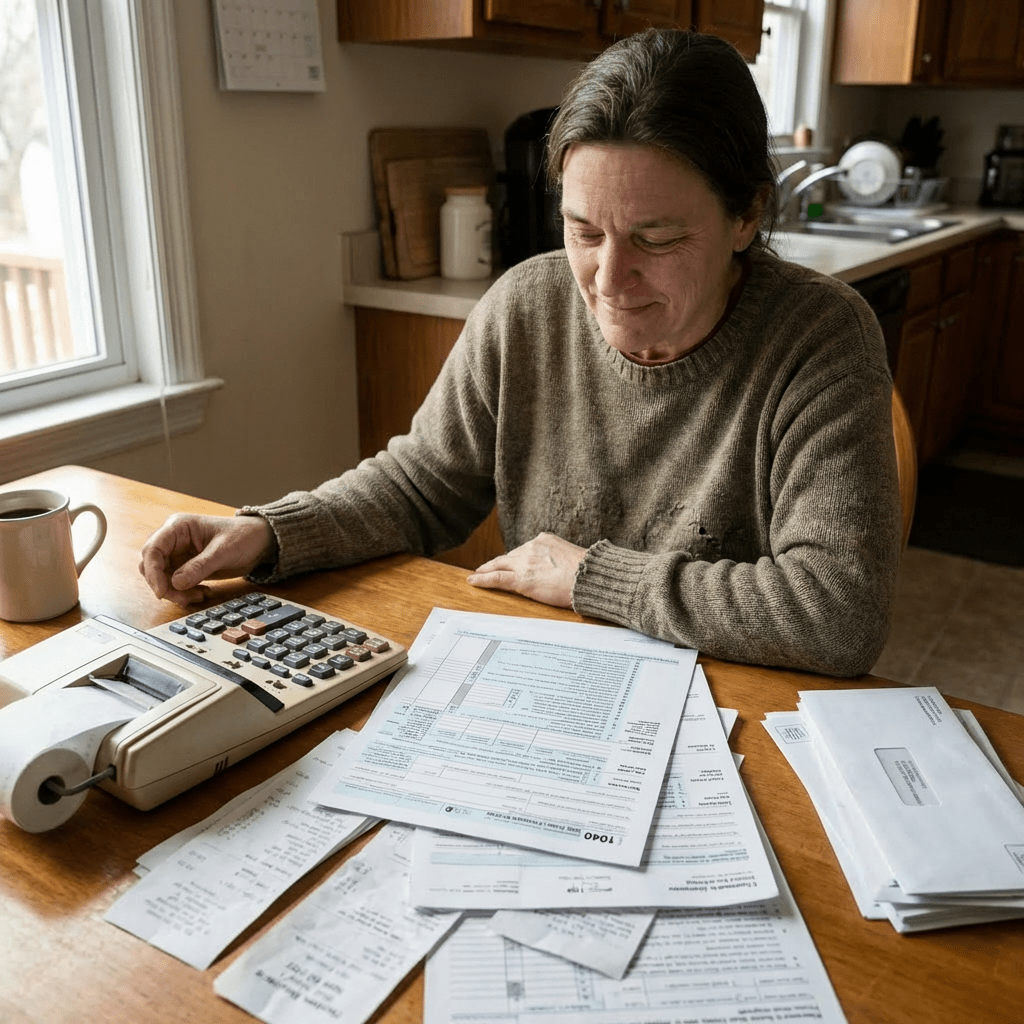
Stressed person reviewing tax forms and receipts using a calculator at a kitchen table.

Furthermore, the ability to pay taxes is often a direct reflection of personal economic agency and the privilege of opportunity. In a well-structured society, the obligation to contribute typically rises with one’s level of financial security, meaning that a tax bill is frequently a byproduct of having accessed a thriving market, a quality education, or a safe environment. Recognizing this link transforms the act of filing from a chore into an acknowledgment of the structural advantages—such as public safety, research and development, and stable governance—that provided the ladder for one’s own achievements.

Ultimately, taxes serve as the primary mechanism for fostering the “common good” and ensuring a baseline of dignity for all citizens. They fund the schools that educate the next generation, the parks that provide communal beauty, and the social safety nets that catch the vulnerable during times of crisis. To pay into this system is to participate in a silent, cross-generational pact: we benefit from the investments made by those who came before us, and in turn, our contributions build the foundation for those who will follow. In this light, paying taxes is less about what is being taken away and more about what we are choosing to build together.

We all like to grumble periodically about the voluntary taxes we pay. (Voluntary has always seemed a misnomer to me – but that is for another time). Admittedly, when I drive from state-to-state, or see our military men and women, or visit a National Park, my heart swells with pride.  I am proud to be an American – a Native American, at that. So I am grateful for the opportunity to pay my fair share to support the greater good.