Hat Trick

Mary Ann

The definition of a Hat Trick is three goals in a hockey or soccer game during one game by one player.  It is a remarkable feat for an athlete.  This blog is about another kind of Hat Trick.  It is a book review of three books on aging that I recently found and thought you might enjoy hearing about them.  

The Hat Trick books are all written by people over 85 years. They are easy reads, and all are amusing with their advice about aging.   

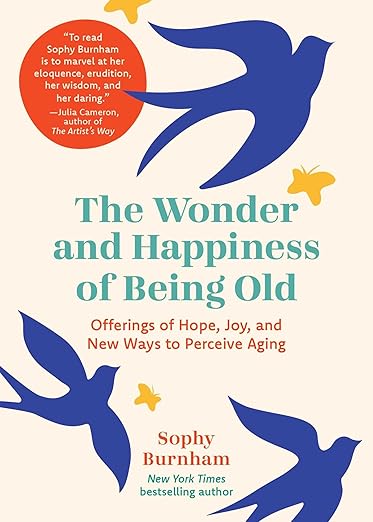
The Wonder and Happiness of Being Old – Offering of Hope, Joy, and new Ways to Perceive Aging by Sophy Burnham is written in letter format.  Remember I shared with you that is a popular style right now, i.e. The Correspondent. Burnham is writing to her 60-year-old cousin Eleanor, with topics that are divided into five sections that include what it is like to be old to family to love embracing all aspects of living.  Each section has several topics that are only a few pages long so you can read just one and more if time allows.  It is the kind of book that you can pick up and open anywhere in the text and gain a nugget of advice from it.  Section 4 has letters that Burnham wrote to herself at 21 to be opened at 42, 42-letter to be opened at 63, 63-letter to be opened at 84, and 84-letter to be read at 109.  Burnham is spunky enough she could be around at 109.  
There is a message of thankfulness for the small joys of life, the love we give and receive, and how important forgiveness is to our inner peace.  No matter how old you are, we all could use an elderly friend or relative to impart life lessons to help us each grow gracefully into old age.  

Our second Hat Trick book is by Judith Voirst. Do you remember reading Alexander, and the Terrible, Horrible, No Good, Very Bad Day to your children?   Judith Voirst was the author of that book and many, many more.  I especially enjoyed the books of poems and reflections that she wrote for turning 20, 30, 40, 50, 60, 70, 80, and most recently 90 years old.  I have loved those books and relating to her documentation of a particular decade.  I have given several as gifts.  
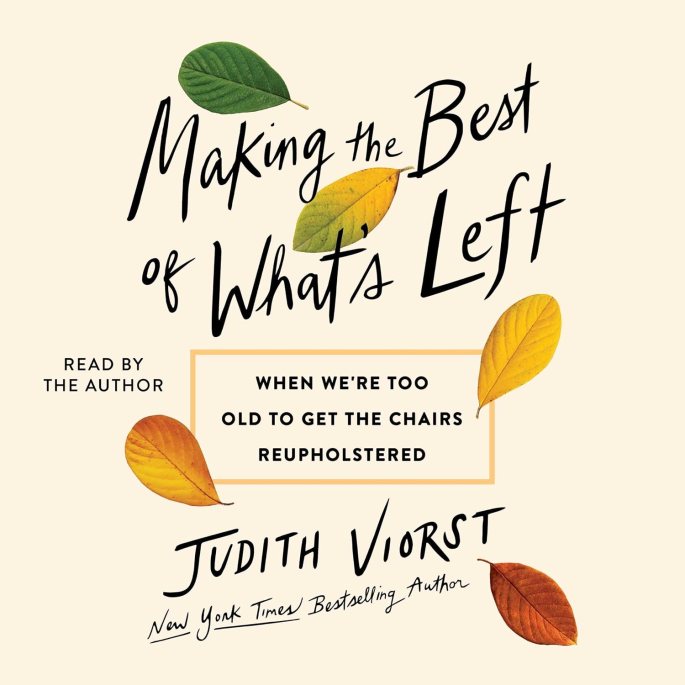
Voirst can sum up a situation with concise language and then give a zinger of a sentence that will make you smile and at times make you break out laughing.  This has made her a bestselling author.  Her latest book is Making the Best of What’s Left – When We’re too Old to Get the Chairs Reupholstered. It is full of short essays and poems capturing one of the last chapters of our life.  She finds humor in these years.  Sometimes a good laugh gets us through some challenging times. Thank you, Judith Viorst for pointing it out to us.  This is also a book that you can pick up and read any place in the text and enjoy her wisdom.  

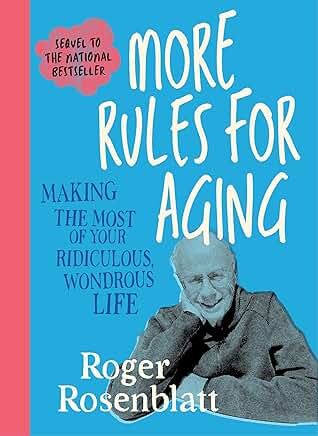
The last book in the Hat Trick is More Rules for Aging – Making the Most of your Ridiculous, Wondrous Life by Roger Rosenblatt.  This book is an extended edition from his first book, Rules for Aging.  There are 114 essays that run from one sentence to small paragraphs.  It is very easy to read.  Each essay will give you some good aging advice.  Rosenblatt is funny, and it is reflected in his essays.  You will find yourself chuckling or at the very least grinning.  
If we are lucky enough to make it to old age, you might as well laugh.  Remember it is the best medicine, and since we take a lot of medicines, there are no bad side effects and doesn’t cost anything.  All three of these books were loved by Lisa and me in our Non-Fiction Book Club.   It was truly a Hat Trick on aging.  So, if you want some wisdom for the ages and a tickle to your funny bone, these books will fill the bill.  They are meaningful and just right to read anytime returning repeatedly to the fountain of wise words to help us through our own old age. 
How to Read Poetry Without Feeling Lost

My book club has selected a book of poems for our September meeting. The poems were written several years ago by the mother of one of our members. One of the ladies said she would read it but that she did not care for poetry.

Poetry can feel intimidating at first. The lines are short, the language is compressed, and sometimes the meaning seems to hide just out of reach. Reading poetry is not about cracking a secret code on the first try. It is about slowing down, noticing what the poem is doing, and letting sound, image, emotion, and meaning unfold together.

The good news is that there is no single “right” way to read a poem. A useful approach is to read slowly, reread, listen to the language aloud, and pay attention to patterns in words, images, rhythm, and form. These habits turn poetry from something mysterious into something you can enter, revisit, and enjoy.

In an effort to better understand a poem, which when well written does not necessarily rhyme and is often somewhat obscure, I will share a few tips.

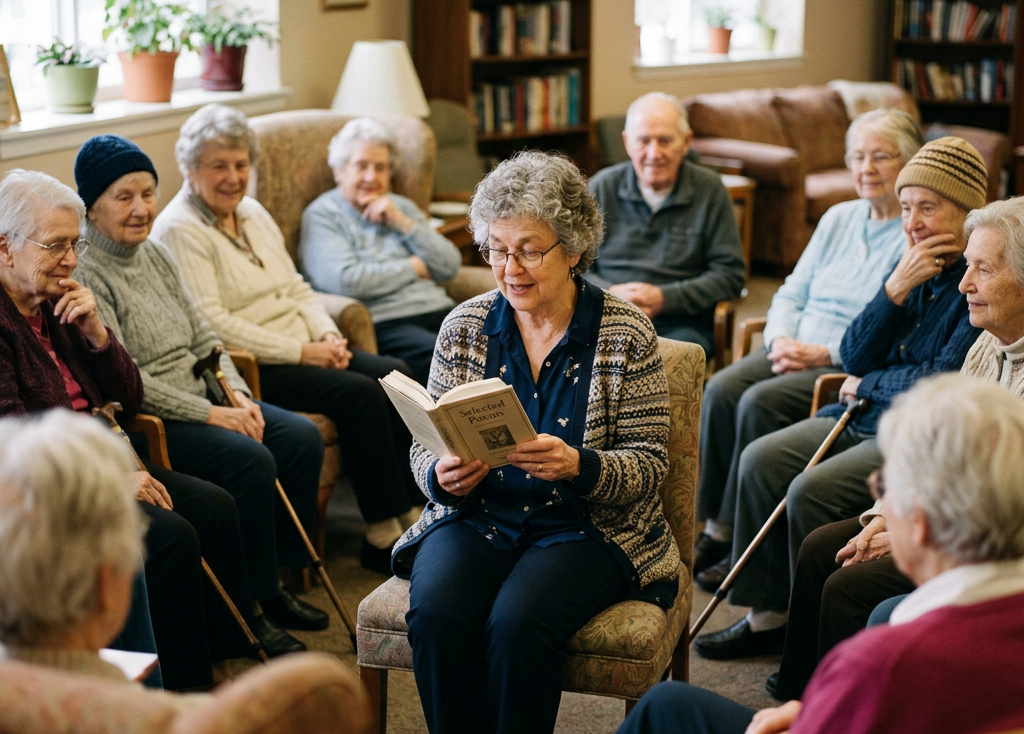
Older woman reading aloud to seated seniors in a community room

1. Read the Poem Once for the Experience

On your first reading, resist the urge to analyze every line. Just take in the poem. Notice the mood, the images that stand out, and any words or phrases that catch your attention. If you feel confused, that is normal. A first reading is an introduction, not a final interpretation.

2. Read It Aloud

Poems often are made of sound as much as meaning. Reading aloud helps you hear rhythm, repetition, rhyme, silence, and emphasis. Even poems that do not rhyme have music in them. Listen for clues where the poem speeds up, slows down, or asks you to pause.

3. Look at the Speaker and Situation

Ask a few simple questions: Who seems to be speaking? Who might they be speaking to? What is happening in the poem, if anything? The speaker is not always the poet, and the poem may not tell a complete story. Still, identifying a voice or situation gives you a place to stand.

4. Notice Images, Patterns, and Surprises

Poems often build meaning through repetition and contrast. Watch for repeated words, related images, shifts in tone, unusual comparisons, and moments that feel surprising. If a poem keeps returning to light, water, doors, seasons, or a particular sound, those patterns are probably doing important work.

5. Pay Attention to Form

Form is the poem’s shape and structure: line breaks, stanza breaks, white space, punctuation, rhyme, meter, and repeated phrases. Ask why the poet arranged the poem this way. A short line may create emphasis. A sudden break may create tension. A repeated phrase may act like an echo, deepening meaning each time it appears.

6. Let Meaning Arrive Gradually

After several readings, try putting the poem into your own words. What is it thinking about? What feeling does it leave behind? What question does it raise? Your interpretation should connect back to the poem’s language, but it does not have to explain everything. Some poems invite uncertainty, and that uncertainty can be part of their power.

A Simple Poetry Reading Checklist

  • Read the poem slowly at least twice.
  • Read it aloud to hear its music.
  • Circle or note words, images, and lines that stand out.
  • Ask who is speaking and what the situation might be.
  • Look for repetition, contrast, and shifts in tone.
  • Notice line breaks, stanza breaks, punctuation, and white space.
  • Write one sentence about what the poem seems to be doing.

Or … just read the poem for pleasure without trying to unpack or understand it. Reading poetry is less like solving a riddle and more like listening closely to a voice. You may not understand everything right away, and you do not need to. Start with what you notice, trust your response, and return to the poem. Each rereading can open a new door through which you may discover something wonderful or new.

A poem shares a thought

From a certain point in time

The author’s musings shared

And often as a rhyme.

At times the stanzas waiver

The lines seem out of touch

So I just feel the rhythm

And it doesn’t hurt so much.

~cynthia

AI for Dummies

Mary Ann

I am sure that you have battled with your phone when texting.  You spell please and the phone spell Louise.   You repeat it, and it does the same thing.  By the third try, the phone may begin to cooperate.  Does this sound familiar?   Another scenario – you are trying to contact the bank, and you are in a verbal game of ping pong with the “person” at the bank continually asking for clearer instruction.  By this point you are totally frustrated and may just hang up or you fall on your knees after being directed to a real person.  This is now our world, and AI or artificial intelligence is the new “person” in our lives.  I am sure you have doubted making a new friend with AI that you didn’t ask for.

You are all aware that my friend Lisa and I do our non-fiction book club.  I have shared several of our selections with you in reviews and such.  Well, Lisa thought it would be good for us old ladies to learn about AI.  I bulked at first, but she was gung-ho!  We settled on reading AI for Dummies by Mueller, Massaron, and Diamond.   It seemed like a good start because we were AI dummies. The edition we read was 2025, a recent update, but as we began to read, we realized it was already outdated.  AI is moving fast – a lot faster than Lisa and I were moving.  It was laborious reading like a college science text.  However, I must admit I did learn some new vocabulary.  Tokens was the key word.  Tokens are bits of information.  The tokens are stored in the data centers.  That is why your phone texting takes the beginning of your intended word and finds something else that could fit which of course is not what you wanted.  We both could see how AI could help doctors or lawyers, but the information you are searching for is only as good as the data input.  It is sort of true for everything.  

Then we got braver since we now knew three new vocabulary words and decided to take an online class with the Princeton Adult School.  It was ZOOM class with an AI guy from the University of PA.  It was a Q and A format.  However, no one knew enough to even ask questions.  Since I am an educator, I was concerned about how AI would be used with students.  I was also concerned with creativity – I didn’t want the world cheating on original ideas.  We did learn a few things.  For example, Claude is the best system to use to support you with research or formatting materials.  I have a writer friend who uses Claude as his staff.  It saves him so much time with his self-publishing work.  AI is a tool.  I just don’t want it to become my best friend. 

Most people don’t know anything about AI and are afraid of it.  I get it.  That is me for the most part.   I did however explore further.  Christ Hayes of MS NOW has a pod cast called Why is This Happening?  He recently hosted several AI experts in an 8-episode series called The AI End Game. Chris is bright journalist who asked many questions that I had, and the experts did clearly explain their responses.  The episode on ethics with Timnit Gebru was excellent and the episode, Boom to Bust with Ed Zitron explained AI economics. The episode on AI consciousness was a bit scary.  If you want to take a short course, these podcasts will educate you. It was worth the eight-ish hours I dedicated to it.  They are more entertaining than AI for Dummies.  Who needs a textbook when you can listen in your car or while exercising?  You can get these podcasts wherever you get you podcasts – I sound like a TV commercial.  It is free – that is always good. 

I must say that Lisa and I haven’t really stopped talking about AI.  She send me articles from the NY Times all the time.  AI is here, like it or not.  Is it here forever?  That is the question.  This all reminded me when home computers came into our lives or the Internet.  It is a blessing and a curse. I just really want to know if something is true.  One lady in the Princeton Adult Class asked how to tell if a picture was real.  Our professor explained several steps to verify a photo.  NO ONE has time to do that for each picture we encounter.  I guess we are going to have to trust.  Not an easy thing to do! 

This has been my journey with AI so far.  I hope that it might help you if you are as confused as I was and still am on many levels.  I have given you some good direction for your journey.  Travel safe and put your seat belt on!   

Mona’s Eyes

The Barnes and Noble book of the year by Thomas Schessler has had mixed reviews, most of which are negative. I feel that to be a sad commentary on today’s readers. I found this book to be an excellent source of learning with a sweet story propping up the lessons.

Schessler provides several essential elements which underscore the artistic adventures of Dade’ and Mona and allow insight into the challenges facing a little girl.

Preserving Memory. Upon observing the trivial objects in the ten-year-old’s room, the grandfather embarks on a quest to provide her with a mental repository of art, imagination and wonder to draw upon should her eyesight fail permanently.

Life Lessons.  Each selection of art is explained not only in terms of the painter/sculptor but includes emotional or philosophical or historical context. Dade’ provides these lessons to assist Mona in navigating the harsh realities of life; lessons that her parents are not equipped to share with her.

Emotional Growth. The grandfather’s treatise regarding each piece of art is, in fact, a form of therapy. Giving Mona perspective on the world and drawing out her own inner strength helps Mona overcome the terror of darkness and blindness.

Focus. Mona is charged by her grandfather to look at the art each week – to really see what is in the painting/sculpture. At first, she gets bored after only a few minutes. Yet as time goes on, she becomes enthralled with the elements in each piece. Learning to focus her attention on the works of art she becomes curious about the meaning of each piece. She wonders about the artist and why s/he expressed her/himself in this way. She learns to take time to observe rather than to rush through an assignment, thus enjoying and better understanding what is before her.

Create a Structure. Mona knows that every Wednesday after school she will spend time with her Dade’ viewing and discussing a work of art. She looks forward to the visits, even though they may at times be tedious. Having structure helps us navigate our days. And enjoying one day per week, knowing what our task will be gives us a sense of purpose.

While many of the reviews find the book boring as each chapter is basically a review of works of art (see https://monaseyesgallery.com ) ,I find it intellectually rich while easily accessible. Critics focus on the “unrealistic” conversations and understanding of a ten-year-old.  Have they met many ten-year-olds these days? Many are quite capable of understanding concepts that some of us may not have contemplated in years gone by. Young people are exposed to all manners of knowledge and information. Teaching young people to discern what is real would be a tribute to any grandparent.

While this book is a novel, I would describe it more as a lesson in art history with a side story about a young lady who is navigating the sometimes-harsh realities of life. Schessler has provided us with wonderful, sometimes intense information in an easy-to-read format. I, for one, appreciate the opportunity to revisit masters’ works of art in a delightful and rich compilation. Each short chapter can be savored. If you are looking for a light, summer read, this may not be your best choice. Yet if you want to learn about art from a new and engaging perspective, give Mona’s Eyes a look.

The Bible Recap

My grandson is studying interpersonal communication as a precursor to a career in ministry. Since high school he has led a youth group each week and facilitates Sunday morning gatherings for youth. He has been vested in this calling for quite some time and his enthusiasm is unwavering. Prior to getting married this past February, he lived with me, as my home is less than a ten-minute drive to the parking lot at his college. So that I may get my facts straight when we discuss religion, I decided it was time to reread the Bible*. Frankly, it has been a very long time since I sat down and went through the entire Bible and I don’t think I’ve ever completed the reading within a year.

I visited Mardel, the Christian Bookstore that is owned by the Greenes who also own Hobby Lobby. I was in search of Christian leadership books for my grandson. During my visit I decided to look at Bibles, too. Admittedly, I was overwhelmed by the selections and, frankly, surprised by the price tags. In addition to Bibles and related books I searched for Read-the-Bible-in-a-Year plans. Back at home, I continued my search online.

For Christmas, my grandson gave me an Amazon gift card to apply to the purchase of a new television in the family room. The one I had was having trouble with all the streaming. I was not ready to expend the money for a new television, but I wanted a new Bible for accomplishing this year’s quest. I asked him if he would mind that I use the gift card to purchase a new Bible. I have several but the most-read ones also have highlights and notes from days gone by. This goal would be approached in a different manner. Needless to say, he was thrilled!

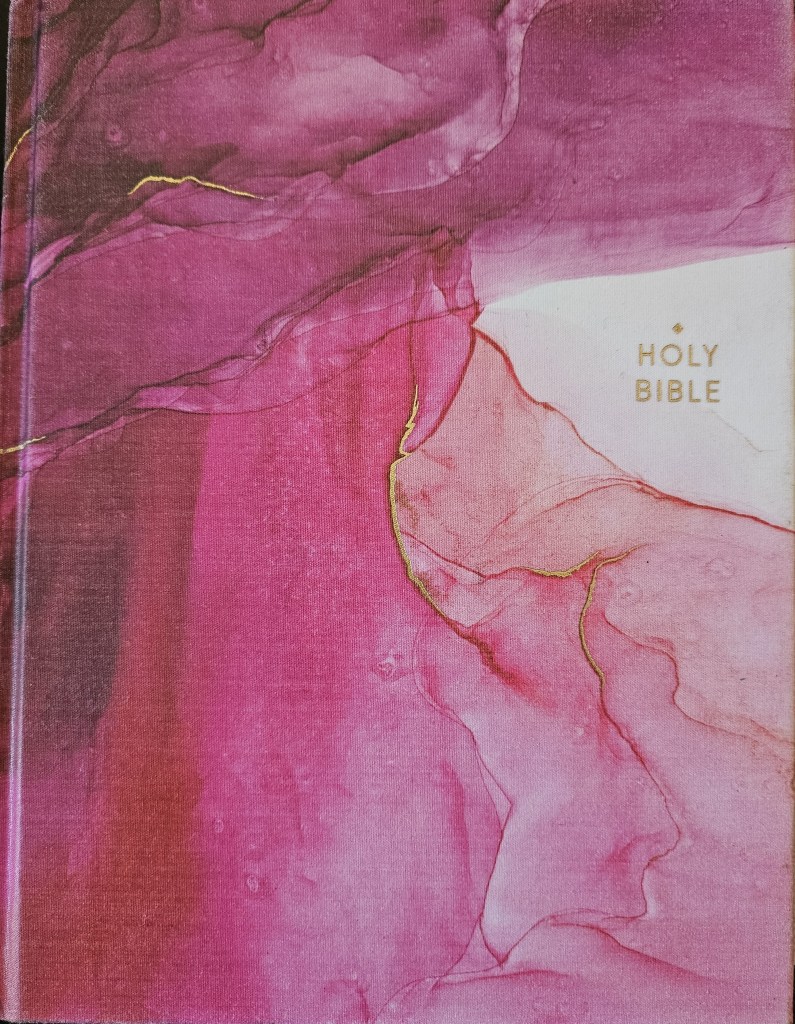
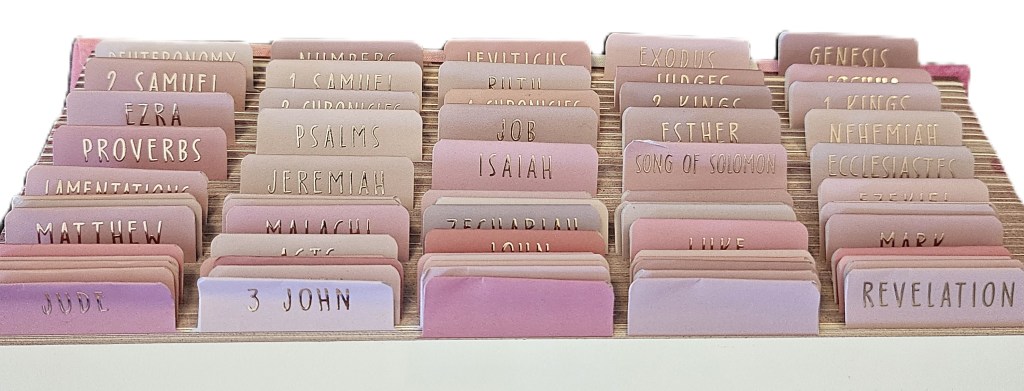
I purchased an artfully covered Bible and matching tabs which I painstakingly applied. Then I settled on the plan that I would begin on January 1. The plan is called “The Bible Recap” (TBR) and is published by founder Tara-Leigh Cobble. The approach is reading the Bible in a year in biblical chronological order. It is a delightful way to accomplish my goal.

Each day I open the app on my smart phone. The day-of-the-year and the date are highlighted in a box. The reading for the day is listed by book and chapters to be read for the day. Ahead of the list is a “devotional.” Multiple methods exist towards the same outcome. The passage may be read in a hard copy Bible or the selection can be read on the phone. Yet I discovered after a few days that I can listen and follow along. The gentleman’s voice is soothing and his pronunciation of difficult names is delightful. I don’t have to struggle through those unfamiliar sounds.

Upon completion of each day’s readings, I go back to the devotional where Tara-Leigh Cobble recaps the day’s readings. Her seven-minute review highlights important passages as she talks about the culture of the times in which the scrolls were recorded. On Wednesday’s she does a “check in” with additional information. During this review I take notes and sometimes highlight passages with my fancy new Bible markers, which are designed not to bleed through the thin pages.

Each time a new book of the Bible is begun, a video from The Bible Project does an overview of the book. These videos are fun as the author/narrator draws while explaining. I have found these invaluable in understanding the totality of the book, so much so that I am recording the day that a book is introduced so I can refer to the videos again if necessary. (See https://bibleproject.com/ )

Honestly, when I set this lofty goal, I feared I would fizzle out. But The Bible Recap is an excellent guidepost and makes reading even the challenging stories more palpable. To date I can boast I am on target!

Whether or not you are religious or Christian, if you want to explore the Bible in its totality, I highly recommend The Bible Recap. https://www.thebiblerecap.com/

*The author has read other religious and spiritual texts over the years. It is the author’s philosophy that to understand humanity it is helpful to have a broad knowledge of various teachings.

The Correspondent 

Mary Ann

Dear SSS Reader,

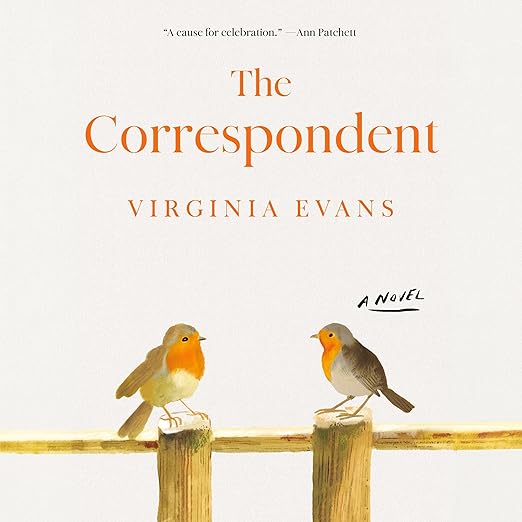
I am writing to share a unique book with you, The Correspondent by Virginia Evans.  In the last few years, there have been several books written in the letter format, so I decided I would write the review in the same manner.  Let’s see how this goes.

The Correspondent is the story of Sybil Van Antwerp.  Sybil is a woman of letters, that is, letter writing. The story progresses through her letters and emails that she writes each day.  Sybil is in her 70s, and this is another trend in some recent literature with Theo of Golden and Remarkably, Bright Creatures with Tova’s story.  All older people who share their wisdom thorough the stories.

Sybil writes her brother, her best friend, her children, her neighbor, and famous authors such as Joan Didion who do answer her. There is a continuing battle with her garden club. You can identify with Sybil and her fellow characters as they live life just like you.  She has a charming exchange with Harry, a young man who needs a friend in his corner.  We watch Harry grow up in Sybil’s letters. 

There are some romances in Sybil’s golden years, and secrets from her past that unfold with the evolution of the story.  Sybil was adopted, and her DNA opens new avenues to investigate. The Correspondent is full of surprises and is a good lesson for us all to learn.  There are surprises waiting for all of us that are just around the corner. 

As you join Sybil by reading her story through her letters, you will find a book of memorable characters and witness a life well-lived.  The Correspondent has been a selection for many book clubs and questions are provided at the end of the book.  Cynthia read it as a selection for her club.  

The Correspondent is being made into a major motion picture. Won’t that be fun!  Maybe Helen Mirren will play Sybil?  It is fun to imagine who will have the lead role.  As I read books, I often cast the movie in my head, and for the most part I never get it right.  I guess I do not have a future career as a casting director.   Do you do this as well?

I have enjoyed sharing this review with you through a letter.  I hope you have enjoyed it too.  The Correspondent is a quick read, and maybe it will encourage you to write an old friend or your grandchildren.  It is nice to get a letter in the mail.  

Fond Regards,

Mary Ann

A Witch, a Fox, and a Magical Inn

Mary Ann  

When you think of a witch, do visions of the movie Wicked come to mind or a witch from the Grimm fairytales darkening your mind’s eye?  Of course, it does.  We have been programed.  However, there are gentler witches, and the following review is about one such witch. 

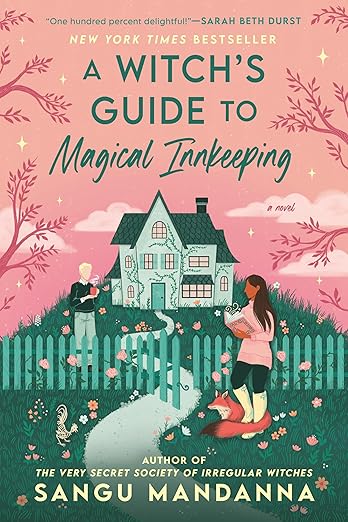
When powerful witch, Sera Swan, loses her magic, how does she gain it back?  This is the theme of A Witch’s Guide to Magical Innkeeping by Sangu Mandanna.  This book was recommended to me by a couple of my book-loving friends – always the best recommendations!  So, I wanted to share it with you.

There is The Inn aptly named Batty Hole, and it is a character on to itself.  It keeps bad guests away and causes flowers to grow in the teacups.  There is a cast of quirky characters that include Great-Auntie Jasmine, who raised Sera; a talking fox named Clemmie -I want to meet this fox; Nicolas, a knight; Matilda, a geriatric oddball; and young cousin Theo who is a budding witch.  Of course, all stories must have a villain and Magical Innkeeping is no exception.  Albert Grey of the British Guide of Sorcery and a powerful witch is Sera’s nemesis and has tried for years to understand her powers.  And if you have a bad guy, you must have an equally good guy. – somewhat like a Hallmark movie!    Hence, Luke Larsen, a handsome academically focused witch, enters the mix with his little sister, Posy. 

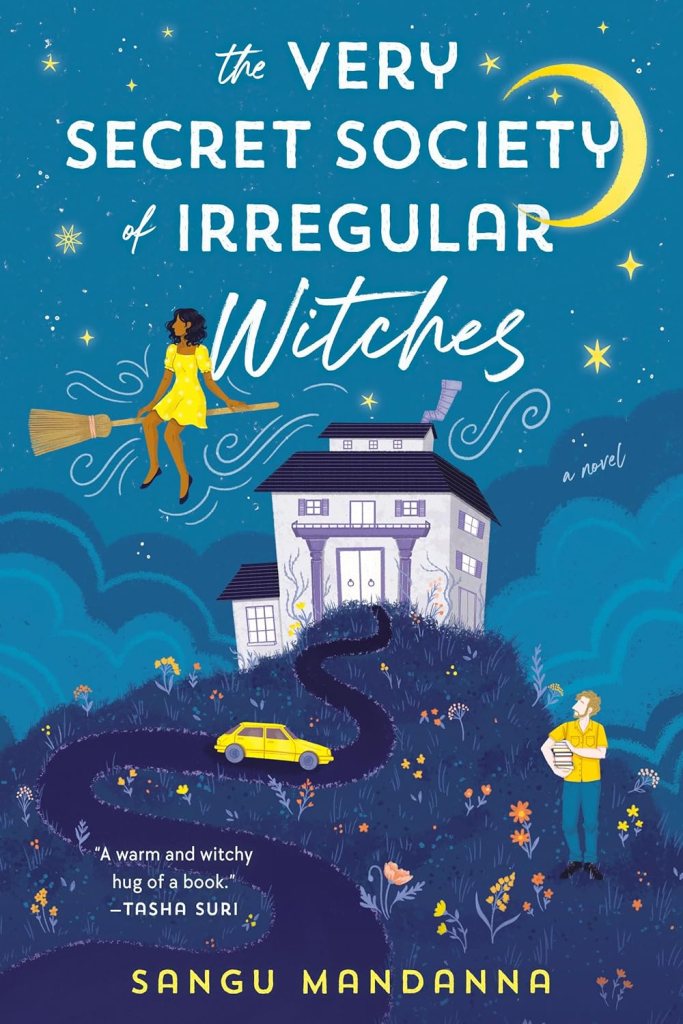
This enchanting “family” joins Sera on her quest to regain her magic.  It has it challenges as all quests do, but will it have its rewards in the end?  You will have to read to find out and what a fun read!  I just downloaded A Very Secret Society of Irregular Witches – a romantic cozy fantasy, another book by Sangu Mandanna.  I am hoping it will be again a sweet story full of whimsy and magic. However, I have been contemplating – what is an irregular witch?  I guess I will have to read and find out! 

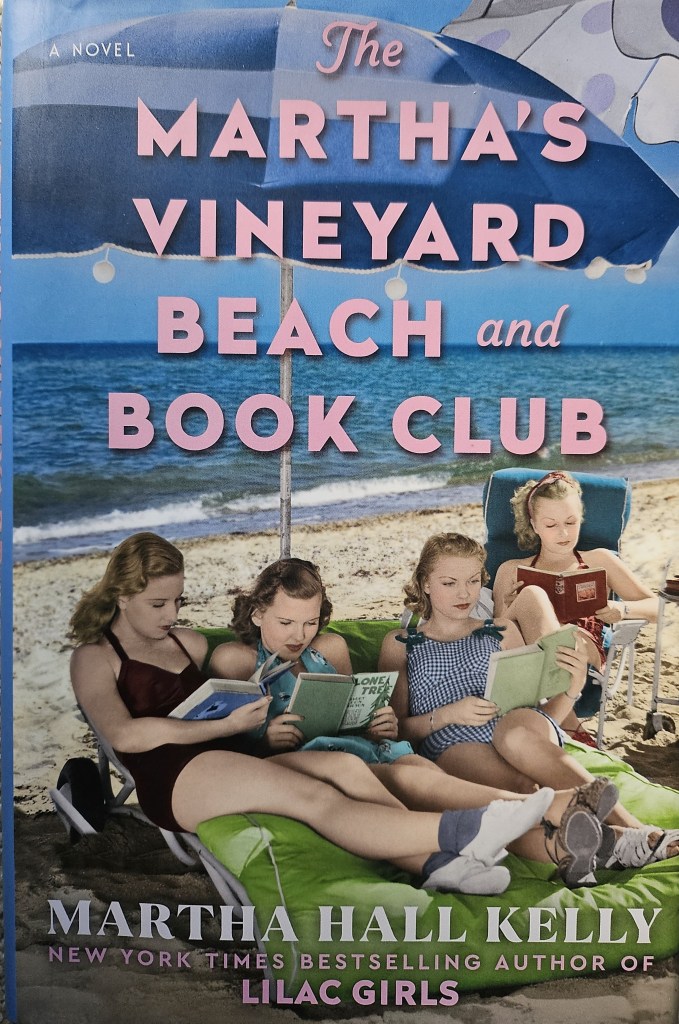
The Martha’s Vineyard Beach and Book Club

By Martha Hall Kelly

When my book club selected this book for our June discussion, I was delighted to know we would be reading a … well … “beach read.”  You know the genre. Easy, light-hearted. The kind of book you just enjoy reading without thinking too much.  I should have known it would be more than that, since Ms. Kelly also wrote *Lilac Girls*, a historical novel set in World War II.

The Martha’s Vineyard Beach and Book Club also is set in World War II.  The story centers around two sisters – Briar and Cadence Smith – who create a book club to cope with the war and with their station in life.

The girls become entangled with romance and espionage, with community and family issues, all while living on Martha’s Vineyard. Cadence is hopeful she can break free of the island and make her way in New York City. Briar, on the other hand, longs for the past and a simpler time.

Martha’s Vineyard Beach and Book Club is a story drawn from Ms. Kelly’s family history and uses little known information about Martha’s Vineyard’s part in World War II.  Themes focus on family, female friendships, the power of literature, and ways to find a sense of “normal” during wartime.

I read the book in two days; thus it *was* an easy read. I was struck by the reference to so many other books that I began to jot down the titles when I ran across them — 39 if I got them all! Most of the titles or authors I recognized, but a few sent me searching for more information. Always on the lookout for books to read, I was intrigued by the extensive list, which did not detract from the story line.

As with many books of late, the author includes a bit of modern intrigue with a little twist at the end. Although I anticipated the outcome, Kelly included an unanticipated detail, making for a happy ending.

The book was enjoyable while informative. Historical fiction is my favorite genre. I like to learn about aspects of the past that may be applied to today. It is said that history repeats itself. Hopefully we can use historical facts to inform decisions today.  If not, at least we can enjoy a good story.

Marc Levy Books

Mary Ann

I would like to introduce you to author Marc Levy.  If this were a true introduction, he would say “Bonjour.”  Marc Levy is the number one best-selling author in France of 26 books.  The 50 million copies of his books have been translated in 50 languages. He is an international literary superstar. 

His first book, If Only It Were True, was made into a Steven Spielberg movie, Just Like Heaven, with Reese Witherspoon and Mike Ruffalo.  What a way to begin a career!  

I discovered Marc Levy’s books from one of the ads that are page savers on your Kindle. I was hooked after reading the summary and since then, I have read three of his books.  The stories are just charming with lively dialogue and interesting characters.  It is a pleasure to get lost in the plots, and it is sad when the stories come to an end.  If I could read French, there would be more stories to read.  However, there are still a few US editions I have yet to read, and I look forward to checking them out. 

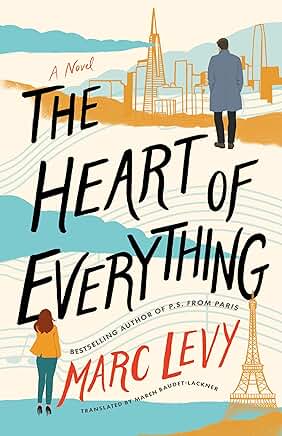
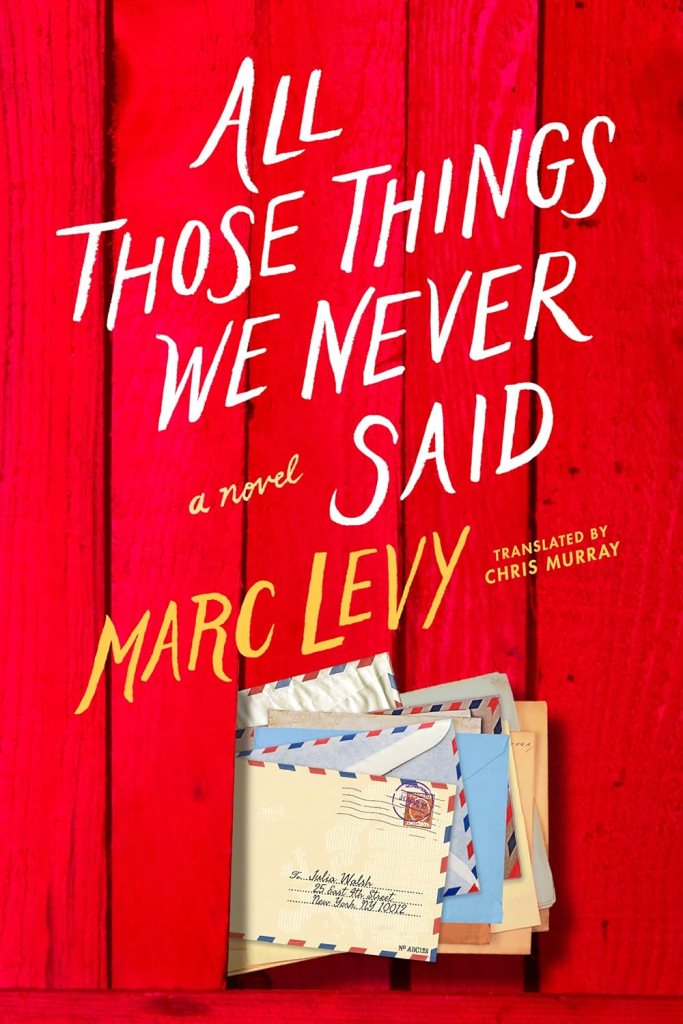
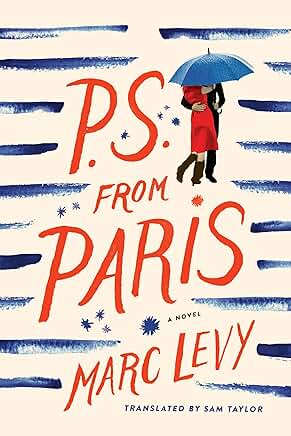
Amazon offers both English and French editions and a few in other languages as well.  So, you can get started enjoying his books.  I might suggest The Heart of Everything – a humorous story of a father-son relationship with interesting plot twists.  All Those Things We Never Said is another charming story of an estranged father and his daughter who are making up for lost time learning life lessons along the way.  P.S. From Paris is a love story set in City of Lights with actress Mia meeting writer Paul and how their relationship unfolds in a lovely ooh-la-la fashion!  These stories would all make great films – Hey, Netflix, it is time to take a look.

Lately, the world has been rather dark and gloomy.  Marc Levy’s books are wonderful ways to escapes it all with funny, interesting plots and appealing characters who will be like old friends by the last page.  That is why I wanted you to meet this clever author and discover his enchanting stories.  His newest book is, The Bookshop of Forbidden Books – Not all heroes wear capes. Some carry books.  Doesn’t that sound enticing?  The US edition will be released later in 2026. Meanwhile, check out his other books that I mentioned, and then you can introduce Mark Levy to others!  Bonne Lecture! – Good Reading! 

This Book Made Me Think of You

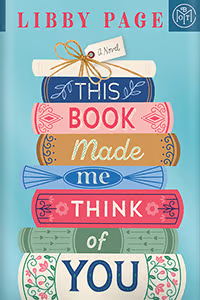
It’s been a while since I read a book that I could not wait to read. This Book Made Me Think of You by Libby Page is one of those books.  If it were a movie – and I hope it becomes one – it would be in the “chic flick” genre.  It is a “feel good” book about love, loss, resilience, and adventure.

The book appears on several of the book list feeds I receive weekly. It sounded like something my sister might enjoy, so when perusing Square Books, a small, local book store during a visit in Oxford, Mississippi, I ran across this one, I suggested she try it.  I picked up a copy, also, as we live in different states. Frankly, I needed something easy-to-read that would be entertaining and positive.

The story tells about a woman who fell deeply in love with a man, only to learn a few months after their marriage that he was dying from cancer. Previously, she was a voracious reader and an energetic, creative woman. Throughout his treatments and after his passing, she became a shell of herself.  Then, on her birthday she received a seemingly random phone call from a local book shop keeper.

That call changed the trajectory of her life going forward. She embarked on adventures she never would have imagined taking. She met people who supported her along the way. She tried new things and stepped out of her comfort zone. I wondered as I read each section whether I would be brave enough to try some of the things she did.

At the beginning of each section, the “book seller” lists four books that are indicative of the section’s theme, so to speak.  Several of the books listed I have read and others I recognize as books I want to read. Those lists provided an added bonus, in my humble opinion.

In fact, my sister and I both exclaimed reading this book inspired us!  Without giving away too much, my sister has selected this book for her May book club. She is including an activity by purchasing a set of books (all different), wrapping each of them in brown paper and tying a colorful ribbon around the package. She will offer each of her book club members to select a package. What a fun and creative idea!

As for me, I am stepping outside of my comfort zone to visit a few places on my own. I will start with some museums that I haven’t seen for a while, perusing the collections without worrying how a companion might be enjoying the time spent.

This is one book I may read again, which I rarely do. The missive reminds us that grief has its place yet the living must continue not only to live but to thrive. Are you in need of a light-hearted book to take to the beach? Would you like just a little inspiration? This Book Made Me Think of You may be just the jolt you need to cheer you up and to give you a renewed outlook on life.