Mahjong!

A couple of months ago, I introduced you to the world of mahjong, a Chinese game that was brought to America in the 1920s. The game has had not only a revival but an explosion! Learning to play American Mahjong has been a challenge.

The National Mah Jongg League created intense rules for play. As with most games, rules are essential in providing the ability to play wherever you go. The NMJL also provides a game card, which changes every year, keeping the game fresh and providing a level playing field for newbies along with more experienced players.

You may recall I had signed up for a beginners’ bootcamp. Prior to attending the lessons, I watched numerous videos, describing some of the basic rules and demonstrating how the game is played. My favorite YouTube mahjong teacher is Jessica at Southern Sparrow. She has a series of eight short videos called Mahjong 101. Her teaching style is clear and she repeats concepts, which helps to ingrain these tidbits in one’s mind. Watching the videos made learning the game rules much easier.
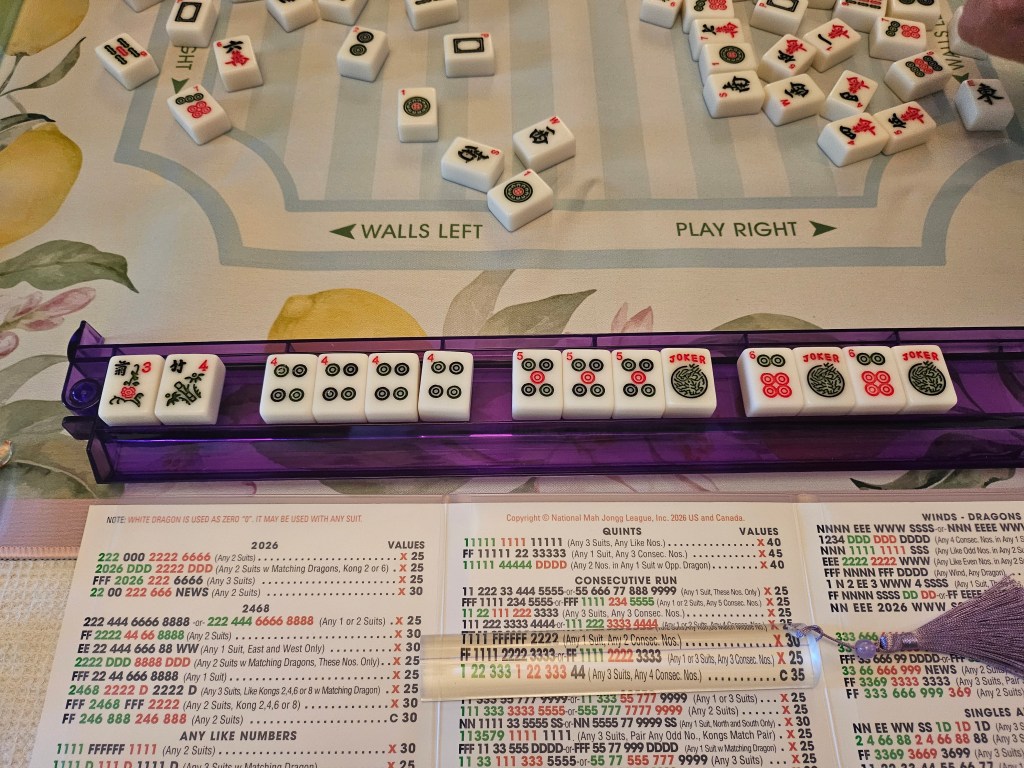
Even with the online and in-person instruction, I was a bit intimidated – especially when looking at the card. I found the very best way to learn to play was, well … to play! I found other beginners felt the same way. We began to play together once a week and slowly we are catching on. We are having fun in the process and enjoying our new friendships. Who knew when in January I set a goal to foster one new friend relationship that I would gain so many friends within a year’s time?! I feel absolutely blessed!

We were warned that once the mahjong bug bit, we would be drawn into the fold and want more tiles, mats, and racks. I have become a mahjong devotee! I just received my Halloween-themed mahjong tiles and mat. How fun!
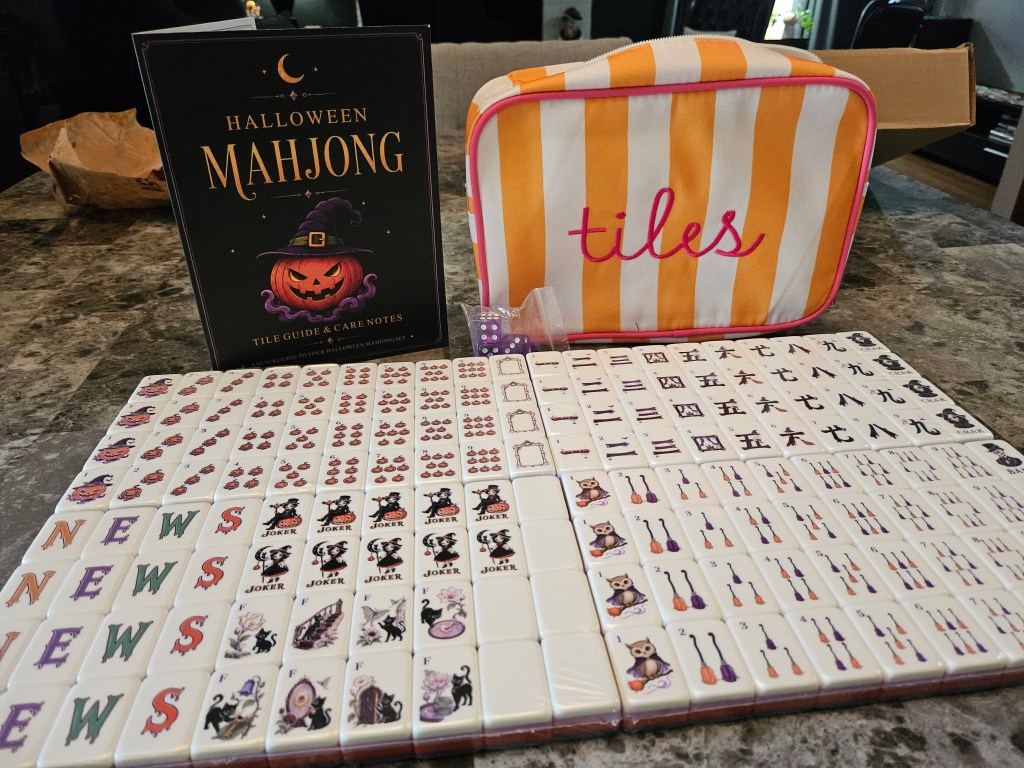
When I mentioned in my August post that I would let you know how it was going, I never dreamed I would be so enamored with the game. Many people are. I have played at one of the local mahjong parlors – The Mahj House – with people who have driven an hour or more just because they could join an open play site.
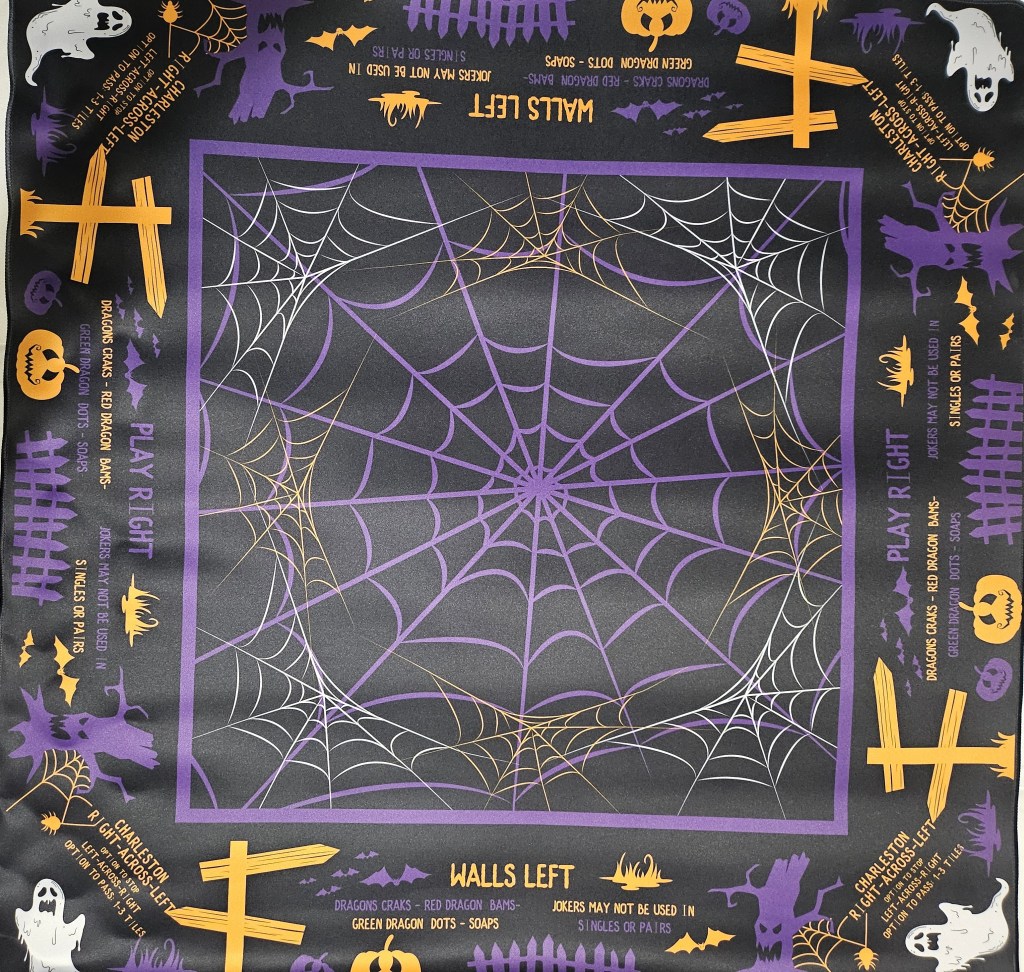
If you decide to learn, take the rules seriously. Review the card frequently. Once you have the rules top of mind and an idea of what the card is about, the rest comes easier. At that point, just play as much as you can for the first two months. Trust me, you will become hooked!

I have dubbed mahjong “the new bridge.”  Not only does it allow people to get together and play, it provides a bridge among people who previously did not know each other. Happy playing!
Keeping The Queendom Royal

Some say, “a man’s home is his castle.” Well, there is no man in this house, so I call it The Queendom. Unbelievably, it has been home sweet home for 28 years. As the second owner, you can imagine that the house is always in need of tender loving care.

I have redecorated several times and remodeled two of the bathrooms, the kitchen, family room, and deck. Still, I have been thinking it is time to upgrade again. I don’t want my house to look like the grandmother who is still living in 1960s. As I look around, all of the sudden there are many things that need to be done.

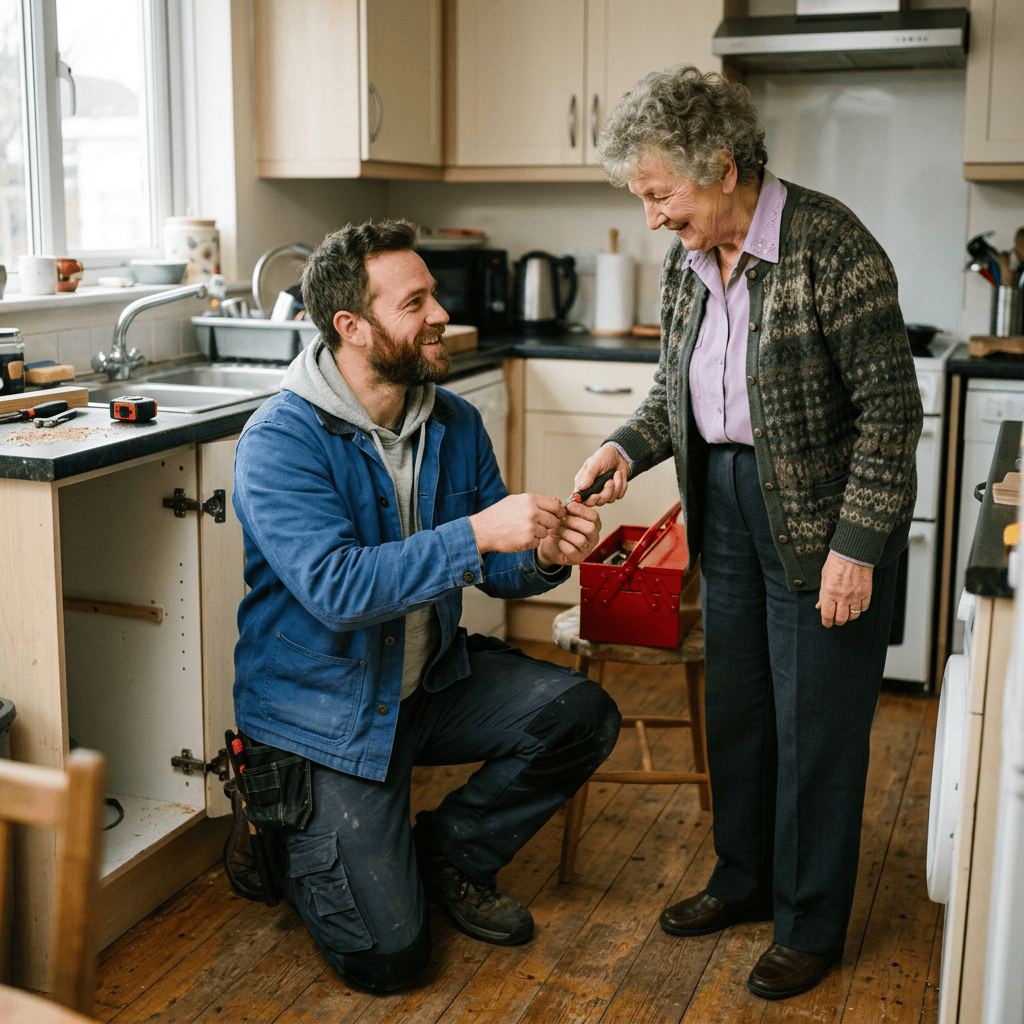
Repair professional and older woman handling a small tool in a kitchen

As Mary Ann has noted on multiple occasions, we single women often must hire someone to do the work. We are strong, independent women, yet there are just some tasks we are not skilled to complete.

Have you ever noticed that something needs repaired or upgraded; only to realize that something else has to be completed first? Setting priorities can be a challenge when one thing leads to the next. Especially when your preference is to redecorate one area, but another area is calling out for attention. Where to begin?

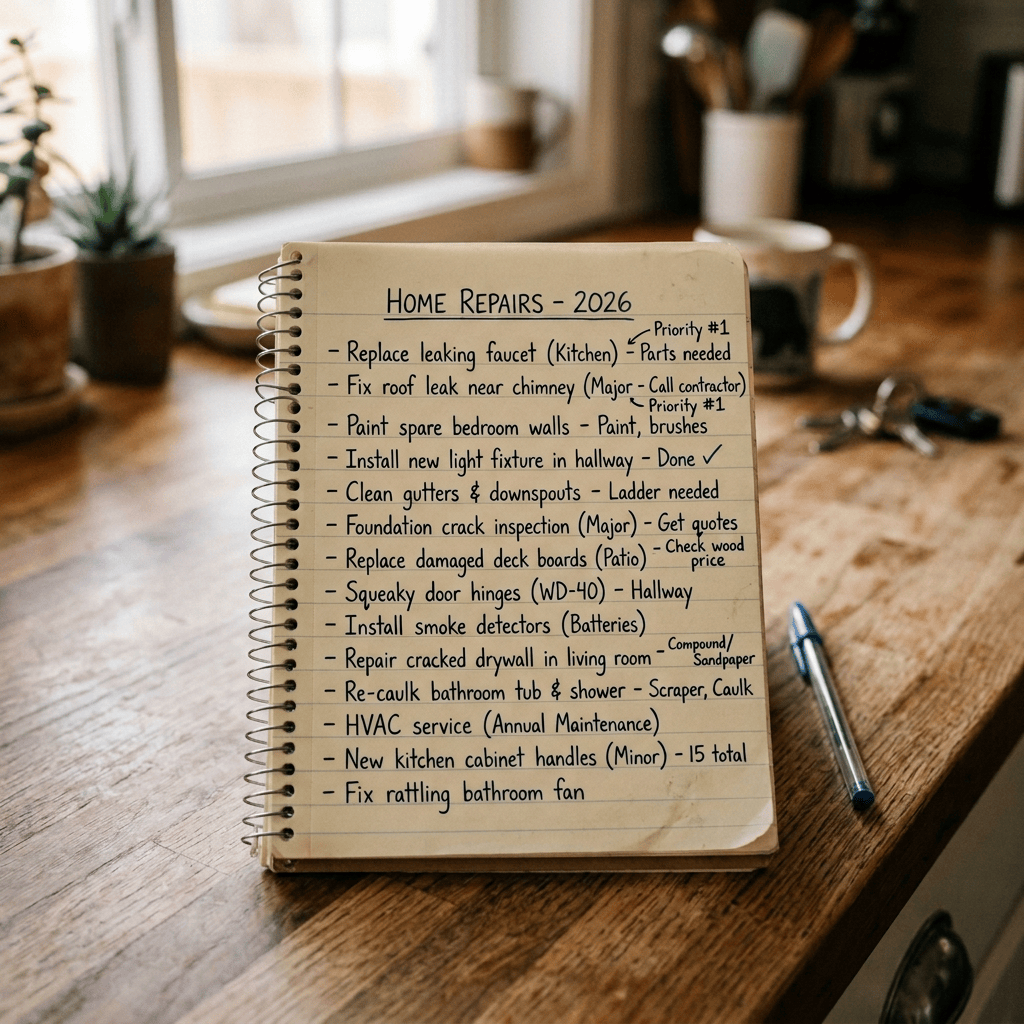
My strategy is to make a list – I’m a list-maker from way back. My daughter used to roll her eyes with all my lists – until she, too, became a list-maker. But I digress. I started a repair / remodel / redecorate list and continue to add to it. On my list, I note each project as large, medium, or small. Large will be projects that mess up the house for two or more weeks and likely cost more than $10,000. Medium projects may take a week but are less than $10,000; and small are those things that can be done within a day or two. I also make a notation if I can do part or all of the work involved.

Notebook page titled HOME REPAIRS - 2024 listing fourteen household repair tasks, priorities, materials, and one completed item

Next, I put the projects in order of priority, noting those things that have to be done before completing the project. Finally, I have begun getting estimates for the work.  Sometimes, I find the more affordable projects move up the list, simply because I can get them done quickly. Checking items off the list is quite satisfying!

Staying up-to-date with repairs and upgrades makes your home more enjoyable. I think of it in this way: if I wanted to sell the house, what would be required? Do I really want to make changes for someone else? Instead, I want to enjoy the time, effort, and money I have expended to make my home my castle.

Autumn – It’s The Best!

In my younger days, summer was the best time of year. The sun shone daily, people were out enjoying activities, and the heat warmed our bodies delightfully.

My granddaughter has never been a fan of summer. She doesn’t like the full beating sun and the heat exhausts her. Autumn is her favorite season. Frankly, it has become mine, also. Early in August, she sent me a text saying, “The best time of year is almost here!”  It made me smile. Autumn does bring a relaxed sense of excitement.

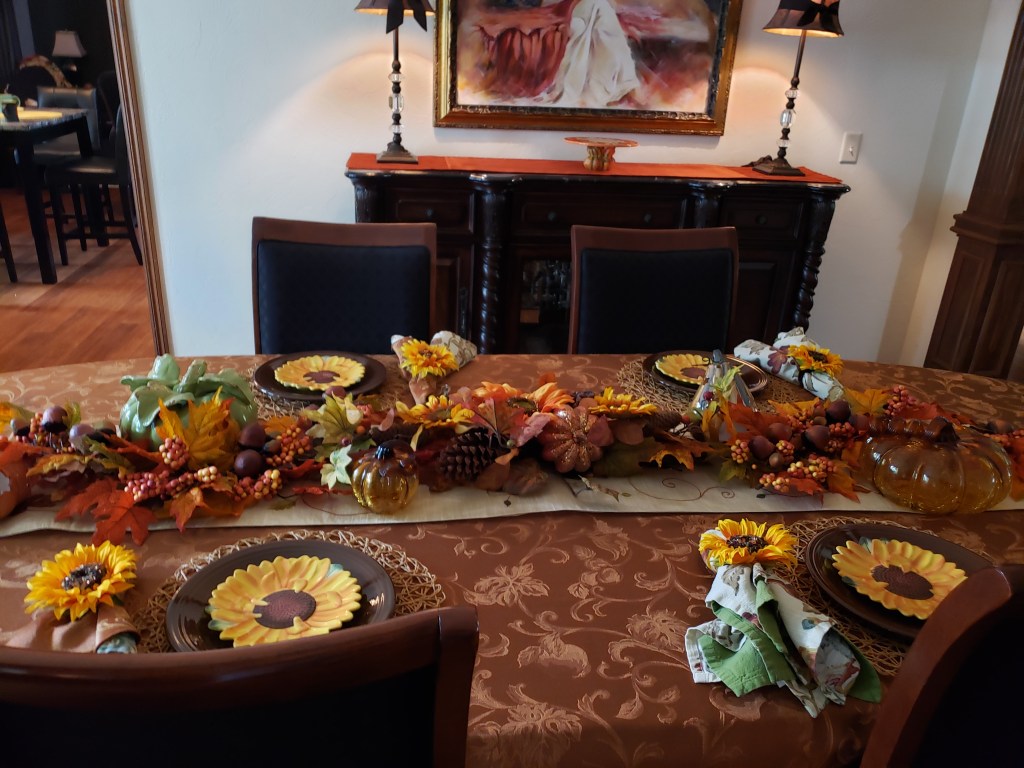
September ushers in the fall and the autumnal equinox which occurred this week signals the official beginning of the season.  Table scaping is easier for me, too. I set a fall décor down the middle and add to it or take from it each month with minimal changes.

More importantly, temperatures cool, breezes pick up, and the evenings glow. It’s a time for picking pumpkins and hayrides or sitting in the Urban Oasis with the fire pit glowing in the evening. Friends gather with welcoming smiles as we anticipate the weeks to come. The anticipation of sweater weather warms our hearts and souls.

Soon Halloween will bring little movie stars and goblins to the door where animated skeletons greet them with treats. My brother termed the season ChrisThanksOWeen as holidays arrive one after another. Then they are gone almost too quickly.

One of my favorite things about fall is the transition nature signals with foliage changing from greens into yellows, oranges, and reds gently swaying in the breeze until branches release their coats. Several years ago, I replaced a fallen cottonwood with a three-trunk autumn breeze maple. I am amazed at how quickly the little trees have become a monument that greets passersby with the color of the seasons.

Tree with orange and red autumn leaves shedding leaves on a walking path

Autumn brings seasonal foods – pumpkin spice everything is everywhere! One year I hosted an all-pumpkin weekend for my daughter and a friend’s son. That created a tradition of looking for pumpkin-inspired dishes throughout the month of October. A funny game turned into a family challenge. We still laugh about it as we cuddle around a fire with chai tea and apple cider.

I ran across “I Love Autumn” by the Lyrical Lanterns on YouTube. It pretty much sums up the feeling of home and family love. “Leaves remind us life’s still fine. This is the season I love to hold.” 

Happy Autumn!

Mommy’s Girl

My daughter turned 50 at the end of last year. She is an executive in a school district that provides vocational and technical education to secondary students and post-secondary adults. She has been married 25 years and has two children.  All this to say is that she is an independent, professional adult who has a successful career and a wonderful personal life.

Upon becoming a wife and mother many years ago, she “moved on.” Prior to that time, we had a very close relationship. But with marriage came other obligations and interests. Seemingly, she no longer needed her mom. Honestly, I felt somewhat abandoned, having been her primary source of interaction at home for many years.  I graciously bowed out as she spent more time with her husband’s family than with me and my extended family. I never wanted to be “that mother” – the one who inserts herself into her children’s lives without being invited.

Don’t get me wrong. I never doubted that she loved me. We managed to spend some time together during holidays. She and I would have a shopping day in both spring and fall – a day we would take off work and spend together. I cherished those few and far between times when I had her to myself for a couple of hours.

Recently, she confided that she was having some health issues. She called when the doctor told her what was going on and that she would need surgery. She said she just needed to hear her momma’s voice. While I knew it was scary, I also knew she would be fine.  I just knew.

Hospitalized woman smiling as an older woman holds her hand

We talked every day for the next two weeks prior to the actual surgery. I met her and her husband at the hospital early the day of the surgery and spent the day with them. For the following two weeks, I was with her every day. I stayed while her husband was at work, cleaned the house, helped with the dogs, made dinners, and quietly sat as she slept. I brought her water and ice packs, administered her medicine, and rubbed her feet. As she regained strength I walked with her around the house.

In short, I was once again, caring for my little girl. My beautiful, grown up daughter.

What a joy to be able to spend this time with her. Even though she was not feeling well at first, as she improved we had plenty of time to talk. We reconnected. We laughed. We cried. We watched mindless television and fantasy movies.

Both of us expressed our gratitude at our ability to share in this experience. As she returns to work I imagine life will return to normal – her with her responsibilities and obligations and me with my life. Yet, my heart will be fuller knowing that when my daughter is in need, she once again becomes mommy’s girl.

How to Read Poetry Without Feeling Lost

My book club has selected a book of poems for our September meeting. The poems were written several years ago by the mother of one of our members. One of the ladies said she would read it but that she did not care for poetry.

Poetry can feel intimidating at first. The lines are short, the language is compressed, and sometimes the meaning seems to hide just out of reach. Reading poetry is not about cracking a secret code on the first try. It is about slowing down, noticing what the poem is doing, and letting sound, image, emotion, and meaning unfold together.

The good news is that there is no single “right” way to read a poem. A useful approach is to read slowly, reread, listen to the language aloud, and pay attention to patterns in words, images, rhythm, and form. These habits turn poetry from something mysterious into something you can enter, revisit, and enjoy.

In an effort to better understand a poem, which when well written does not necessarily rhyme and is often somewhat obscure, I will share a few tips.

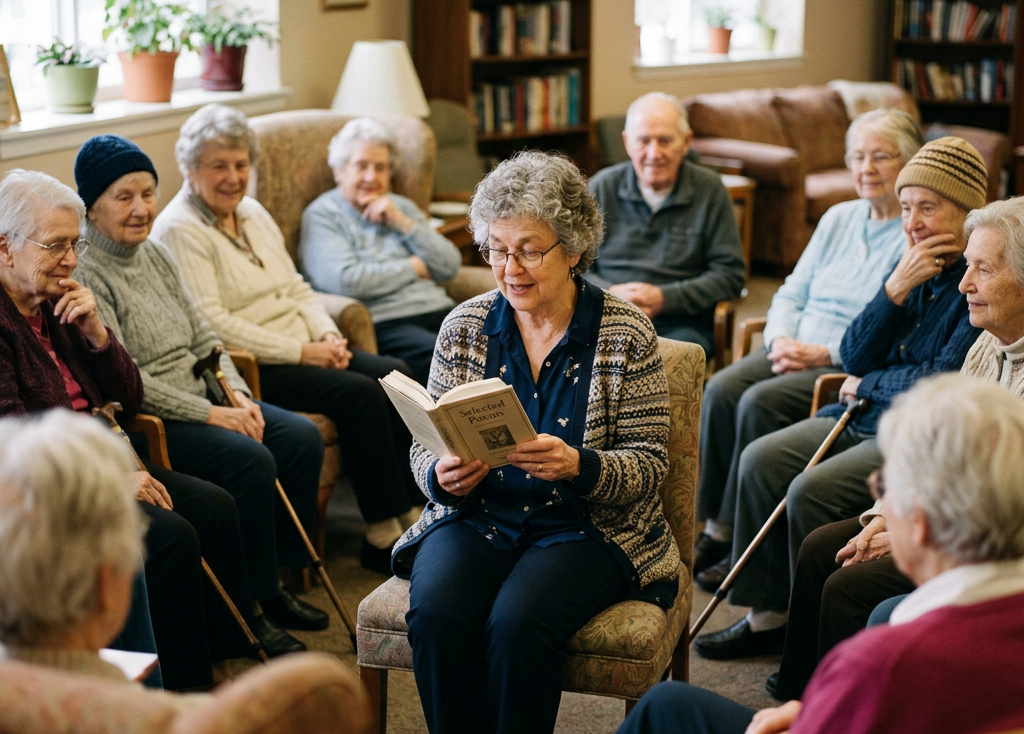
Older woman reading aloud to seated seniors in a community room

1. Read the Poem Once for the Experience

On your first reading, resist the urge to analyze every line. Just take in the poem. Notice the mood, the images that stand out, and any words or phrases that catch your attention. If you feel confused, that is normal. A first reading is an introduction, not a final interpretation.

2. Read It Aloud

Poems often are made of sound as much as meaning. Reading aloud helps you hear rhythm, repetition, rhyme, silence, and emphasis. Even poems that do not rhyme have music in them. Listen for clues where the poem speeds up, slows down, or asks you to pause.

3. Look at the Speaker and Situation

Ask a few simple questions: Who seems to be speaking? Who might they be speaking to? What is happening in the poem, if anything? The speaker is not always the poet, and the poem may not tell a complete story. Still, identifying a voice or situation gives you a place to stand.

4. Notice Images, Patterns, and Surprises

Poems often build meaning through repetition and contrast. Watch for repeated words, related images, shifts in tone, unusual comparisons, and moments that feel surprising. If a poem keeps returning to light, water, doors, seasons, or a particular sound, those patterns are probably doing important work.

5. Pay Attention to Form

Form is the poem’s shape and structure: line breaks, stanza breaks, white space, punctuation, rhyme, meter, and repeated phrases. Ask why the poet arranged the poem this way. A short line may create emphasis. A sudden break may create tension. A repeated phrase may act like an echo, deepening meaning each time it appears.

6. Let Meaning Arrive Gradually

After several readings, try putting the poem into your own words. What is it thinking about? What feeling does it leave behind? What question does it raise? Your interpretation should connect back to the poem’s language, but it does not have to explain everything. Some poems invite uncertainty, and that uncertainty can be part of their power.

A Simple Poetry Reading Checklist

  • Read the poem slowly at least twice.
  • Read it aloud to hear its music.
  • Circle or note words, images, and lines that stand out.
  • Ask who is speaking and what the situation might be.
  • Look for repetition, contrast, and shifts in tone.
  • Notice line breaks, stanza breaks, punctuation, and white space.
  • Write one sentence about what the poem seems to be doing.

Or … just read the poem for pleasure without trying to unpack or understand it. Reading poetry is less like solving a riddle and more like listening closely to a voice. You may not understand everything right away, and you do not need to. Start with what you notice, trust your response, and return to the poem. Each rereading can open a new door through which you may discover something wonderful or new.

A poem shares a thought

From a certain point in time

The author’s musings shared

And often as a rhyme.

At times the stanzas waiver

The lines seem out of touch

So I just feel the rhythm

And it doesn’t hurt so much.

~cynthia

When to Wear White

I was reared to believe that one only wore white – especially white shoes – between Memorial Day and Labor Day. I adhered strictly to this fashion rule well into my professional career. Even when wearing “winter white” suits, I would don a darker blouse or scarf and navy or black shoes. Looking back on those times, it seems a bit ridiculous now. Where did we get the idea that wearing white was reserved for summer?

Wearing white in the summer and packing it away after Labor Day seems to have been a fashion rule designed by early 20th Century elite. The nouveau riche in New York was attempting to join the “old money” crowd who were established as the social elite. This group established fashion rules to separate themselves from the up and coming.

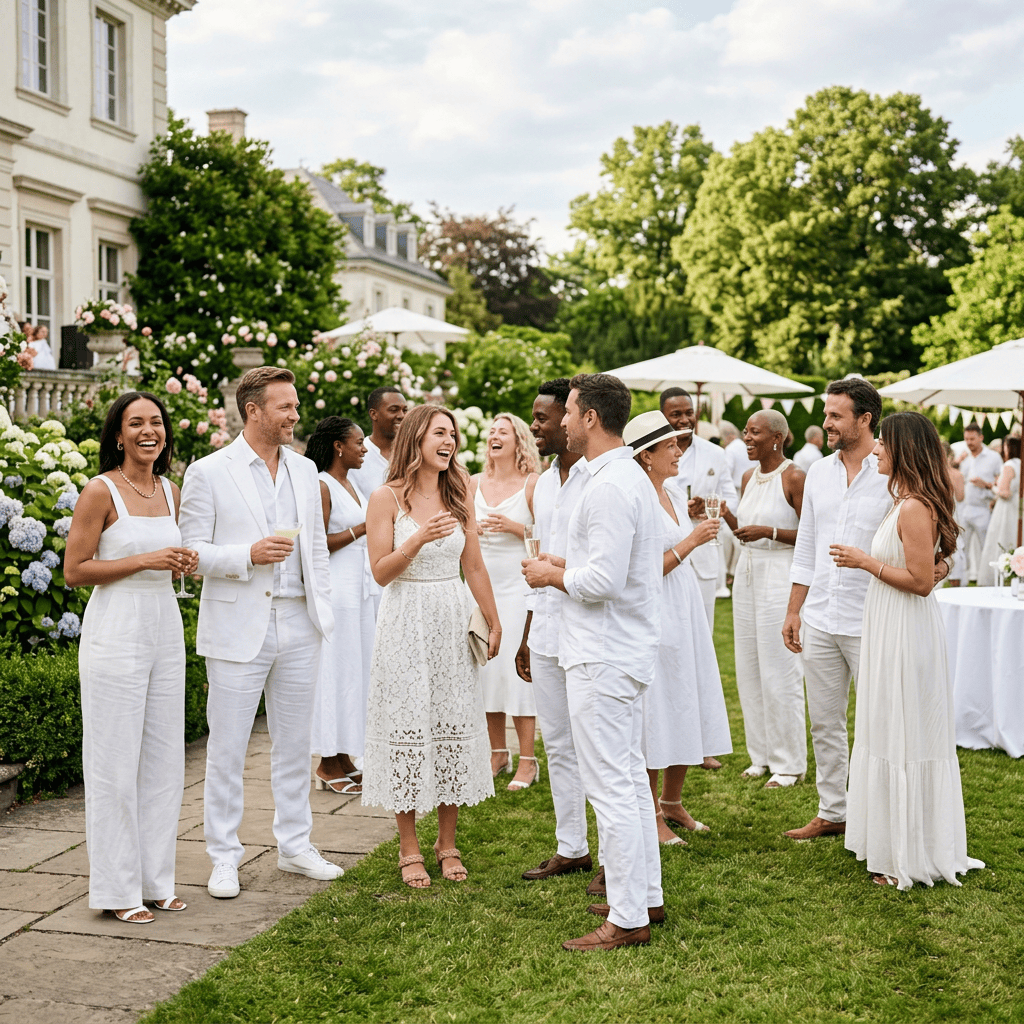
Group of people dressed in white talking and laughing at an outdoor garden party

Of course, a more practical reason existed. Many from high society summered in Newport or Southampton, leaving behind the dirty streets of New York City. Vacation attire was cooler, consisting of linen suits, breezy dresses, and tennis attire. These lighter clothing articles were packed away until Memorial Day to keep them clean and fresh.

After Labor Day and returning to New York, white clothing was not practical as walking near dirt-laden streets containing horse excrement and stinky garbage would quickly soil clothing, staining the lighter fabrics.

Fashion magazines reinforced the seasonal changes by promoting darker colors for fall. This prompted etiquette experts to declare white a summer color; darker colors were for fall and winter.  Only a few fashion icons challenged the rules. Coco Chanel, Audrey Hepburn, and Tom Wolfe all chose to wear white year around.

Thankfully, today the rule is considered outdated. Even those fashion magazines that touted the fashion rules have agreed that weight of the fabric is more important in selecting seasonal clothing. My guess that rule, too, will fall by the wayside, considering we now live and work in temperature-controlled environments.

While I agree with current fashion thought, I still find a crisp, white, capri feels undeniably summer-ish. Still, I am happy to be free of the fashion rules of old.

Getting Things Done [Not]

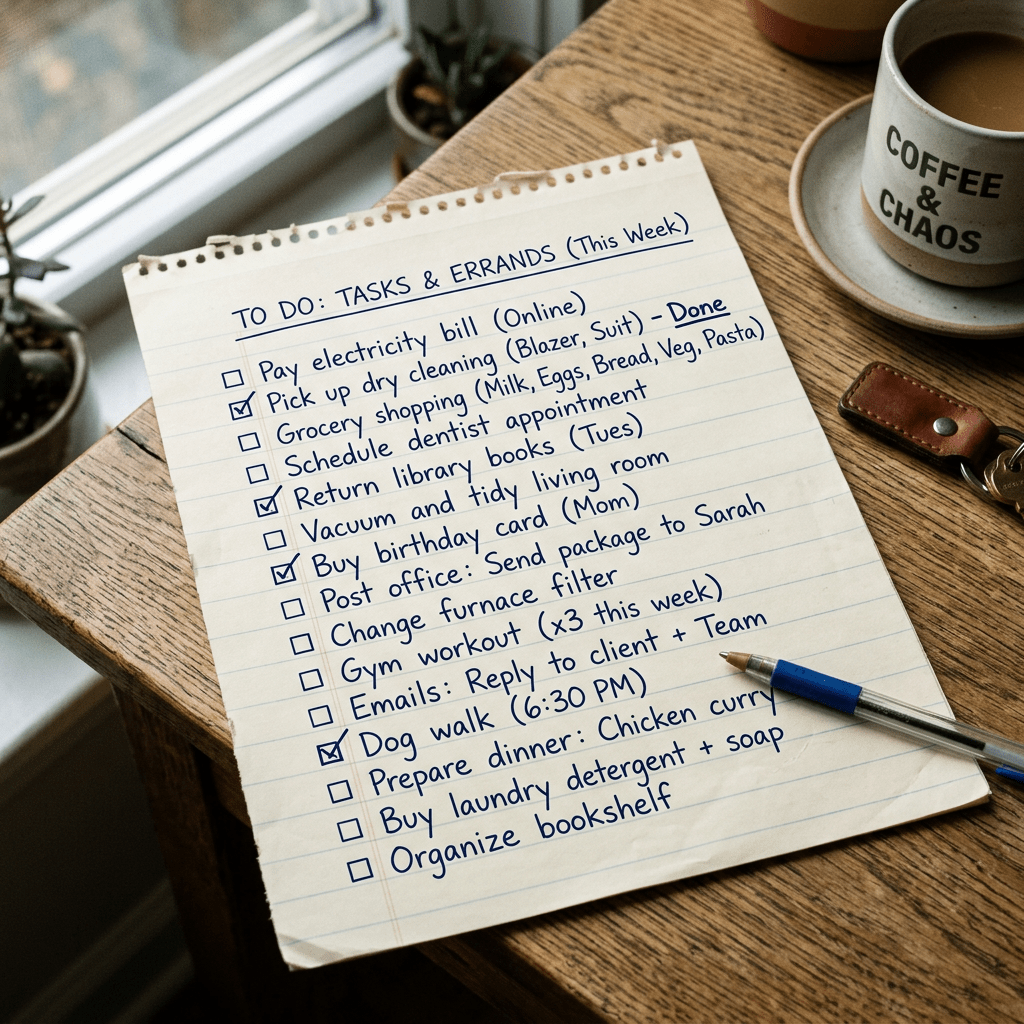
On most days I am driven to get things done. At least I was until recently. In the evening I make a list of things I want to accomplish the next day so that once I am up and dressed, I am ready to take on the world – the retirement world, that is!

Handwritten weekly to-do list on lined paper with some tasks checked off and a coffee cup on a wooden table

But lately I just feel tired. I’m guilty of staying up too late at night, into the wee hours of the morning. Then, getting moving in the morning is more difficult. I drag through breakfast and morning chores. By the time I sit down to read, I am ready to take a little snooze. I’ve learned I can lie back in the little recliner in my office, close my eyes, and let my body relax. I may power nap for fifteen or twenty minutes but over the past few weeks those minutes have turned into an hour.

At first, I felt guilty for not completing the tasks before me. But a few days ago, I realized, “Isn’t this what retirement is all about?”  After years of working twelve-hour days, have I not earned the right to rest when I want to? I have accepted, logically, that my day is mine. Except when I have agreed to meet a friend or attend a meeting, I am in charge of me. No one is checking to see if there are a few dishes in the sink or if the drawers are organized.

Overall, I am healthy. I eat fruits, vegetables, grains, and proteins. I exercise throughout the day. So why am I so tired? Oh. Now I remember. I am seventy-something and have no real obligations. Is part of lacking energy really a lack of motivation? If I am being honest with myself, my days are not as full as they once were.

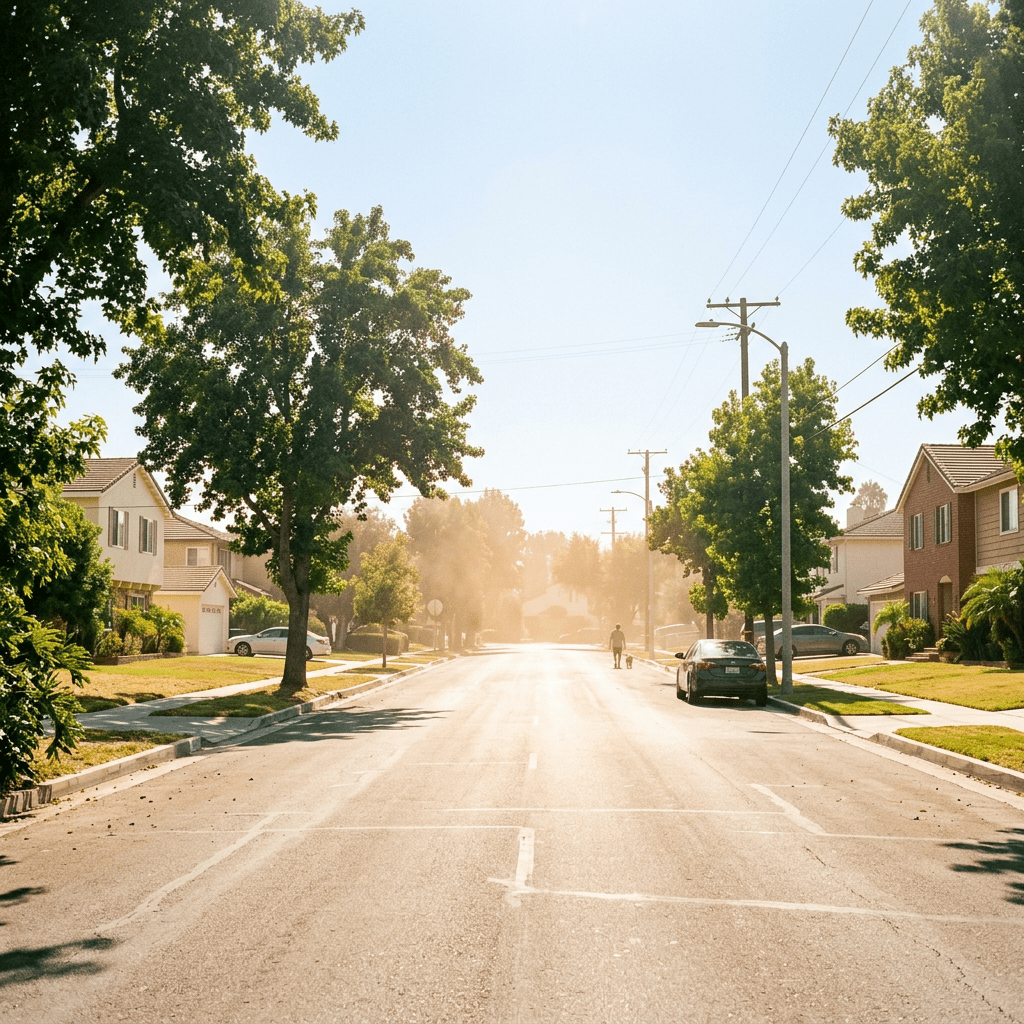
Suburban street with houses, trees, parked cars, and a person walking a dog
.

Another factor this summer is the incredible heat dome that hovers over this part of the country. Temperatures over 100 degrees, bright sunny days, and heat indexes even higher keep this former sun goddess inside. I water the flowers at 9:00 pm when temperatures drop to 90 in the impending dark of night.

Reflecting on my days and nights with concern, I finally came to the realization that not getting a list of things done every day is okay. Friends tell me I do more in a day than they accomplish in a week. Not attacking a long list of unimportant tasks is, well, not important. I let go of the need to be busy every minute and now I can savor the time I sit and read …. And should I doze off for a bit, that is fine, too. Retirement is a time to slow down and enjoy life; not worry about checking off items from the task list.

Playing the Sparrow

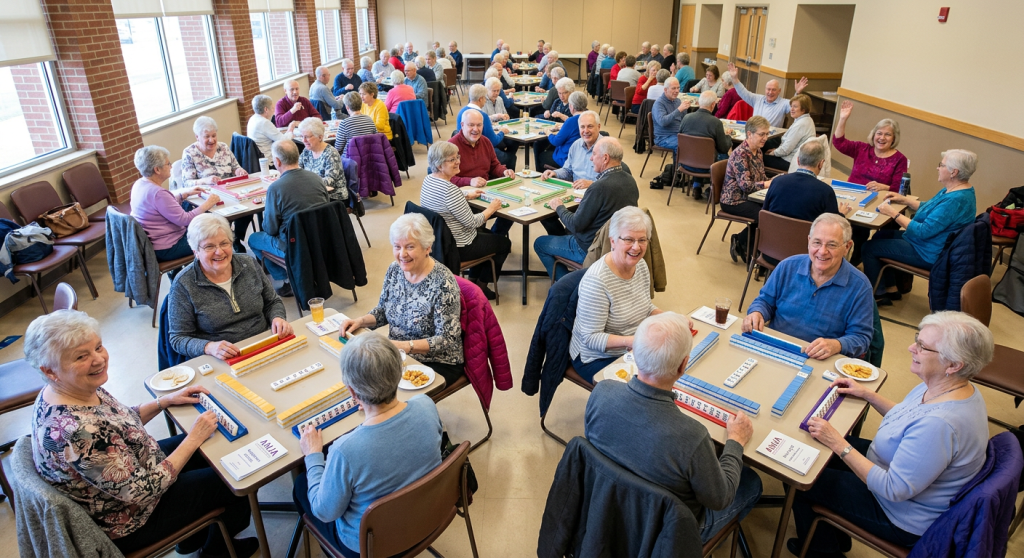
Picture this. As you walk through the door you observe several tables at each of which four people are sitting with smiles on their faces. Tiles are clicking, conversation is flowing, and social media is all but forgotten. What is going on?! Ah. These individuals are finding community by playing a game – mahjong.

Seniors gathered around tables playing Mahjong game in a community center
A lively group of seniors enjoys playing Mahjong in a bright community room

What is it about mahjong that draws so many people – almost devotees – to the game? I had heard about mahjong several years ago and occasionally thought I would like to discover more. Recently, I’ve come to the conclusion that I want to join the throng. Yet, I know nothing about the rules, the plan, or how to get started.  Thus, I went on a search to find out more.

Mahjong’s current rise is not just nostalgia or novelty — it reflects a broader desire for tactile, social, screens-off activities that combine strategy, tradition, and community. Similar to a card game, mahjong uses tiles that are designed in suits with additional tiles to add dimension to the play. Obviously, the goal is to win a hand, but to get there takes strategically selecting and discarding tiles to yield a set of tiles based on a formula prescribed on a card from the National Mah Jongg League. At least for American Mahjong.

Mahjong has been played in multiple versions including Chinese, Riichi, Hong Kong, Japanese, Taiwanese, and Filipino traditions before coming to America in the 1920s. It is believed there are currently as many as 40 versions. As the communities and rules vary, so do the spellings – mah jong, mah-jongg, and mahjong.

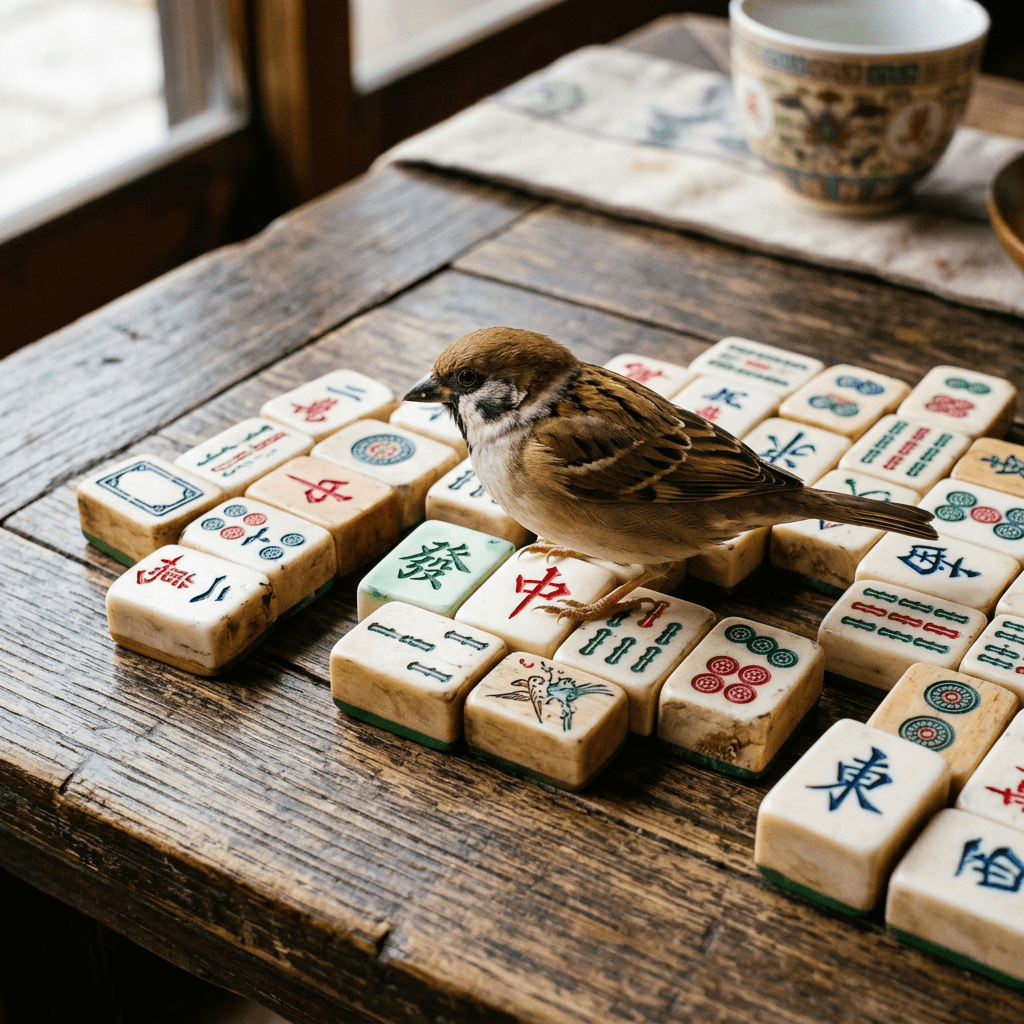
Sparrow standing on mahjong tiles arranged on a rustic wooden table.
A sparrow stands on a set of mahjong tiles on a wooden table near a window.

Mahjong derives its name from Chinese words translated as sparrow, due to the clicking sound made when playing with the tiles. It is easy to understand once you walk into a mahjong house – or Mahj House, as many are called.

Admittedly, as a novice I am intimidated. Yet I see so many people jumping on the bandwagon that I would be remiss if I didn’t join the parade. I have found a few friends who also want to learn. We are signing up for a Mahjong Boot Camp. Yes, there really is such a thing!

For those who want to immerse themselves, there are custom-made tile sets, mats, game-night accessories, jewelry, and more. The mahjong craze does not seem to be a phase.

In our post-pandemic world, people long for face-to-face connection. Playing mahjong allows you to enter a mahj house and join a table, even if you know no one there. Fast friends are made as tiles are passed. It becomes almost an obsession for some people.

Book clubs, Bible study groups, mother’s day out, senior centers, and others are thrilled to have someone teach them to play. I am told that although it seems intimidating at first, once you start playing and the rhythm clicks – pardon the pun – you will be hooked.  I can’t wait! I will let you know how it goes! Meanwhile, you might want to try a group in your own area. You will challenge your brain, have fun, and make new friends.

Gathering Wellness Information

How many times have you gone to the doctor, already assured of the cause of what is ailing you? If you are like me, you enjoy doing preliminary research. You feel assured when you believe you are informed.

In the past we relied solely on the doctor for medical advice. Yet now, with so much information available to us, the doctor has become the one who validates what we already know. The doctor has the authority to prescribe medication or treatment. If you ask medical professionals, most will say that internet searches are their worst enemies as patients come into their offices, already having answers.

Elderly woman speaking to a stressed male doctor in NHS scrubs in a medical office

I have personally experienced this myself.  I went for a consultation before agreeing to an invasive medication, armed with a long list of questions.  The doctor was so exasperated with my questions that he actually walked out on me, almost slamming the door behind him.  In my defense, my questions were based on reading the results of a clinical trial that were published by the company that sold the treatment. I felt the doctor had “god syndrome” – that is, he believed a patient should take his word as gospel and not question his authority. Of course, I wasn’t questioning his authority; just his experience in administering the medication. Oh, well.

All this to say, be discerning when turning to YouTube, websites, and social media for answers. Please understand, I am not blaming the social media platforms. Online health information can be helpful. It can also be misleading or even incorrect. Ultimately, talk to your doctor and hope s/he has the patience to answer your questions.

Following are some thoughts about searching for and using online health information.

Start With a Healthy Level of Caution

Remember that online medical content can be useful for learning basic information, but it should not replace individualized medical advice. Be especially careful with advice about diagnosis, medication changes, supplements, diets, procedures, or stopping prescribed treatment. Each person has a unique chemistry, lifestyle, and history. Work with your medical professionals to discern the best treatment for you as an individual.  Assume that any dramatic claims need verification before acting on them.

Check Who Is Providing the Advice

Video call between a man and a female AI health specialist in white coat

This is a big one! Look for the author’s name, credentials, professional role, and organization. Just this week I watched two online videos by AI doctors! While the information shared may have come from reliable sources, AI’s ability to filter those sources is still in its infancy.  Opt instead, for sources connected to government health agencies, major medical centers, universities, professional medical organizations, or established nonprofit health organizations. Be especially cautious if the content creator does not clearly identify her/his qualifications or uses vague labels such as “health expert,” “wellness coach,” or “researcher” without verifiable details.

Evaluate the Purpose of the Content

Ask whether the goal is to inform, sell, persuade, entertain, or build an audience.  Watch for sponsored products, affiliate links, paid memberships, supplement sales, coaching programs, or “exclusive” cures.  Be careful when fear, urgency, outrage, or miracle language is used to keep your attention.

Look for Evidence, Not Just Opinions

Reliable medical information should provide the source indicating from where the evidence comes.  Look for references to peer-reviewed research, clinical guidelines, medical organizations, or expert review.  Watch out for personal stories presented as proof, limited trials and studies, or claims that “doctors do not want you to know this.”  Check whether the information is current, because medical guidance can change as new evidence becomes available. How often have you seen information that is one, five, even twenty years old? Once information is posted online, it never goes away!

Searching for answers is a way of life these days. A wealth of good information is in cyberspace awaiting our perusal. It is great to have valuable information at our fingertips. The important thing is to be mindful, cautious, and discerning.  Then, search to your heart’s content!

Mona’s Eyes

The Barnes and Noble book of the year by Thomas Schessler has had mixed reviews, most of which are negative. I feel that to be a sad commentary on today’s readers. I found this book to be an excellent source of learning with a sweet story propping up the lessons.

Schessler provides several essential elements which underscore the artistic adventures of Dade’ and Mona and allow insight into the challenges facing a little girl.

Preserving Memory. Upon observing the trivial objects in the ten-year-old’s room, the grandfather embarks on a quest to provide her with a mental repository of art, imagination and wonder to draw upon should her eyesight fail permanently.

Life Lessons.  Each selection of art is explained not only in terms of the painter/sculptor but includes emotional or philosophical or historical context. Dade’ provides these lessons to assist Mona in navigating the harsh realities of life; lessons that her parents are not equipped to share with her.

Emotional Growth. The grandfather’s treatise regarding each piece of art is, in fact, a form of therapy. Giving Mona perspective on the world and drawing out her own inner strength helps Mona overcome the terror of darkness and blindness.

Focus. Mona is charged by her grandfather to look at the art each week – to really see what is in the painting/sculpture. At first, she gets bored after only a few minutes. Yet as time goes on, she becomes enthralled with the elements in each piece. Learning to focus her attention on the works of art she becomes curious about the meaning of each piece. She wonders about the artist and why s/he expressed her/himself in this way. She learns to take time to observe rather than to rush through an assignment, thus enjoying and better understanding what is before her.

Create a Structure. Mona knows that every Wednesday after school she will spend time with her Dade’ viewing and discussing a work of art. She looks forward to the visits, even though they may at times be tedious. Having structure helps us navigate our days. And enjoying one day per week, knowing what our task will be gives us a sense of purpose.

While many of the reviews find the book boring as each chapter is basically a review of works of art (see https://monaseyesgallery.com ) ,I find it intellectually rich while easily accessible. Critics focus on the “unrealistic” conversations and understanding of a ten-year-old.  Have they met many ten-year-olds these days? Many are quite capable of understanding concepts that some of us may not have contemplated in years gone by. Young people are exposed to all manners of knowledge and information. Teaching young people to discern what is real would be a tribute to any grandparent.

While this book is a novel, I would describe it more as a lesson in art history with a side story about a young lady who is navigating the sometimes-harsh realities of life. Schessler has provided us with wonderful, sometimes intense information in an easy-to-read format. I, for one, appreciate the opportunity to revisit masters’ works of art in a delightful and rich compilation. Each short chapter can be savored. If you are looking for a light, summer read, this may not be your best choice. Yet if you want to learn about art from a new and engaging perspective, give Mona’s Eyes a look.