An Alternate Look at Wellness Goals

In a few short days old father time will fade out and the new year baby will take center stage. This is the time when we begin to regret the rich foods and extra drinks we have enjoyed during Chris-Thanks-O’Ween. We resolve to exercise more, eat healthier food, and cut back on all the goodies that are now evident on our bodies.  As the saying goes, “a moment on the lips; a lifetime on the hips.”

Overall I am a pretty healthy eater by choice. The semi-annual blood tests remind me I also need to be healthier by recommendation – of the doctor! I find that if I move during the day, avoiding the sedentary lifestyle that comes with colder, darker days, I do feel better.  I’m not alone. Many people are thinking about lifestyle goals with enthusiasm as the calendar reminds us of another rotation around the sun.

This year let’s look at wellness from a broader perspective. The term wellness has been around for quite some time and is often paired with the word health – as in Health and Wellness. Wellness refers to so much more than exercise and diet, although those two factors affect overall wellness much more than we give them credit.

Wellness is the active pursuit of lifestyle choices that leads to a state of good health, holistically. Rather than looking only at those things that cause illness, it considers the integration of mind, body, and spirit.

Early in this millennia, I developed a model for balanced living. Honestly, it was my interpretation of the Hindu philosophy of chakras, which at that time was relegated to the “woo woo”. Over the past twenty-five years, the system has been mainstreamed by several entities, embracing the reality of wholeness. In a nutshell, wellness (or life balance) can be achieved by awareness of physical, emotional, occupational, social, creative, intellectual, and spiritual aspects of your life.

Physical, obviously, has to do with nutrition, exercise, and even sleep patterns.

Emotional focuses on managing feelings, building resilience, feeling connected.

Occupational is finding satisfaction in work, volunteering, or tasks that give you a sense of self.

Social is fostering positive relationships, finding community, and eliminating unhealthy interactions.

Creative has to do with self-expression which can be manifested in a number of ways. Not just artistically or in singing, playing an instrument, or painting, but also in the way we dress, how we carry ourselves, our approach to celebrating, and so on.

Intellectual refers to mental stimulation and may include reading, writing, puzzles, etc.

Spiritual relates to identifying your purpose, your values, and finding meaning in your life.

Each of these facets in your life are components of wellness. Together, they comprise who you are; how you see yourself; and how others view you. Finding wellness, as a whole person, can bring happiness and improved health.

I wish for you, our dear readers, a healthy, happy, 2026 and wholistic wellness.

Checklist for Healthy Holidays

This time of year can be fun and exciting. As the holiday season rolls around, we can also feel the pressure of more spending, additional calendar entries, richer food – all leading to an unhealthy feeling. Let’s revisit some tips for “sleighing” the holidays, as the youngsters might say.

You could go to a wellness retreat, starting at $6,500 … or you could review the following suggestions:

  1. First things, first. Take care of yourself!

We can get quite caught up in the holiday spirit. We want to say “yes” to every invitation, activity, event, and seasonal only opportunities.  I get it. It’s the most wonderful time of the year. Still, as throughout the year, taking care of your physical needs is important. We push ourselves to meet the self-imposed (or other-imposed) deadlines, putting our own needs aside. At our age, it is acceptable to prioritize the need for rest.

I find my list has a lot of “carry overs” because I get tired before the end of the day. When I push myself to do “just one more task” I end up overexerting and feeling exhausted. Most of those tasks are not as important as they seemed at first. A little exercise is invigorating and helps reduce some of the stress your body is experiencing.

Good physical health leads to better mental health.  Make a plan. Set priorities. Participate in only those things you really want to do. You’ve earned the right to say “no”!

You don’t have to say “no” to all the rich and yummy food that appears this time of year. Again, make healthy choices. Eat a cookie and a piece of cake and enjoy every morsel. Just follow your preset quality and quantity goals to avoid overindulging.

  • Know the stressors.

Be aware of your limitations: Not only your physical but also financial. Set a budget and stick to it. If you are as I am, Christmas brings out the uber generosity.  I want to pay the repair people extra for their trouble. I want to buy the grandchildren everything they want. I want to treat friends to coffee, lunch, and cocktails. But I also have to remember that the income I have is the income I have. No more is coming in and I’m not looking forward to an annual raise. As my children and grandchildren get older, they actually want less. They, too, have budgets. Keeping the spending down helps them to feel less pressure.

  • Set boundaries.

The year has been somewhat contentious. Holiday gatherings are not the appropriate places to have political or other controversial conversations.  Even when it is someone else broaching an uncomfortable subject, you can arm yourself with “topic-changers.” Be prepared to tell a story about a funny childhood memory, or a new food you tried. Ask about their further holiday plans or a recipe they might have made as a contribution to the buffet. On occasion, someone may push the topic, even after you have attempted to steer away from it.  Be prepared to say some like “I would appreciate it if we didn’t discuss this right now” or “let’s find a lighter topic to discuss.”  Other people at the gathering will appreciate your ability to set the stage for pleasant interactions.

  • Do something meaningful.

Meaningful is different for each of us.  You may engage in a walk. Visit a neighbor. Call or Zoom a distant friend. Write holiday cards.  If you are lonely or missing a loved one who has passed, you might try an adult coloring book or journal your feelings.

Non-profits especially appreciate volunteers this time of year. Helping a registered organization reminds us that with all of our aches and pains and occasional sadness, we are still fairly well off and have a lot of blessings.

Sit back for a moment. Relax. Think of three things you for which you are grateful. Then put a smile on your face and take in a breath of cold December air. Enjoy the holiday season. Spring is just around the corner!

Angel Phone Operators

Mary Ann

When we were children, there were phone operator – a real person – who would help find a telephone number or other information.  They were the good old days.  Boy, do I miss real people.  I bet you do too.  This brings me to a story about being thankful, making this Thanksgiving time of year even more meaningful. 

My mother use to say that God had two angel phone operators.  One angel was the please prayer operator and the other was the thank you prayer operator.  She would say that the please operator was constantly busy. People would ask for things all the time – please, please, please!  The thank you operator was hardly ever busy.  Apparently, people didn’t thank God for his help.  My mother told me that it was my job to keep the thank you operator busy.  I needed to thank God for all my blessings.  I took her at her word.  I always thanked God.  I still do at the end of each day.  

During the Thanksgiving season, we do think more about our blessings and are thankful for them.  If we could just keep those feelings throughout the year, we would all be better off.  There are all kinds of studies that support that gratitude brings peace to our souls. It keeps us both mentally and physically healthy.  

When I said my prayers as a little girl, my mother and brother and I would say three prayers.  Now a Lay Me Down to Sleep which is well-known, but we would say two other prayers that I have never heard anywhere.  I am going to share them because they are sweet, and I hate to think they will be lost when I am gone. Here they are:

Prayer 1

When I kneel down to say my prayers,

Each word goes climbing on the stairs,

On wind and ear to God who listens and rejoices 

 to little children’s thoughts and voices.

Prayer 2

Jesus, I kneel down to pray 

Thank you for another day

With hands to feel and eyes to see

And all my loving gifts to me.

Help me in the way I walk. Teach me the way I talk

Guide and bless me from above

Jesus, it is you I love. 

Do any of you know these prayers? They will both keep the thank you angel operator busy as they both say thank you to God.  Maybe the little angel will help you to remember as well to count your blessings and say thank you!

Rereads

Mary Ann

There are so many books to read.  I read a lot, yet I never seem to be caught up.  There is always another new book on the horizon.  So why would anyone reread a book from their past.  However, many of those old book friends still call us. 

There were several books over the years that have beckon me to visit them again.  Some of them were read when I was in high school, and somehow, we were expected at 16 years old to have a deep range of life experiences to relate to them.  I don’t think so.

I reread a few books when I was teaching those novels to students.  I can remember reading The Yearling by Marjorie Kinnan Rawlings and crying at the end of the story when Jody was no longer interested in playing with the water wheel he had

built at the beginning of the story.  He was no longer a boy.  I was reading it to my 4thgrade class of girls.  They probably thought I was nuts.  I read Animal Farm by George Orwell in a reading class that I was teaching.  It was fun watching young minds trying figure out if it was about communism or whatever. I think I will reread it again with the state of the world.  It is probably coming true on many levels. 

I decided to reread The Scarlet Letter by Nathaniel Hawthorne.  At 16 what did I know of love, of adultery.  Hawthorn writes such beautiful prose, and a tear or two fell down my cheek about Hester’s plight.  When in 11th Grade, I was just trying to get through the assignments not really relating.  With a little life under my belt, I could empathize with Hester’s life. You understood her emotions.  I am so glad I carved out time for this reread.

Then I reread To Kill a Mockingbird by Harper Lee.  I loved it and it was so clear with a second reading what a good man Atticus was – doing the right thing despite his personal feelings.  You learn universal lessons.  Plus, it was a hoot reading Scout’s impressions of school.  I remember that I read them to my faculty for a different point of view of education.  

Another favorite from my youth was The Catcher in the Rye by J.D. Salinger.  As a teenager, I thought Holden had nailed life as he navigated coming of age.  However, on the second read as an adult, I thought he was just a whiny kid – so disappointing for me.  I think that is why I didn’t like The Goldfinch by Donna Tartt– whiny teenagers.


There are few more books that I will give another whirl through the pages. I always reread Anne Lamott’s book.  I find some little nugget of wisdom in each of the essays – always worth a reread.  I am currently reading The Count of Monte Christo by Alexandre Dumas that gave me the idea for the Reread Blog. I loved that book!  I am so glad that it is 1500 plus pages. I don’t want it to end, and yet, I know the ending. It is so well-written with rich vocabulary.  Remember the SAT practice list?  It is that kind of rich vocabulary. 

I am debating rereading Moby Dick by Herman Melville, but I think it is truly my white whale.  I am sure you have some books that you might want to reread.  Some will probably be duds, others true gems.  Visit your old friends – they will welcome you back! 

Winter

Mary Ann

If you divide your life up into seasons, you are in the winter of your life after the age of 70.  Each season has its bearuty and its own challenges.  Who wants to go through puberty again or menopause?  Once is enough!  However, if you live long enough, you will pass through all the seasons and will arrive in Winter where you will have lived more years than you will live in the future. It is a rather jarring fact.  

Erik Erikson developed a psychosocial theory in the late 20th century that identified eight stages that a healthy individual passes through from infancy to late adulthood (65 years until death).  In each stage there are two conflcting traits that can be developed such as trust vs. mistrust in infancy or generativity vs. stagnation in middle age.  Living through the conflict is what helps individual develop competency, and a virtue is gained from the experience. 

When you are in the Winter of your life, you are in the final stage of integrity vs. despair.  It is a time when individual reflect on their lives with a sense of acceptance and fulfillment or face feelings of regret and despair.   During this reflective time of life, older individuals gain wisdom as the ultimate virtue of their lifetime.  Just Goggle Erikson to learn more about theses developmental stages.

I must say that this ending stage of life has been a real challenge for me.  When I look back on my life, I am satisfied for the most part about my contributions to the world.  I have helped lots of children, parents, and teachers over my 40 years in education.  I raised two children mostly by myself who are kind and good people for the world.   I used my creativity to make beauty in world. I have tried to be kind to everyone I encountered.  I have peace with all of this. 

What has caused me regret and despair has been actual retirement.  When I retired, I faced several big life challenges all in a matter of months.  I retired, I moved, my beloved Father died, and then Covid hit.  During Covid, I develop a drop foot which gave me mobility problems, and basically, I couldn’t seek medical help until after the pandemic. 

My plans for retirement were halted and had to be changed.  I wasn’t going to be able to travel or join a hiking club or take tap dancing lessons, and pickleball looked like a lot of fun. I was and have been in despair regarding all of this.  I think God was teaching me a lesson with my hubris about how my retirement would look. 

In an earlier blog, I shared with you the lessons learned from the nonfiction book club that my friend, Lisa and I have participated in for the last 5 years.  The basic premise for most of the books is accept and adapt.  I think I have been dealing with acceptance going through the various stages of grief and loss and not putting as much emphasis on adapt.  I knew this in my head, but not in my heart.  I needed time to grieve my loss. I am now trying to work hard on adapting and making the necessary adjustments to give me a life that I want.

After the age of 70, medical challenges begin to appear.  You must deal with them; you have no choice.  I have done a lot of physical therapy and acupuncture.  It is not curing me, but it is keeping me going.  I try new treatments.  For the most part, I must exercise in some way every day.  

Lisa and I are currently reading an excellent book about the second half of life called Joyspan, The Art and Science of Thriving in Life’s Second Half by Kerry Burnight that address many issues of elderhood.  Burnight is trained in geriatrics.  Her key points are to grow, adapt, connect, and give.  Adapting was my weakest point, Burnight gives great suggestions how to work through the various tenants.  Little questionnaires help you pinpoint where you might need to focus your attention.  My attention is on how to adapt my life to be able to live life like I wanted.  Maybe not as I have imagined but still a possibility.  I needed to take a leap of faith.  It is a change in attitude which I control.  I still get discouraged, but I recover much quicker, and then I problem solve how I might meet the challenge.  I need to plan more.  I need to ask for help when I need it.  Secretly, I still hope for a miracle, but I am learning to appreciate what I can do and not regret what I can’t.  

I am right in the middle of Winter.  I love the crisp, clean smell of falling snow so I am trying to enjoy the beauty of this season of life.  It is a slowing down of time.  I am putting energy into me that I was not able to in other seasons. That is a good thing.  I would not have been able to go to doctor’s appointments and treatments in other seasons, so I guess it is good we get these challenges when we age.  Being in winter is getting me ready for the final goodbye, and I am hoping it will be a transition into another spring, an eternal spring with adventures yet to begin. 

Invisalign

Mary Ann

When I was in seventh grade, I got braces.  I was one of the few kids in the school to have them.  And on top of that, I wore glasses.  Four eyes became metal mouth. In those days, you wore metal band around the whole tooth, and you wore little rubber bands to pull the teeth in the right direction.  I can remember that each time I went to get them tightened, I was in pain before we hit the elevator. It was a very long two years to get my teeth straight.  Then it was retainers for years. Did any of you have those experiences in your junior high years? 

Today, kiddos have a much different experience.  Most children are wearing braces today. You are really not different from anyone else at school.  It starts much earlier with pallet spreaders, retainers before and after, and the development of Invisalign – the invisible retainers that gradually move your teeth. You must wear those retainers for 23 hours a day and that can be difficult for young people to do.  However, you can’t really see them, so you “quietly” make the changes to your smile. 

Initially what started my brace journey was a little girl jumping on my back when I was three and I hit the refrigerator, and my front tooth blacken and died.  I lost the tooth way too early so when the permanent teeth came in, my one front tooth crossed the other front tooth.  The braces fixed the tooth and my bite, so I was gifted with a great smile.  

In my 50s my teeth began to shift. The cross over tooth was crossing over again and the other tooth was drifting back so I had a shadow when I smile.   It would show up especially in photos.  My dentist in NYC suggested I try Invisalign to fix my teeth again.  So, in my sixties, I began to wear braces, the new improved version, but nevertheless it was still braces. I was one of the orthodontist’s oldest patients.  At my age, I oversaw my own procedures.  I would check in every 6-8 weeks.  I was given the trays, and I was very disciplined wearing them for the required 23 hours.  Occasionally I would take a few  extra hours off.  I was able to complete the procedures in 15 months.  The Orthodontist corrected the shifting tooth, but he also realigned my bite, so my bottom teeth did not touch my top teeth making them better for old age.  The final trays become your retainers, and they prevent you from grinding your teeth and wearing them down. 

I was happy that I decided to wear braces twice.  Once is enough for most people.   However, if you are not happy with your teeth or your smile or having problems with your bite causing problems with your teeth, Invisalign is something to consider.  It cost me $5000 for the procedure and some of it was covered by my dental insurance from work and I had money in my HSA.  Today, it would cost you up to $9,500.  To me it was worth every cent.  I am very good at wearing my retainers each night.  On my first round of braces, you were weaned off retainers – every day to three times a week to once a week then done.  Really, you are never really done with retainers because teeth shift.   So, if you want to keep that beautiful smile, it will need constant attention. If you ever considered doing Invisalign, it is easy and not too much discomfort.  Remember, you are never too old to begin again whether it is your first or second time with braces! 

Gifts for Children

Mary Ann 

I have worked with children for over 40 years, and during that time, they have taught me a few things that I would like to share.  I am also a mother and grandmother, and the family, too, have all taught me life lessons as well. So, I compiled a list of what I think are the most important gifts, the most valuable gifts, you can give children.  These are not American Dolls or video games or a new Smartphone. These gifts are from the heart and soul and will outlast any toy.  Originally, I wrote this for a school newsletter, and one of the parents who was a publisher of a city magazine also ran it in her magazine – a sweet gesture to me.  

Gifts for Children
  1. The Gift of Love – We need to give our children unconditional love.  They need to know that there is a safe harbor from life’s storms.
  2. The Gift of Time – We need to make time for each of our children each day.  The time you have children in your home will go very quickly, and it is the minutes of a day that you make the biggest difference.  Take time to read, time to talk, time to snuggle, and time to be with them.
  3. The Gift of Acceptance – God gives each child treasures to bring into the world. Each child has different abilities.  We need to be happy with the treasure and not dwell on the things that may not be a strength.  Perfection is a hard burden for a child to carry. 
  4. The Gift of Language – We need to be talking to our children and helping them to learn words. We need to give them lots of experience so they can talk about them.  We need to read to children, say nursery rhymes, and “play” with words.  This is not the job of the television.
  5. The Gift of Example – We need to walk our talk.  If we expect our children to be honest, we must be honest in our own daily lives.  Your actions speak louder than your words.  Children are watching.
  6. The Gift of Consequences – We need to let children learn that their choices have good and bad consequences.  We cannot create a perfect world for them. That is an injustice to children who live in an imperfect world.  They need to know how to cope with mistakes and disappointments.
  7. The Gift of No – Children need to have boundaries and to know their limitations.  We can say “no” to a child, and he or she will still love us.  Children are not in charge of families.  
  8. The Gift of Curiosity – Children naturally love to learn, and we need to keep them ever curious about the world. We need to develop lifelong learners so they will keep growing. Your interest in the world will plant those seeds.  

As parents and grandparents, we have the awesome responsibility to shepherd our children and grandchildren through life.  Hoping these gift ideas will help be a north star to what is truly important to our children.  

It has been a few years since I originally wrote this article.  I don’t think I would change anything that I proposed.  If anything, I think I would add something about kindness, especially in the times we are living.  Be Kind is just too important to be ignored today.  We need to talk about it and live it each day.  It fits with most of the other gifts.

Hoping this blog with help you and the families in your life in the coming school year.  Learning is more than reading, writing, and arithmetic.  It is also growing a loving and kind heart, and you can be the most influential teacher with these gifts to the children in your life.   

Earn Your Wings

Mary Ann

When I was a little girl, my mother would always say that when I did a kindness, I was earning my wings.  I had no ideas what she was talking about until one day I realized I was earning my angel wings, a place in heaven.  Boy, was that an epiphany! 

We are living in a world where kindness is a vanishing commodity.  There are still very kind people who go out of their way to help you.  However, there is a lot of cruelty in the world and just plain meanness.  They are not earning their wings.  

We need to have grace with one another.  It makes life a bit easier when we do.  Etienne de Grellet famous quote summarizes this way of living.  “I shall pass this way but once; any good that I can do or any kindness I can show to any human being: let me do it now.  Let me not defer nor neglect it, for I shall not pass this way again.”  Imagine if we all lived by that advice.  No Hunger, No War, No Poverty, No Hate, No Bullying, No Hurt….

I have been blessed with kind people in my life, and I try hard to be kind to those in my orbit.  As they say in the south, my life has been “an embarrassment of riches!”  If, I ever win the lottery, I would have such great joy giving most of it away to help the world.  Wouldn’t that be fun to make that happen?

 When I look back on my life, there is an incident that showed me what real kindness is.  I was perusing an antique shop, and my eyes landed on a cherry dresser that had 7 mirrors on it, and it was instantly love at first sight.  What beautiful lady stood before this gorgeous piece of furniture when it was newly made?  Well, I asked the shop owner how much it was.  He said $1600.  It might as well be $160,000.  I was just recently divorced, and I had to provide for two children.  Teaching did not pay enough to allow such a luxury.  However, the owner said that the dresser was a consignment piece, and the owner of it was picking it up later in the week. I could talk to her and see if she would sell it for less. 

So, I returned to the shop and met the lady who owned the dresser.  I asked her if she were willing to sell it for less.  She asked what I could pay.  I pulled $500 out of the air knowing the piece was worth so much more. She said if I would give her $600, the dresser was mine.  Well, $600 was also impossible for me to buy it, and I told her.  She said that if I could send her $50 a month until it was paid off, I could have the dresser.  This lady did not know me from Adam, yet she took a chance.  She was trusting a young woman who fell in love with her antique dresser. 

I came to know that she herself was a former teacher, divorced, and raised her children by herself. She had walked in my shoes and knew it was like to not to have much money.  She wanted someone who loved the dresser to have it.  That was me!  For the following year, I sent a check each month and at the end of the year, the dresser was mine.  I still have that beloved antique and forty years later, I have never forgotten the kindness that was extended to me.  It may be just a piece of furniture, yet it actually was so much more.  It was one person touching the heart of another, a lesson to remember for a lifetime.  I have tried to pass this particular kindness on by giving most of the antiques that I no longer needed or wanted to someone who would love them. They are gifts! 

So when you hear someone speak about passing kindness forward, remember when someone was kind to you, keep it in your heart, and earn your angel wings for a better world!!

Nagomi

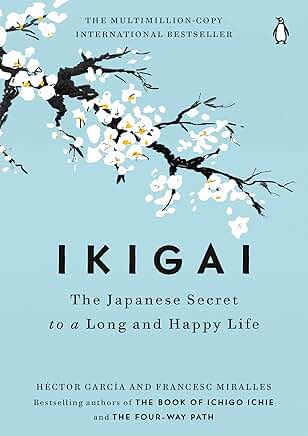
A few days ago I reflected on the goal of having purpose in one’s life, giving meaning.   I guess I have entered a reflective period as today I am thinking of the philosophy of balance and achieving a harmonious life.  In Japanese culture, this concept is nagomi.

Kevin Dickinson on Big Think describes nagomi as “blending seemingly disparate elements until they form a unified, harmonious whole.”  This sounds like a delightful perspective, yet a challenging concept to implement.  How do we maintain our values and morals and achieve peace in a world that consistently throws negativity, anger, and opposition at us?

Kenichiro Mogi, has written a book describing how the Japanese have internalized a life perspective that helps achieve personal balance. It is about harmony, sustainability, and being agreeable. Ken suggests that Japanese people are “very good at being successful but at the same time keeping a low profile.”

In their food, for example, mixing elements from different origins yields delicious dishes. Mogi gives the example of Katsu curry. The cutlet is a French meat dish, the curry is Indian, and rice is Japanese.  Bringing together these disparate elements into one satisfying meal offers pleasure which in turns provides a sense of satisfaction. This example while simple is not meant to trivialize the concept of nagomi.

Mogi, a senior researcher at Sony Labs, is also a visiting professor at the University of Tokyo. In his book he presents how nagomi is manifested in nine areas of life: relationships, food, health, self, society, nature, creativity, and lifelong learning. He offers examples of nagomi in each of these areas.

I found this an interesting concept and fundamentally similar to my own Seven Wheels model for balanced living. Rather than nine focus areas, the model I developed has, well, seven. They are labeled: Physical, Emotional, Professional, Relationships, Self Expression, Intellectual, and Spiritual. Of course each area has a depth that is not fully described in the naming convention. My annual goal setting touches each of these facets to ensure I am achieving well-rounded experiences.

At times, it is easy to spend all your energy in one aspect of your life, only to discover later that something is missing. To achieve equanimity we move gently back into those areas we have neglected. Doing so brings our lives into balance. We realize that the whole is more effective than the sum of the parts. Thus, we find ourselves more balanced and our lives in harmony with our environment.

I guess it somewhat boils down to a positive and focused outlook on life.  I recall a song from childhood – you may have sung it, also. “This little light of mine. I’m going to let it shine.”

It is better to light a candle than to curse the darkness.

Gazpacho

My first encounter with cold soup was the tomato concoction that originated in Andalusia, Spain known as gazpacho. Traditionally, as I understand it, gazpacho comprises tomatoes, bell peppers, onion, cucumber, and bread with a vinegar and oil, all blended together. Made this way, gazpacho can be eaten with a spoon or enjoyed as a smoothie-type drink.

The recipes in many of my cookbooks, however, do not blend the ingredients, rather they leave small chunks of the summer vegetables giving the soup “tooth.” This way is my preference – I want something to chew!

My brother would tease me saying, “I ordered gazpacho at a restaurant once, but it was cold when the server brought it.” ha ha.

Over the years I have delighted in making fresh gazpacho and keeping it in the refrigerator for several days. When working in the yard or just coming home from a day out in the heat, there is nothing as refreshing as a bowl full of cold veggies. And with all the yummy ingredients I can get my daily dose of vegetables in one bowl.

While I have always told my granddaughter that a recipe is a suggestion, I have always combined and followed recipes from three cookbooks to make mine. I had not been very adventurous beyond the basic ingredients. This year I thought I was very clever.

This gazpacho has tomatoes, celery, onion, garlic, parsley, red wine vinegar, olive oil, vegetable juice and a touch a cayenne. I added sweet and crunchy watermelon radishes and some chickpeas for protein. I was out of cucumbers, which usually find their way into the soup. Avocado chunks are used as garnish to complete the meal. Bread has never been in my summer soup of choice.

Being very proud of myself, I looked on-line to see what the professionals are doing with gazpacho. Authentic recipes abound yet a wealth of “best” and “most refreshing” gazpachos yielded soups that veered from the traditional.  Some people have added hot sauce, zucchini, various herbs, and even watermelon! I guess I’m not so smart after all.

However you decided to make it, fresh summer vegetables offer the most delicious concoction to cool your palate and soothe your soul when temperatures soar. Made ahead, you don’t even have to cook when you come in. And that’s another bonus!