Benjamin Bunny

Mary Ann

It was love at first sight.  There he was sitting on the top shelf of the toy store display case.  My children were young as we vacationed in Petaluma, CA.  They were busy checking out at all the other toys, and I made a beeline to the gray rabbit puppet.   It was a German Steiff arm puppet with a little brass button tag on its ear. When I put the puppet on my hand, he came alive as all puppets do when you play with them.  It is magical when they become real.  
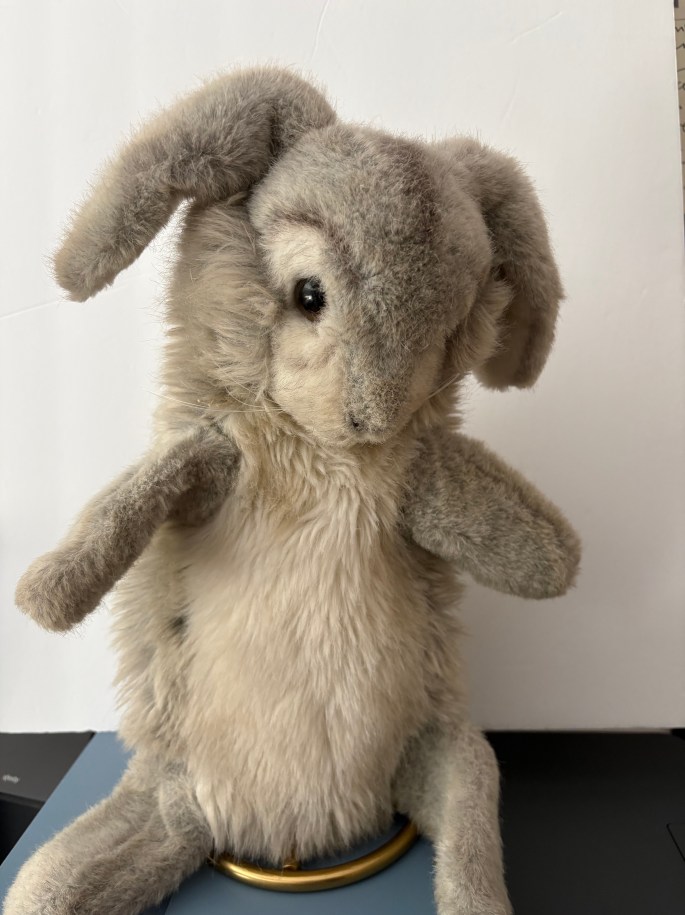
Then I looked at the price tag – $35 which was a hefty price in the 70s.   After some debate, the bunny was on the way home with me.  He was just too cute to leave behind, and as a teacher, I could use the rabbit with my work with children.  I named him Benjamin Bunny after the Beatrix Potter’s character.  I didn’t realize at the time how much that bunny puppet would mean to my life.

I fell in love with puppets after taking a weekend workshop about making puppets and writing puppet shows.  I ended up giving my own puppetry workshops, The Magic of Puppetry, to children and fellow teachers.  Puppets were a good vehicle to get the creative juices going.  However, it was always a wonder watching children truly believe that puppets were alive.  As the puppeteer, children could see that you were moving the puppet and talking for it, yet it made no difference.  The children believed and that is where the magic is.

Benjamin was always a star at the presentations, but he did not come into his own until I became a principal.  Since I oversaw very young children, I would visit the classes to read books, and Benjamin would join me.  Benjamin was a very shy bunny, so it would take him a minute or two to warm up when he gave a timid wave to the children.  Now, Benjamin ‘s mouth did not move so he would whisper in my ear what he wanted to say.  At the end of my visit, Benjamin would hug each of the children.  Little ones would love that special hug.   Occasionally, a child would not hug him – he or she was also timid.  However, as the year progressed, the child would become braver and finally hug Benjamin.  Over the years, all the children in the school knew Benjamin from his visits to their early childhood classrooms.  Benjamin became a bit of a celebrity.  He had been hugged by hundreds and hundreds and hundreds of children.  So much love!

When I moved to NYC, Benjamin came with me and visited our youngest children for book readings as well. He had a following and was a star in the Big Apple.   Again, those visits ended with hugs from adoring children.  Benjamin was dearly loved for 25 years and has now retired with me.  We did do a ZOOM visit during the Covid Pandemic, and Benjamin showed the children how to wear a face mask, and he “told” them to listen to their parents and teachers so they would be safe. 
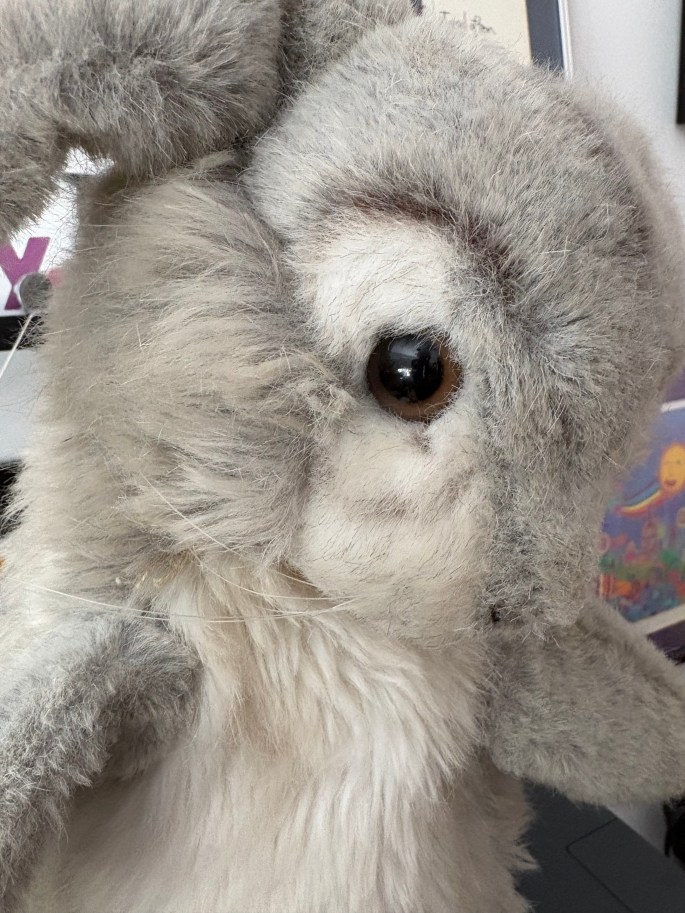
In retirement now, Benjamin sits on a shelf in my office.  I look at him every day and he makes my heart smile.  Benjamin Bunny represents my life’s work with children and the happiness of doing that.  I have decided that I will have him cremated with me when the time comes for me to say goodbye.  No one else would ever know who Benjamin was and what he meant to me.  The little bunny epitomizes children’s love, and I want to take that love with me.  
Journaling As Treasure

Mary Ann

When you write in your journal, it is a safe place to share your thoughts, feelings, experiences, and emotions – the good, the bad, and the ugly!  It is like putting gold into a treasure chest.  The treasure is valuable and precious to you.  What is written is for you alone.  It is your treasure. 

I have kept journals for most of my adult life.  It is mostly in fits and spurts.  When I am traveling, I document the journey, and I love rereading them reliving my adventures.  I have written them during challenging times of my life.  Journaling was cathartic and was a type of self-therapy healing an injured soul.  In a way, it saved me.  

When I went to work in New York City, I recorded my daily life.  It was a unique experience that was a gift in the last stages of my career.  I have a box full of journals to reread that chronicled those special years. Sweet memories!

I do keep a dream journal and record dreams that I can remember.  The dreams are usually distinctive and often have a message in them.  I can see patterns in my life.  This is not done daily, only when I recall the missive.  Often the dreams are freeing from redundant patterns in my life, my choices.

I am a nature journalist.  I write and draw the entries of plants and animals I observe.  It is one of my favorite activities, and it gives me the gift of peace.  This past Christmas, I was given a nature journal by Margaret Renkl, author of The Comfort of Crows.  It is a weekly diary of what you see in your own backyard.  It imitates Renkl’s Crows which is stories of her backyard observations.   So far, it has been snow, snow, snow.  Not much action.

Journaling is something that I do enjoy, but I have a dilemma regarding it.  What do you do with them after you written them, especially if they are highly emotional, and your treasure is exposed?  The nature journals or the travel journals are nice to keep.  They are not soul baring for the most part.  However, the ones from my divorce were deep–water treasure, a portal to a damaged heart and soul.  I didn’t want my children to know some things about their father or did I want them to know what I wrote about them or how hard it was financially.  I tried to protect them, and what good would it really do if they knew?  I think it is best to reread them and then shred them.  You see how you grew from the lessons your learned. It is freeing to put the experiences in the past, and you are lighter letting go to have a soul at peace. 

New York, New York – Part 5

New York City Shops 

Mary Ann 

Ask anyone in New York, what is the best city in the world?  They will all tell you, New York City, of course!  It may be your favorite city too.  Despite the crowding, dirty streets, foul smells, and the like, it remains a beloved place for people from all over the world.  It is the seat of entertainment, finance, art, and on and on.  Those of us who got the chance to live or work there know how special a city it is.  Yet, below what you first see, there is a bustling city of matchless wonders.

New York City is full of unique people; however, it is equally full of unique shops.  When exploring the city, these charming places make an adventure unfolding around every corner. During my time in New York City, I enjoyed discovering many of the city’s best kept secrets.  We all know Macy’s or Bloomingdales – where tourist roam!  People seldom unearth the treasures of the one-of-a kind shops that populate New York. 

The island of Manhattan has various districts for garments, flowers, furniture, jewelry, diamonds, etc.  Nestled in among the warehouses, you can often find shops that sell wholesale items to the public.  I can remember once going into a costume jewelry store, and I thought I had gone to earring heaven. Row upon row of very pretty, very inexpensive earrings greeted me as I entered.  

In this blog, I want to share with you some of the distinctive places I found, and the best place to start is with sweets.  Birthdays at my school were always a little over the top with treats for fellow classmates and teachers.  As principal, I was included as well – lucky me!  There were delicious cupcakes and whoopie pies and giant cookies.  Some of the best treats came from world-famous Magnolia’s on Bleeker Street. The cupcakes were exceptional; however, the banana pudding is out-of-this-world.  Magnolia does ship their baked goods, but the banana pudding recipe can be found online.  I have made it, and the pudding is very close to the original.  Another favorite of mine is Baked by Melissa.  This bakery has a few shops throughout the city. The cupcakes are quarter-sized morsels of pure delight.  They have hundreds of flavors that they change in and out.  You can stop by and pick up a few to nibble as you walk down the street.   Melissa also ships their mini cupcakes all over, and they offer lovely holiday assortments.  They have a cute 3-pack that are nice to give as memorable favors. 

Occasionally, a new yummy would hit the market. When the summer of cronuts premiered in the city, the lines wound around the block. They were a combo of a donut and a croissant and were coveted.   You were crestfallen when you finally got to the front of the line only to find out they were out. Tears prevailed and sometimes colorful screaming!   

Then we have the candy shops.  Time Square has its Hersey and Reese’s shops, but they do not compare to the riches of the specialty chocolate shops that pepper the city.   Jacques Torres is probably one of the most famous.  The chocolate is good, and they will add red peppers or some other exotic ingredient to the chocolate to give it a tasty little kick.  The chocolate comes in all shapes and sizes.  I do love their very rich hot chocolate that comes in a variety of flavors – great on a cold NYC day.  My favorite chocolate shop is Li-Lac’s, the oldest chocolate house in Manhattan founded in 1923 – there are several locations.  It has the creamiest chocolate – once you start eating it, you can’t stop. They ship as well. 

 Another favorite candy store was Sockerbit featuring gummies, licorice, and chocolates.  It was a stop and mix store, so you paid by weight of your mixed bag.  Unfortunately, it closed, but Bon Bon and Lil Sweet Treat have opened in the West Village offering the same candies. What I noticed as I was checking out the shops, the locations may have changed or there is a new name for the same products. I think Covid changed the market in many cases.

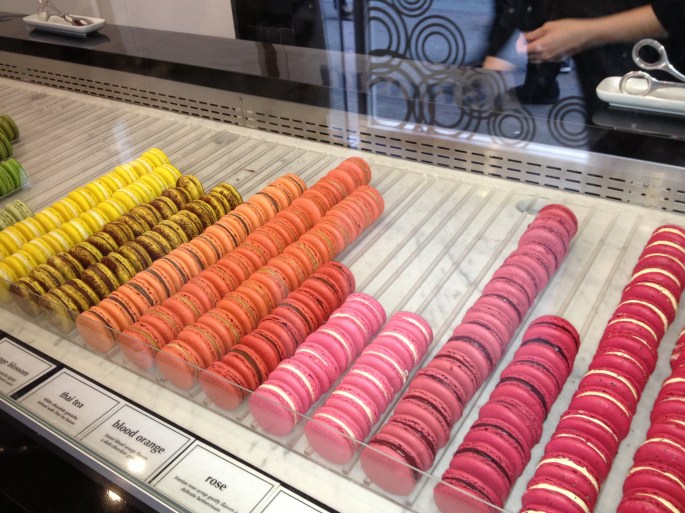
One-item shops prospers in New York City.  It would be hard for such shops to make it somewhere else.  It take several million people to make it happen.  However, it makes the shops memorable due to their uniqueness.  There is a rice pudding store, Rice to Riches, where a variety of favors and toppings are offered.  I found a shop that only sells salt with some chocolates, flowers and bitters called Meadows.   The Parisian Laduree has a shop in NYC with their famous macrons – there are other macron only shops as well.  How about a shop that only sells tassels and trims?  Or a shop that sells mostly trays.  Then there is a shop that sells just belts.  The possibilities are almost endless.  There is a lot of turnovers, yet some old timers remain. 

There are bookstores that only sell one type of book – cookbooks, mysteries, or children’s books.  Wonderful selections to explore. Barnes and Noble bookstore has several stores with huge inventories. New Yorkers are readers.  The best of all is The Strand – a landmark bookstore near Union Square.  All kinds of books, old and new, are available.    It is a fun place to while away a few hours.

I could go on and on. Yet, I haven’t even talked about the restaurants or the many exclusive services.  I will save that for the next New York, New York blog, and we can visit them together. 

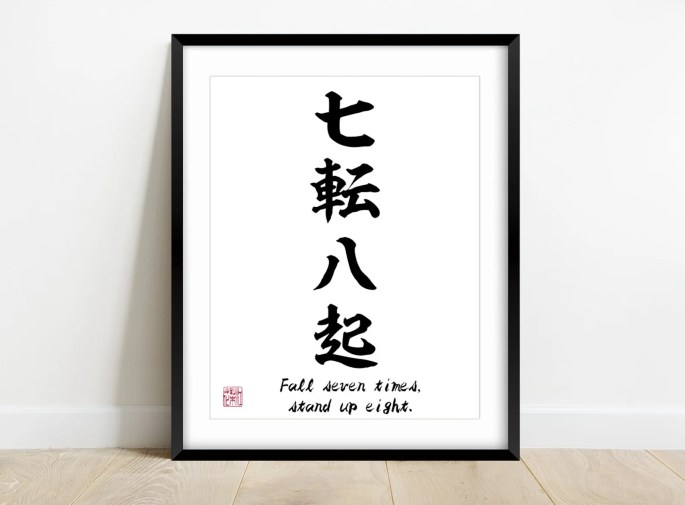
Down 7, Up 8

Mary Ann

A few months ago, I found this Japanese proverb – Down 7, Up 8, and I thought it summed up what life is all about.  My mother always said, “Life is Hard, “and indeed she was right.  Life in one way or another is always knocking you down, and you learn early on that you must get yourself back up.  Look at a toddler.  They fall down all the time, and they for the most part (even after tears) bounce back up.  

We must be resilient to survive.  Ask any cave man!  Our downs in life are not saber tooth tigers, but they can be just as dangerous.  There are many losses in life.  Divorce or any breakup with a friend or lover can be overwhelming.  Chronic illnesses or a death of a love one can tragically break your heart.  Watching your children suffer in any way is like having the same suffering yourself.  The loss of a job or a financial crisis can be devastating. There are always challenges in life, and we must accept and adapt to them.  We must be resilience.

Resilience is defined as the ability to mentally or emotionally cope with a crisis or return to pre-crisis status quickly.  I have been down and out many times in my life for one reason or another, and I am sure you have been there as well.  Sometimes it was very hard to get back up, but really there was no other choice but just do it!   You must adapt to handle the situation, and hopefully, the challenges will help you grow stronger, so you are ready for whatever is next. 

I strongly believe that most problems have a solution if we put the time and energy into solving them. That is resilience in action.  Look how resilience the natural world is.  Nature is always teaching us lessons to live by.  After devastating wildfires, tiny green shoots fight their way through the ashes to survive. We need to fight our way upwards again as well.

For thousands of years, humans have been falling down and getting back up.  I guess it is part of the human condition, and we humans have documented it with the written word in proverbs, sayings, and quotes.  The ancient Japanese culture captured the essence of resilience in just a few words. – down and up.  In ending, there is another quote that I also thinks captures the meaning of resilience – If you are going through hell, keep going.  I can identify with that.  I am sure you can too. 

Aging

Mary Ann

When I was in 9th grade, we read Shakespeare’s As You Like It.  We had to recite the famous speech, All the World’s A Stage, in front of the class.  It was a piece that took an individual through the various stages of life comparing it to a play.  For the most part, I didn’t get it.  If you hadn’t lived a particular stage, you couldn’t identify with it.  And what in the world did sans teeth, sans eyes, sans taste, sans everything mean? 

Well, as one ages, the various stages begin to make sense, and now, that I am in the final stage of the speech, I know what sans, French for without, means and indeed it is true. I always thought that there should be a T-shirt that says, “Aging is Not for Sissies.”  You must be tough to grow old.  There is a challenge around every corner, a surprise just awaiting you.

Aging is full of aches and pains.  You discover body parts you didn’t know existed.  You develop health conditions like hypertension, cholesterol, or diabetes. Your body does not want to do what your head tells it to do.  You can’t open the peanut butter jar.  It is hard to go up the steps or getting out of a chair.  You can’t see as well as when you were young.  You can’t hear either, so you say what a lot. You forget names, and words just sit on the tip of your tongue. There are lots of thingmajigs or whatchacallits in your vocabulary now.  You have many senior moments.  The list could go on and on, and it keeps growing with the passing years.  Mark Nepo has said, “The terrain of aging is steeper the longer we go.”  Amen!  

As challenging as aging is, there are many good things that can only be acquired with growing older.  There are lessons to be learned with the passage of time.  With aging you gain wisdom and experience.  Life is always teaching you a lesson.  You gain understanding and patience from those lessons.  You grow to appreciate stillness and the peace that it brings.  You begin to understand that taking the time to smell the roses is what life is all about.  You embrace the life you have and live acceptance.  You discover your inner light and let it shine.

We know that change is inevitable.  It is one thing that you can count on.  Yet, it is still hard to embrace as you grow older. The changing is getting us ready for the final journey whatever it will be.  Again, I quote poet Mark Nepo whose beautiful words explains the coming adventure.  “It’s as if my body is a nest and my soul is a bird who has waited a lifetime for the moment it can fly away.”  Aging prepares us for that final flight.

I wrote this essay for the journaling group that I recently joined.  The topic was aging, and I based some of it on the work of Mark Nepo.  He is a poet and spiritual writer who I just discovered.  His prose is lyrical and so deep that you pause after many of his sentences to ponder the wisdom that Nepo imparts.  His most recent work is The Fifth Season, Creativity in the Second Half of Life.  Nepo is now in his seventies, and this book echoes his many years of a reflective life.  My friend Lisa and I read the book as part of our nonfiction book club.  After the first section, we decided to do a slow read of this book.  Each section has four or five chapters that each end with a journal prompt and a discussion question about the reading.  This was a great jumping off point for Lisa and me to discuss the reading. We decided to read one section a week and then take a second week to reflect on what we read.  That is how rich the readings were.  I took notes throughout the various sections, and we reviewed our thoughts when we finished the book.  I don’t believe I have ever put that much energy into reading a book.  However, it was worth every minute.  Since both Nepo and I are in our fifth season, I could recognize myself throughout the book.  We are all traveling on the same path but in our own unique way.  I am thankful I got to join him on his. 

Lisa and I would highly recommend this book, but it is not a quick read even though the book is only 200 pages.   You need to take your time and digest Nepo’s beautiful words.  It is nourishment for the soul. It is a book to return to again and again gaining insights into one’s inner life.  I am also reading Nepo’s bestselling book, The Book of Awakening, that is a year’s worth of daily readings.  He wrote it 20 years ago, and it is still very relevant.  Many people read it year after year.  I think I will too.  Each day is ended with mediations to reflect upon the wise words Nepo shares.  If you would like to hear more about Mark Nepo and his books listen to Mel Robbins’ Podcast from November 16, 2025 – The Exact Words You Need to Hear Today If It Feels like Nothing’s Working.  Mel is a big fan of Mark.  I hope that you will join his fan club along with me!  

Merit Badges

Mary Ann

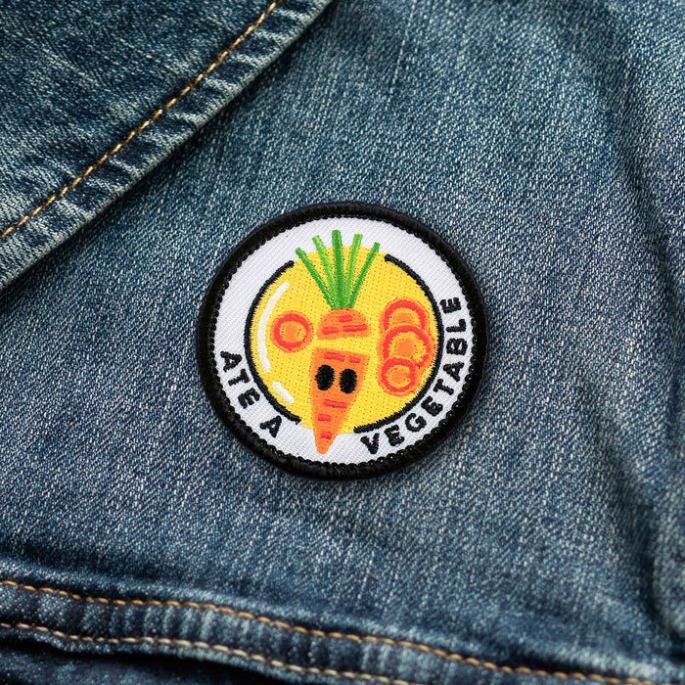
I imagine when you were young that you were a member of the Cub Scouts or the Brownies.  As you grew, you then became a Boy or Girl Scout.   During those years, you earned Merit Badges in areas that you wanted to learn new skills or to develop a new interests.  I often wondered what would happen if we could still earn merit badges into adulthood.  What would that look like?

There would probably be badges for good parenting or kindness.  You might earn one for excelling with finances or cooking. The possibilities are endless.   I wonder if we would wear them with coordinating sashes to match our outfits or attach them to our computer cases.  People would be bragging about their earned badges on social media.  There might be reality shows with competitions to win them.  Maybe earning badges would change the world for the better because you must be a good person to receive one.

So, what does it mean to be a good person?  I think a good person is a kind person and a kind person is a good person.  Kindness is the quality of a person who is friendly, generous, considerate, caring for others and oneself, empathetic, courageous, uplifting, and a strong desire to make things better without reward. If you live those qualities – walk your talk – you are a good person.

Now, if we had grown-up merit badges, there would have to be a list of requirements to earn it, just like scouts do.   Let’s look at some possible badges to see what we would have to do to achieve it. 

Good People for People Badge –

SMILE

Donate to Charities

Volunteer

Do Small Kindnesses for Others (like holding a door for someone)

Feed People

Help Children and the Elderly

Good People for the Earth – 

Support Clean Air for all

Support Clean Water for all

Protect Endangered Animals

Drive Electric Cars

Use Alternative Energy – Wind, Water, and Solar

Recycle Everything 

Eliminate Land Fill and Floating Ocean Trash

Love Your Country by caring for it

Good People for Yourself – 

Exercise

Eat a Balanced Diet

Hydrate – 8 Classes a Day

Practice Meditation and Mindfulness

Socialize 

Be a Life-Long Learner

All the requirements are good things for all people. It is being kind to everyone, the Earth, and yourself.   I think this could incent individuals to be better people for the best possible world.  We really don’t need merit badges, but if that would help to encourage people, let’s go for it now!

Note – There is an actual company that makes merit badges for adults. Winks for Days (winksfordays.com) has an array of badges for every big girl and big boy to show-off their accomplishments.  The badges are $10, and they created pins as well.  Do you need a badge for flossing or taking your vitamins or watering  your plants?  Winks has them and many more.  Check it out.   

Joyspan

Mary Ann

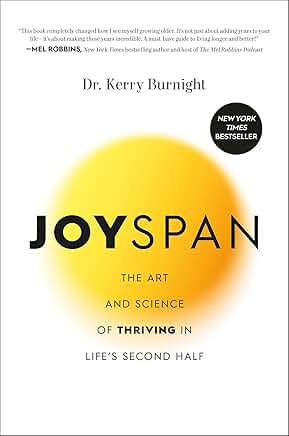
As you know, the Silver Sage Sisters have written frequently about life in retirement and growing older.  We have tried to share with you good books and ideas to help you ease into this chapter of your lives. I have recently come across a book that I think you would like.  It is Joyspan – The Art and Science of Thriving in Life’s Second Half and is written by Dr. Kerry Burnight who is known as America’s Gerontologist.  She believes in optimizing dignity, health, and joy with aging.  

Burnight defines joyspan as the experience of well-being and satisfaction in longevity.  She states further that joyspan requires knowledge, intention, and effort and is achievable regardless of where you are starting out today.  Thriving in old age means to live a fulfilling, purposeful, and satisfying life despite the challenges that accompany aging. You must maximize physical health, cognitive function, emotional well-being, social connections, and sense of meaning.  

In Joyspan Burnight determined four essential elements about aging that include the following:

  1. Grow: Continue to explore and expand
  2. Connect:  Put time into new and existing relationships
  3. Adapt: Adjust to changing and challenging situation
  4. Give: Share themselves

As you grow through the second half of your life, focusing on these four tenants will help you find meaning.  The book goes into great detail about all of them.  There are excellent surveys to help you determine where you are with them and great examples of each in action.  

Joyspan is written by a gerontologist who understands aging, not just the medical aspect.  Dr. Burnight does not dismiss you because you are older.  She respects you and that is often rare in the medical field.  It is a special doctor who takes time to listen to you and is willing to work with you.  Aging is a partnership between the doctors and the patients.

As you know, my friend Lisa and I have had a non-fiction book club for the last six years, and Joyspan has been one of our favorite books.  I have given it to several friends to help them figure out their journey with aging.  Lisa and I have read numerous books on every aspect of aging, and Joyspan tells the good, the bad, and ugly of it all.  It is full of relatable information that everyone in their golden years can use.  Joyspan is a book that I will return to again and again.  I hope that you will find it a treasure as well and will help you age with grace.  

Museums

Mary Ann

From the beginning of civilizations, humans have been hoarders or to say in a kinder way, packrats.  Luckily, it has been a blessing, and we have museums all over the world to prove it.  The Pharaohs took everything with them for the afterlife.  Instead, it has given us today a view of what life was like for the select few in ancient times.  Thank you, King Tut!

We all know the big museums like the Smithsonian museums, The Metropolitan or Nature History Museum in NYC, The British Museum in London, or the Louvre in Paris.  We all want to see the Mona Lisa at the Louvre – surprise, it was kind of small.  I walked by the Rosetta Stone at the British Museum several times until I asked a guard where it was.  It was also small.  How could several languages be on such a small slab of stone?  I thought it should be the size of a wall with such information.  Wrong again.  Then there are the dinosaur exhibits which are so prevalent at the world’s museums.  I have always loved seeing dinosaurs.  I think that most people do.  The dinosaur halls are always jammed and not only with children. 

One of the gifts of travel is the chance to see museums that are around the world, and those museums connect us to each other and our common humanity.  I remember years ago going to the Hellenic National Archaeological Museum in Athens, Greece.  They had a newly opened Children’s Museum. It was about children rather than for children.  It was fascinating to see how much in common today’s children had with children from 4000 years ago.  They had potty chairs and sippy cups.  The children played with small animals and balls that were captured in sculptures of the time.  Children remain the same.  A good lesson for us all – basically, we haven’t changed much.  

Museums can move you emotionally in both sad and joyous ways.  Anne Frank’s House in Amsterdam is an example.  I was surprised to find how big the attic space was.  As I read Anne’s diary, I had pictured the families in just a couple tiny rooms.  They were more spacious than imagined, but it was still confining to live silently for years.  You can only feel that by standing in the exact rooms.  Visiting Auschwitz in Poland, there is a solemn atmosphere surrounding the camp.  Walking into the showers and seeing the ovens stays with you.  How could humans treat other humans in such brutal ways?  Museums help us to remember.

As sad as some of the museums are, there are many more that brings great joy!  What could be better than looking at Monet waterlilies in the L’Orangeries in Tuileries Gardens in Paris.  Giant waterlilies!  It is breathtaking!  The Musee Marmottan Monet is on a quiet street in Paris, and it houses the largest collection of Monets in the world.  It is not a busy museum so you can take your time sitting and soaking in the masterpieces. By now you know that I love Monet.  Throughout the world, there are many museums that focus on the work of one artist.  You learn so much visiting each one, and you will be ready for the next game of Jeopardy!

Then there are outdoor museums like the ones in Scandinavia where you can see anything from a baby moose to handicrafts and replicas of ancient dwellings.  You get to walk around outside learning about the various cultures. There are sculpture gardens, and as you walk on winding paths through the woods, you see great works of art nestled into the landscape.  I have been to Millesgarden in Sweden and Grounds for Sculpture in New Jersey.  All fun!

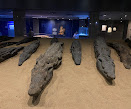
However, my favorite museums are the quirky ones throughout the world. I am always looking for them when traveling.  In England there was a dog collar museum in Leeds, England – the kind that a big Mastiff might wear with pointed metal “teeth”.   A favorite was the Mummified Crocodile Museum in Egypt (featured below).  The Egyptians mummified crocodiles to honor the god Sobek.  The pharaohs took everything with them and maybe even the kitchen sink.  I guess they thought they would need crocodiles in the afterlife??  Drum roll!!! The most unique museum I ever found was The Icelandic Phallological Museum in Reykjavik.  Yes, a penis museum! It is like you have finally seen everything.  So, I am wishing you some great discoveries as you visit museums around the world. You never know what you might find along the way.  Maybe even a Pharaoh’s kitchen sink?

Ikigai  

Mary Ann

You may or may not have heard of Ikigai.  The word has been showing up in the news recently.  Ikigai is Japanese for a reason to live.  It is about purpose.   As retired people, it is sometimes hard for us to give up our purpose which for the most part was our work.  It is our identity.  That is why some people cannot stop working. The Japanese do not have a word for retirement.  They plan on being busy for their whole lives, living with purpose.  It seems to keep them living long lives. 

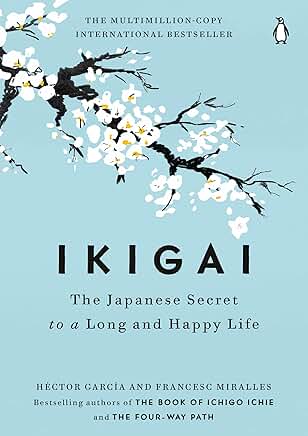
Hector Garcia and Francesc Miralles in their book, Ikigai, The Japanese Secret to a Long and Happy Life studied how Japanese who live in Okinawa, a Blue Zone community, live. There, individuals live into their 90s and many well into their 100s. What were these people doing to live long healthy lives?   Their lives had meaning because they have purpose, Ikigai.  Garcia and Miralles interviewed a hundred residents that resulted in five areas that enhanced aging.  They included: don’t worry; cultivate good habits of eating, sleeping, and exercising; nurture friendships every day; live an unhurried life; and be optimistic. One person said, “The secret to a long life is going to bed early, waking up early, and going for a walk. Living peacefully and enjoying the little things. Getting along with your friends. Spring, summer, fall, winter…enjoying each season, happily.”   The little book is full of many ideas for living a good life! 

The book ends with The Ten Rules of Ikigai:

  1. Stay active; don’t retire
  2. Take it slow
  3. Don’t fill your stomach
  4. Surround yourself with good friends
  5. Get in shape for your next birthday
  6. Smile
  7. Reconnect with nature
  8. Give thanks
  9. Live in the moment
  10. Follow Your Ikigai

Each of us has a passion or talent that we know and maybe one yet to be discovered. That can be your Ikigai.  It does not have to be a full-time job.   When I retired, it was hard for me to not be productive every day.  For 40 years I was doing all the time, and I just couldn’t get that out of my head. I felt guilty if I took time to read or sit outside enjoying the sunshine, just being.  I thought I had prepared well for retirement.  I had made plans to keep myself busy.   However, I was still worrying about productivity.  I just couldn’t let it go. 

After reading this little book and studying Ikigai, I realize you don’t have to be productive in the traditional sense.  It is about being busy with things that inspire you and nurture your soul.  It may mean knitting or reading or cooking or gardening or crafting or volunteering or writing a blog.   You make your own Ikigai.  You bring meaning and purpose to your own life on your own terms.  Now, go find exactly what that is and enjoy the unfolding of your days as you discover your Ikigai!   

Address Books

Mary Ann 

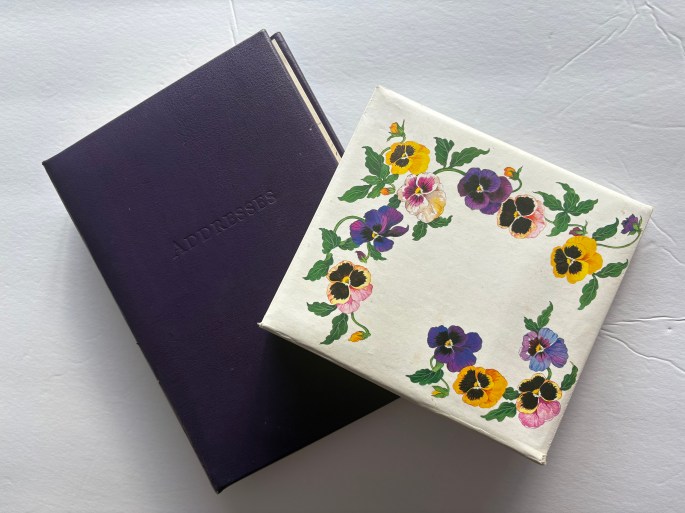
Every few years I redo my address books after the Christmas holidays.  I usually have updated addresses that come with the Christmas cards.  Christmas cards are my way of touching base with all the people who have been dear to me through the years. I may not see many of my friends, but they are still important to me.  Because I have lived all over the country, my friends are from all over.  I view my address updating as a milestone in my life noting all the changes that happened over the years. 

 So, I ordered new address pages and began the update and transfer of addresses.  As I compared old addresses to the pile of new envelopes, you begin to see your sphere of friends unfold to the next stages of their lives – that life is unfolding for each of them in their own unique way.  I witness their lives through their Christmas notes and holiday letters. 

Most younger people, children of my friends, always have new addresses.  They are at an age when you move a lot so of course they change.  They often have married or had children.  However, my retired friends have downsized so they too often have new address.

One of the saddest changes at my age and what I find scary is the loss of friends.  Good friends have passed.  It is hard to x them out of the address book.  I pause at each one and say a little prayer telling them that I miss them.  Everything has changed for their family, and my life has tilted as well.

As I go through the address book, I notice that I didn’t hear from certain people.  This is my cue to text them to check to see if they are okay.  Many have given up sending Christmas cards; some are busy with their lives and don’t have time for correspondence.  Sometimes friends have become sick, or there are divorces. There is no Christmas cheer to share.  When a person is going through a rough time, they often are not ready to share their challenges or sadnesses with others.  When I check-in I say that I hope all is well, and I am here for you if you need anything.

This year as I did this housekeeping exercise, I found a file of all my old address books.  I decided it about time that I throw them out, but first, I need to go through them to determine if there was anything I need to keep.  As I was perusing the ABC of my friends, I found a few people who I could not identify.  I find that rather funny.  The person must have been a friend, or they would not be in the book.  As life moves along, people do come in and out of your life and change like the seasons.  It may not be a forever friend, but they were once upon a time important to me. 

So now I am set for a few years, and I do not know what life will bring until the next time.  Babies will come, people will marry, they will move, and some will die.  I will continue to send Christmas cards and many birthday cards to the people who are dear to me. It is my way of celebrating each of them for being part of my life.