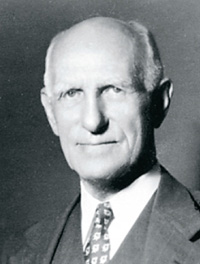
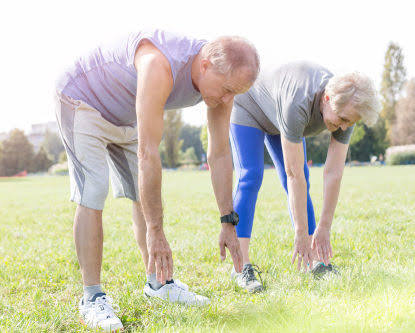
Aging

Mary Ann

When I was in 9th grade, we read Shakespeare’s As You Like It.  We had to recite the famous speech, All the World’s A Stage, in front of the class.  It was a piece that took an individual through the various stages of life comparing it to a play.  For the most part, I didn’t get it.  If you hadn’t lived a particular stage, you couldn’t identify with it.  And what in the world did sans teeth, sans eyes, sans taste, sans everything mean? 

Well, as one ages, the various stages begin to make sense, and now, that I am in the final stage of the speech, I know what sans, French for without, means and indeed it is true. I always thought that there should be a T-shirt that says, “Aging is Not for Sissies.”  You must be tough to grow old.  There is a challenge around every corner, a surprise just awaiting you.

Aging is full of aches and pains.  You discover body parts you didn’t know existed.  You develop health conditions like hypertension, cholesterol, or diabetes. Your body does not want to do what your head tells it to do.  You can’t open the peanut butter jar.  It is hard to go up the steps or getting out of a chair.  You can’t see as well as when you were young.  You can’t hear either, so you say what a lot. You forget names, and words just sit on the tip of your tongue. There are lots of thingmajigs or whatchacallits in your vocabulary now.  You have many senior moments.  The list could go on and on, and it keeps growing with the passing years.  Mark Nepo has said, “The terrain of aging is steeper the longer we go.”  Amen!  

As challenging as aging is, there are many good things that can only be acquired with growing older.  There are lessons to be learned with the passage of time.  With aging you gain wisdom and experience.  Life is always teaching you a lesson.  You gain understanding and patience from those lessons.  You grow to appreciate stillness and the peace that it brings.  You begin to understand that taking the time to smell the roses is what life is all about.  You embrace the life you have and live acceptance.  You discover your inner light and let it shine.

We know that change is inevitable.  It is one thing that you can count on.  Yet, it is still hard to embrace as you grow older. The changing is getting us ready for the final journey whatever it will be.  Again, I quote poet Mark Nepo whose beautiful words explains the coming adventure.  “It’s as if my body is a nest and my soul is a bird who has waited a lifetime for the moment it can fly away.”  Aging prepares us for that final flight.

I wrote this essay for the journaling group that I recently joined.  The topic was aging, and I based some of it on the work of Mark Nepo.  He is a poet and spiritual writer who I just discovered.  His prose is lyrical and so deep that you pause after many of his sentences to ponder the wisdom that Nepo imparts.  His most recent work is The Fifth Season, Creativity in the Second Half of Life.  Nepo is now in his seventies, and this book echoes his many years of a reflective life.  My friend Lisa and I read the book as part of our nonfiction book club.  After the first section, we decided to do a slow read of this book.  Each section has four or five chapters that each end with a journal prompt and a discussion question about the reading.  This was a great jumping off point for Lisa and me to discuss the reading. We decided to read one section a week and then take a second week to reflect on what we read.  That is how rich the readings were.  I took notes throughout the various sections, and we reviewed our thoughts when we finished the book.  I don’t believe I have ever put that much energy into reading a book.  However, it was worth every minute.  Since both Nepo and I are in our fifth season, I could recognize myself throughout the book.  We are all traveling on the same path but in our own unique way.  I am thankful I got to join him on his. 

Lisa and I would highly recommend this book, but it is not a quick read even though the book is only 200 pages.   You need to take your time and digest Nepo’s beautiful words.  It is nourishment for the soul. It is a book to return to again and again gaining insights into one’s inner life.  I am also reading Nepo’s bestselling book, The Book of Awakening, that is a year’s worth of daily readings.  He wrote it 20 years ago, and it is still very relevant.  Many people read it year after year.  I think I will too.  Each day is ended with mediations to reflect upon the wise words Nepo shares.  If you would like to hear more about Mark Nepo and his books listen to Mel Robbins’ Podcast from November 16, 2025 – The Exact Words You Need to Hear Today If It Feels like Nothing’s Working.  Mel is a big fan of Mark.  I hope that you will join his fan club along with me!  
Merit Badges

Mary Ann

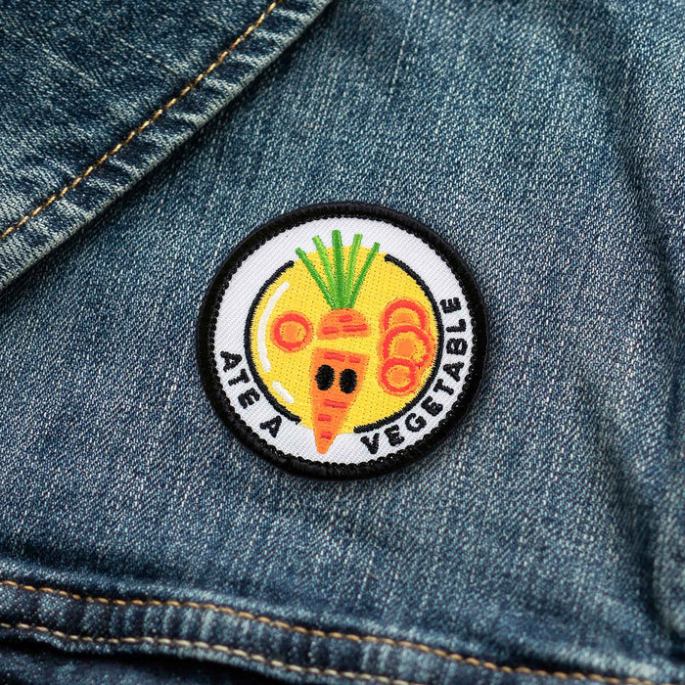
I imagine when you were young that you were a member of the Cub Scouts or the Brownies.  As you grew, you then became a Boy or Girl Scout.   During those years, you earned Merit Badges in areas that you wanted to learn new skills or to develop a new interests.  I often wondered what would happen if we could still earn merit badges into adulthood.  What would that look like?

There would probably be badges for good parenting or kindness.  You might earn one for excelling with finances or cooking. The possibilities are endless.   I wonder if we would wear them with coordinating sashes to match our outfits or attach them to our computer cases.  People would be bragging about their earned badges on social media.  There might be reality shows with competitions to win them.  Maybe earning badges would change the world for the better because you must be a good person to receive one.

So, what does it mean to be a good person?  I think a good person is a kind person and a kind person is a good person.  Kindness is the quality of a person who is friendly, generous, considerate, caring for others and oneself, empathetic, courageous, uplifting, and a strong desire to make things better without reward. If you live those qualities – walk your talk – you are a good person.

Now, if we had grown-up merit badges, there would have to be a list of requirements to earn it, just like scouts do.   Let’s look at some possible badges to see what we would have to do to achieve it. 

Good People for People Badge –

SMILE

Donate to Charities

Volunteer

Do Small Kindnesses for Others (like holding a door for someone)

Feed People

Help Children and the Elderly

Good People for the Earth – 

Support Clean Air for all

Support Clean Water for all

Protect Endangered Animals

Drive Electric Cars

Use Alternative Energy – Wind, Water, and Solar

Recycle Everything 

Eliminate Land Fill and Floating Ocean Trash

Love Your Country by caring for it

Good People for Yourself – 

Exercise

Eat a Balanced Diet

Hydrate – 8 Classes a Day

Practice Meditation and Mindfulness

Socialize 

Be a Life-Long Learner

All the requirements are good things for all people. It is being kind to everyone, the Earth, and yourself.   I think this could incent individuals to be better people for the best possible world.  We really don’t need merit badges, but if that would help to encourage people, let’s go for it now!

Note – There is an actual company that makes merit badges for adults. Winks for Days (winksfordays.com) has an array of badges for every big girl and big boy to show-off their accomplishments.  The badges are $10, and they created pins as well.  Do you need a badge for flossing or taking your vitamins or watering  your plants?  Winks has them and many more.  Check it out.   

Joyspan

Mary Ann

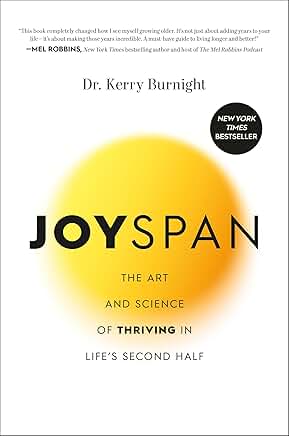
As you know, the Silver Sage Sisters have written frequently about life in retirement and growing older.  We have tried to share with you good books and ideas to help you ease into this chapter of your lives. I have recently come across a book that I think you would like.  It is Joyspan – The Art and Science of Thriving in Life’s Second Half and is written by Dr. Kerry Burnight who is known as America’s Gerontologist.  She believes in optimizing dignity, health, and joy with aging.  

Burnight defines joyspan as the experience of well-being and satisfaction in longevity.  She states further that joyspan requires knowledge, intention, and effort and is achievable regardless of where you are starting out today.  Thriving in old age means to live a fulfilling, purposeful, and satisfying life despite the challenges that accompany aging. You must maximize physical health, cognitive function, emotional well-being, social connections, and sense of meaning.  

In Joyspan Burnight determined four essential elements about aging that include the following:

  1. Grow: Continue to explore and expand
  2. Connect:  Put time into new and existing relationships
  3. Adapt: Adjust to changing and challenging situation
  4. Give: Share themselves

As you grow through the second half of your life, focusing on these four tenants will help you find meaning.  The book goes into great detail about all of them.  There are excellent surveys to help you determine where you are with them and great examples of each in action.  

Joyspan is written by a gerontologist who understands aging, not just the medical aspect.  Dr. Burnight does not dismiss you because you are older.  She respects you and that is often rare in the medical field.  It is a special doctor who takes time to listen to you and is willing to work with you.  Aging is a partnership between the doctors and the patients.

As you know, my friend Lisa and I have had a non-fiction book club for the last six years, and Joyspan has been one of our favorite books.  I have given it to several friends to help them figure out their journey with aging.  Lisa and I have read numerous books on every aspect of aging, and Joyspan tells the good, the bad, and ugly of it all.  It is full of relatable information that everyone in their golden years can use.  Joyspan is a book that I will return to again and again.  I hope that you will find it a treasure as well and will help you age with grace.  

Museums

Mary Ann

From the beginning of civilizations, humans have been hoarders or to say in a kinder way, packrats.  Luckily, it has been a blessing, and we have museums all over the world to prove it.  The Pharaohs took everything with them for the afterlife.  Instead, it has given us today a view of what life was like for the select few in ancient times.  Thank you, King Tut!

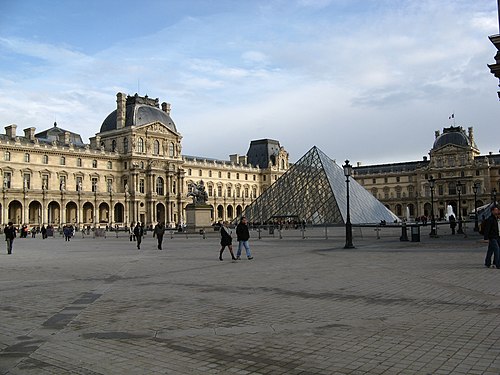
We all know the big museums like the Smithsonian museums, The Metropolitan or Nature History Museum in NYC, The British Museum in London, or the Louvre in Paris.  We all want to see the Mona Lisa at the Louvre – surprise, it was kind of small.  I walked by the Rosetta Stone at the British Museum several times until I asked a guard where it was.  It was also small.  How could several languages be on such a small slab of stone?  I thought it should be the size of a wall with such information.  Wrong again.  Then there are the dinosaur exhibits which are so prevalent at the world’s museums.  I have always loved seeing dinosaurs.  I think that most people do.  The dinosaur halls are always jammed and not only with children. 

One of the gifts of travel is the chance to see museums that are around the world, and those museums connect us to each other and our common humanity.  I remember years ago going to the Hellenic National Archaeological Museum in Athens, Greece.  They had a newly opened Children’s Museum. It was about children rather than for children.  It was fascinating to see how much in common today’s children had with children from 4000 years ago.  They had potty chairs and sippy cups.  The children played with small animals and balls that were captured in sculptures of the time.  Children remain the same.  A good lesson for us all – basically, we haven’t changed much.  

Museums can move you emotionally in both sad and joyous ways.  Anne Frank’s House in Amsterdam is an example.  I was surprised to find how big the attic space was.  As I read Anne’s diary, I had pictured the families in just a couple tiny rooms.  They were more spacious than imagined, but it was still confining to live silently for years.  You can only feel that by standing in the exact rooms.  Visiting Auschwitz in Poland, there is a solemn atmosphere surrounding the camp.  Walking into the showers and seeing the ovens stays with you.  How could humans treat other humans in such brutal ways?  Museums help us to remember.

As sad as some of the museums are, there are many more that brings great joy!  What could be better than looking at Monet waterlilies in the L’Orangeries in Tuileries Gardens in Paris.  Giant waterlilies!  It is breathtaking!  The Musee Marmottan Monet is on a quiet street in Paris, and it houses the largest collection of Monets in the world.  It is not a busy museum so you can take your time sitting and soaking in the masterpieces. By now you know that I love Monet.  Throughout the world, there are many museums that focus on the work of one artist.  You learn so much visiting each one, and you will be ready for the next game of Jeopardy!

Then there are outdoor museums like the ones in Scandinavia where you can see anything from a baby moose to handicrafts and replicas of ancient dwellings.  You get to walk around outside learning about the various cultures. There are sculpture gardens, and as you walk on winding paths through the woods, you see great works of art nestled into the landscape.  I have been to Millesgarden in Sweden and Grounds for Sculpture in New Jersey.  All fun!

However, my favorite museums are the quirky ones throughout the world. I am always looking for them when traveling.  In England there was a dog collar museum in Leeds, England – the kind that a big Mastiff might wear with pointed metal “teeth”.   A favorite was the Mummified Crocodile Museum in Egypt (featured below).  The Egyptians mummified crocodiles to honor the god Sobek.  The pharaohs took everything with them and maybe even the kitchen sink.  I guess they thought they would need crocodiles in the afterlife??  Drum roll!!! The most unique museum I ever found was The Icelandic Phallological Museum in Reykjavik.  Yes, a penis museum! It is like you have finally seen everything.  So, I am wishing you some great discoveries as you visit museums around the world. You never know what you might find along the way.  Maybe even a Pharaoh’s kitchen sink?

Ikigai  

Mary Ann

You may or may not have heard of Ikigai.  The word has been showing up in the news recently.  Ikigai is Japanese for a reason to live.  It is about purpose.   As retired people, it is sometimes hard for us to give up our purpose which for the most part was our work.  It is our identity.  That is why some people cannot stop working. The Japanese do not have a word for retirement.  They plan on being busy for their whole lives, living with purpose.  It seems to keep them living long lives. 

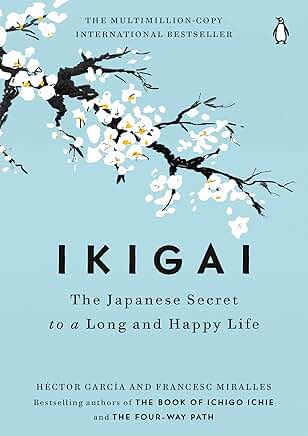
Hector Garcia and Francesc Miralles in their book, Ikigai, The Japanese Secret to a Long and Happy Life studied how Japanese who live in Okinawa, a Blue Zone community, live. There, individuals live into their 90s and many well into their 100s. What were these people doing to live long healthy lives?   Their lives had meaning because they have purpose, Ikigai.  Garcia and Miralles interviewed a hundred residents that resulted in five areas that enhanced aging.  They included: don’t worry; cultivate good habits of eating, sleeping, and exercising; nurture friendships every day; live an unhurried life; and be optimistic. One person said, “The secret to a long life is going to bed early, waking up early, and going for a walk. Living peacefully and enjoying the little things. Getting along with your friends. Spring, summer, fall, winter…enjoying each season, happily.”   The little book is full of many ideas for living a good life! 

The book ends with The Ten Rules of Ikigai:

  1. Stay active; don’t retire
  2. Take it slow
  3. Don’t fill your stomach
  4. Surround yourself with good friends
  5. Get in shape for your next birthday
  6. Smile
  7. Reconnect with nature
  8. Give thanks
  9. Live in the moment
  10. Follow Your Ikigai

Each of us has a passion or talent that we know and maybe one yet to be discovered. That can be your Ikigai.  It does not have to be a full-time job.   When I retired, it was hard for me to not be productive every day.  For 40 years I was doing all the time, and I just couldn’t get that out of my head. I felt guilty if I took time to read or sit outside enjoying the sunshine, just being.  I thought I had prepared well for retirement.  I had made plans to keep myself busy.   However, I was still worrying about productivity.  I just couldn’t let it go. 

After reading this little book and studying Ikigai, I realize you don’t have to be productive in the traditional sense.  It is about being busy with things that inspire you and nurture your soul.  It may mean knitting or reading or cooking or gardening or crafting or volunteering or writing a blog.   You make your own Ikigai.  You bring meaning and purpose to your own life on your own terms.  Now, go find exactly what that is and enjoy the unfolding of your days as you discover your Ikigai!   

Address Books

Mary Ann 

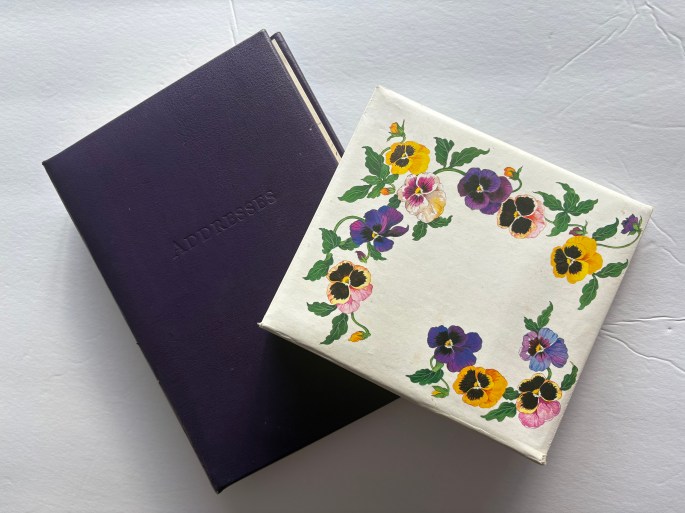
Every few years I redo my address books after the Christmas holidays.  I usually have updated addresses that come with the Christmas cards.  Christmas cards are my way of touching base with all the people who have been dear to me through the years. I may not see many of my friends, but they are still important to me.  Because I have lived all over the country, my friends are from all over.  I view my address updating as a milestone in my life noting all the changes that happened over the years. 

 So, I ordered new address pages and began the update and transfer of addresses.  As I compared old addresses to the pile of new envelopes, you begin to see your sphere of friends unfold to the next stages of their lives – that life is unfolding for each of them in their own unique way.  I witness their lives through their Christmas notes and holiday letters. 

Most younger people, children of my friends, always have new addresses.  They are at an age when you move a lot so of course they change.  They often have married or had children.  However, my retired friends have downsized so they too often have new address.

One of the saddest changes at my age and what I find scary is the loss of friends.  Good friends have passed.  It is hard to x them out of the address book.  I pause at each one and say a little prayer telling them that I miss them.  Everything has changed for their family, and my life has tilted as well.

As I go through the address book, I notice that I didn’t hear from certain people.  This is my cue to text them to check to see if they are okay.  Many have given up sending Christmas cards; some are busy with their lives and don’t have time for correspondence.  Sometimes friends have become sick, or there are divorces. There is no Christmas cheer to share.  When a person is going through a rough time, they often are not ready to share their challenges or sadnesses with others.  When I check-in I say that I hope all is well, and I am here for you if you need anything.

This year as I did this housekeeping exercise, I found a file of all my old address books.  I decided it about time that I throw them out, but first, I need to go through them to determine if there was anything I need to keep.  As I was perusing the ABC of my friends, I found a few people who I could not identify.  I find that rather funny.  The person must have been a friend, or they would not be in the book.  As life moves along, people do come in and out of your life and change like the seasons.  It may not be a forever friend, but they were once upon a time important to me. 

So now I am set for a few years, and I do not know what life will bring until the next time.  Babies will come, people will marry, they will move, and some will die.  I will continue to send Christmas cards and many birthday cards to the people who are dear to me. It is my way of celebrating each of them for being part of my life.

Monikers

Mary Ann

How can I help you, Young Lady?  How many times have your heard this?  Does it make you angry or insult you?  Among my friends, there is mixed reactions to being referred to as a young girl with gray hair.  

It only seems to happen to women.  I don’t recall my father being called young man.  I am not sure you know a husband or father being called that.  I don’t think older men would put up with it.  As older women, we tend to do so.  I guess we don’t want to make a scene, no matter how angry it makes us or how insulted we are.  It is not worth the effort!

However, a moniker is an informal term for a name, nickname, alias, or handle and is often used to describe someone or something with a characteristic label.  The Big Apple is a moniker for New York City.  So that kind of moniker is a positive use of a name.  It is debatable if young lady is a positive moniker.

When we are called young lady, maybe we should try to see it in a more positive light.  At least, you are being recognized when you are addressed.  Maybe the person is really giving you a compliment trying to make you feel special.  Most of the time, it is a young person greeting you.  They are not saying, “Hello, Old Lady.”  I think that often Miss is a better way to acknowledge you.  Since we are women of a certain age, we often are taken good care of by the waiter or clerk afterwards. 

I think as women of certain age, we should smile rather than grumbling about the moniker.  We can give grace.  We can show the young person we are classy ladies.  If you feel that you need to say something – that “young lady” makes you uncomfortable, say it.  The person probably didn’t give it a second thought but will think about it in the future. 

As I was writing this blog, the phone rang, and an appointment clerk had called to verify a doctor’s appointment.  When the person was hanging up, she said, “Goodbye, Hon.” I know her so it was an endearment and not an insult.  Life is too short to dwell on such a small slight.  So next time you are addressed as young lady or sweetheart, be a sweetheart and give the person a smile.  Take it as a compliment.  It will make the world a little brighter, and we need more of that!

The View from Lake Como 

Mary Ann

Have you discovered the Adrianna Trigiani universe of books?  If you have, you know her wonderful stories and are probably like me waiting for her next book.  If you do not know this author, you are about to make a new friend with Adrianna.   I envy you a bit to have the opportunity to discover this masterful storyteller’s tales. 

Adrianna Trigiani is an author who writes about her Italian heritage from Big Stone Gap in the Appalachian Mountains of Virginia to Greenwich Village in New York City to New Jersey and Italy. The heroine of her books are often women finding themselves and are on the verge of blooming into the strong women they were meant to be.  Their journeys unfold in small towns to big cities, and Trigiani will frequently tell the stories in trilogies, so you really get to know the characters well. You kind of grow with them too.  If you know Italian families, you will appreciate the dialog and biting humor of the families. Trigiani captures it all in her novels.

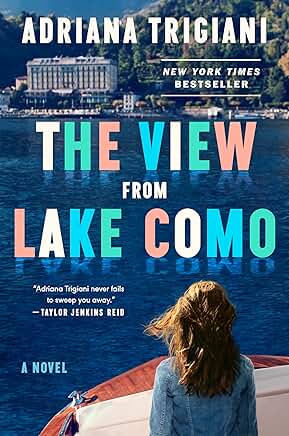
Since 2000, she has written 19 books – mostly fiction but she does do some nonfiction.  Her most recent book from 2025 is The View from Lake Como, the Jersey version, not the Italian lake; however, Italy becomes a main character in this story.  Giuseppina (Jess) Capodimonte Baratta, the heroine, is a woman who is finding herself.  Jess has endured several hardships with a death of a beloved uncle, a divorce, a controlling family, an unfulfilled career, and the other ups and downs of life.  She wants more from her small life in Lake Como, so she goes to Italy to find herself and what a new life could bring.  Jess is spreading her wings, and you get to join her on the flight!   We all see ourselves in Jess’s transformation, and you may learn a little about yourself as you accompany Jess on her adventure. 

I know that once you read one of Adrianna Trigiani’s stories, you will seek out her other books to be part of her one big Italian family throughout the world.  More importantly, you will be part of her big literary family as well enjoying her tales that are full of heart and soul!   

Small Towns

Mary Ann

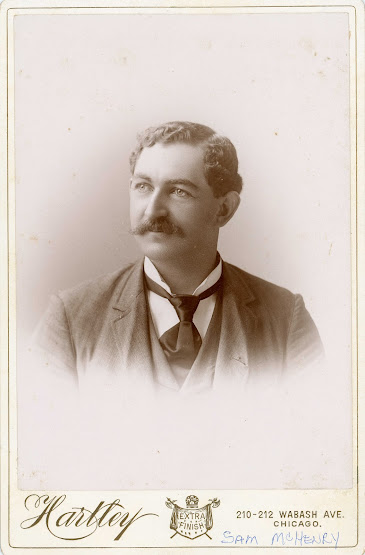
My father grew up in Benton, a little town in Northeastern Pennsylvania.  That little town produced some very exceptional individuals who changed the world.  One was my uncle, Samuel B. McHenry.  He was an inventor with 43 patents that included brooms and brushes that paid the bills, but he also patented several alternative energy inventions like a wave machine and using stream currents to generate electricity – a man ahead of his time. At one point in his career, he got in trouble with a society lady in Chicago.  My Great-Grandfather, his brother Abram, had to go get him and bring him home to Benton.  He was “madly” in love with a young woman he never met – there is a thin line between genius and insanity.  

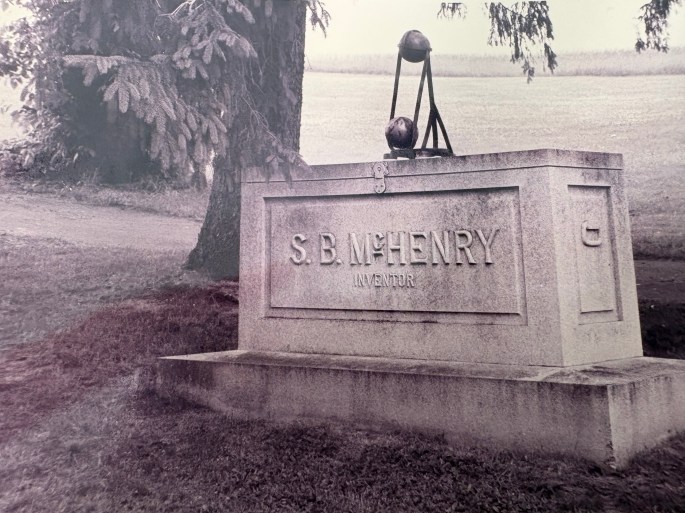
I included a photo of his memorial at the cemetery where he is buried.  It was a representation of a craftsmen’s chest where tools were kept with the word Inventor engraved on it.  I always thought it was a treasure chest.  On top of the block of granite is a gizmo that Samuel invented called an Astronomical Demonstrating Device.  According to my father the top sphere represented the sun, and the bottom sphere was the Earth.  The device rested on a figure-eight base that had the months of the year engraved.  As the earth revolved around the sun, the device would move settling on the current month of the year.   Every time I visited the cemetery, the earth sphere was in the correct month of the year – almost like magic.  Apparently, the tilt of the Earth as it moved through space initiated the movement of the device to the correct month. 

The second person was Dr. Frank Laubach.  He was a missionary and travelled the world using the Bible to teach reading.  The premise was that “each one, teach one.”  I would teach you to read then you would teach someone else to read and so on.   His work was Nobel Prize worthy.  However, he was honored in 1984 with a stamp commemoration. The Laubach Literacy Program and the Laubach Method, developed with his son, Dr. Robert Laubach, is still helping illiterate people learn to read. Today, the programs have merged with ProLiteracy Worldwide and have touched people in 103 countries.  

 When I was little, my grandmother took me to the Laubach house in Benton to meet Dr. Laubach when he was home from his travels.  It was a rare moment.  I remember seeing him from afar as I was too shy to greet him.  I had no idea who he was.  He seemed to glow. Maybe his gentle soul was shining through.  I never forgot that encounter. 

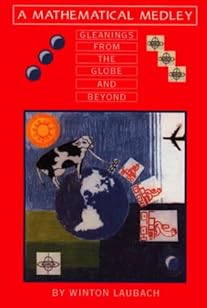
Finally, the third person was Winton Laubach.  He was a childhood friend of my father’s.  Winston was legally blind and had to count the streetlights to find his way home after a day of play.  He studied math at Penn State and Columbia University and later taught the subject at Penn State and the Colorado School of Mines.  His book A Mathematical Medley illustrates his love for numbers. 

I once asked my father how a small town in the mountains of Pennsylvania could produce such noteworthy individuals.  He said that they were all trying to get out!  I am not sure that is true.  However, it was a close-knit community where everyone knew everyone.  When you went out to play, wherever you were at lunch time, you had lunch there. The community collectively raised all the children.  Their grandparents and aunts and uncles and cousins all lived in the same little town.  These extended families always supported the children, and they knew they were supported.  They all had long childhoods which allowed their imaginations to grow.  

The world is so different today with families far flung across the country and more recently around the world.  Families must work hard to develop such communities of the past.  I am thankful that my family roots run deep in this little community of Benton.  It has helped to create the person I have become.  America should have more small towns like Benton to help shape the future of the world in a positive way.

Exercise Snacks

Mary Ann

I recently came across an article on Exercise Snacks.  Now, the definition of a snack is a small amount of food eaten between meals. Exercise snacks reflect the same philosophy with activity, as snacks do to food. Exercise Snacks are doing a small amount of movement from 30 seconds to 5 to 10 minutes of activities. It can be as simple as climbing the stairs to walking around the house to dancing to a favorite song.  It can also be gardening or housework – all activity counts!  

Dr. Howard Hartley, a cardiology, in 2007 coined the term Exercise Snacks.  These little burst of exercise or movement help elderly people to mitigate physical decline as they age.  The small amount of movement can have an impact on chronic conditions like heart disease, high blood sugar, and even dementia.  Every little bit of activity can make a difference in your overall health. 

Exercise Snacks can be done by all of us of a certain age.  We can take the stairs a time or two more a day.  We can walk around the neighborhood or around your house.  You can hop on a stationary bike for a five-minute ride and if that is too much than do it for two minutes.  Start out with baby steps and work your way up to longer sessions.  These small changes have big rewards and can support behavioral changes that develop habits.  It is hard to get started and to keep going when exercising. 

I have been kind of doing Exercise Snacks without knowing what it was called.  You probably have too.  However, since reading the article, I have been more conscientious regarding every movement I am making and that they will add up to better results if I keep doing them.  The bottom line is not to be sedentary.  Every household chore that I do adds up to more movement.  

Of course, it takes me a week to get my Christmas decorations up and then down rather than a weekend as in the past.  I am slowing down, but I am still moving.  That movement is making me healthier physically and mentally.  I need to celebrate that, and the little victory dance that I am doing now is yet another kind of movement.  If I miss a day because I have low energy, there is always tomorrow.  You can always begin again.  Piggyback on regular daily activity by adding a little exercise – an example, while washing dishes, do some heel raises.  When watching TV, do chair exercises.  Sitting is passive so adding some movement changes everything making you more active and being active makes you healthier.  It is time to begin Exercise Snacking  – Bon Appetite for better living!