
Mary Ann
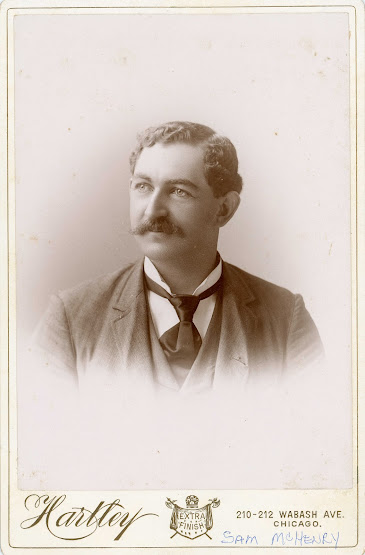
My father grew up in Benton, a little town in Northeastern Pennsylvania. That little town produced some very exceptional individuals who changed the world. One was my uncle, Samuel B. McHenry. He was an inventor with 43 patents that included brooms and brushes that paid the bills, but he also patented several alternative energy inventions like a wave machine and using stream currents to generate electricity – a man ahead of his time. At one point in his career, he got in trouble with a society lady in Chicago. My Great-Grandfather, his brother Abram, had to go get him and bring him home to Benton. He was “madly” in love with a young woman he never met – there is a thin line between genius and insanity.
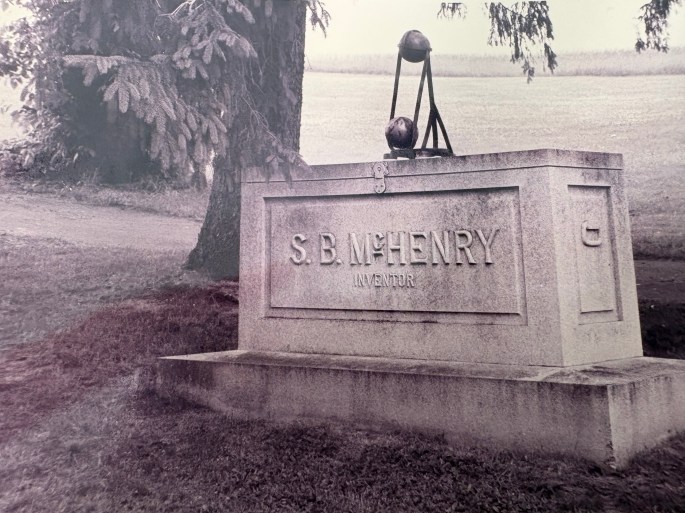
I included a photo of his memorial at the cemetery where he is buried. It was a representation of a craftsmen’s chest where tools were kept with the word Inventor engraved on it. I always thought it was a treasure chest. On top of the block of granite is a gizmo that Samuel invented called an Astronomical Demonstrating Device. According to my father the top sphere represented the sun, and the bottom sphere was the Earth. The device rested on a figure-eight base that had the months of the year engraved. As the earth revolved around the sun, the device would move settling on the current month of the year. Every time I visited the cemetery, the earth sphere was in the correct month of the year – almost like magic. Apparently, the tilt of the Earth as it moved through space initiated the movement of the device to the correct month.
The second person was Dr. Frank Laubach. He was a missionary and travelled the world using the Bible to teach reading. The premise was that “each one, teach one.” I would teach you to read then you would teach someone else to read and so on. His work was Nobel Prize worthy. However, he was honored in 1984 with a stamp commemoration. The Laubach Literacy Program and the Laubach Method, developed with his son, Dr. Robert Laubach, is still helping illiterate people learn to read. Today, the programs have merged with ProLiteracy Worldwide and have touched people in 103 countries.
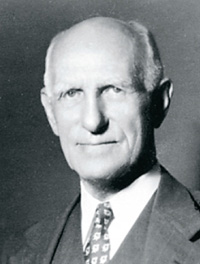
When I was little, my grandmother took me to the Laubach house in Benton to meet Dr. Laubach when he was home from his travels. It was a rare moment. I remember seeing him from afar as I was too shy to greet him. I had no idea who he was. He seemed to glow. Maybe his gentle soul was shining through. I never forgot that encounter.
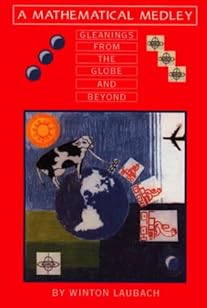
Finally, the third person was Winton Laubach. He was a childhood friend of my father’s. Winston was legally blind and had to count the streetlights to find his way home after a day of play. He studied math at Penn State and Columbia University and later taught the subject at Penn State and the Colorado School of Mines. His book A Mathematical Medley illustrates his love for numbers.
I once asked my father how a small town in the mountains of Pennsylvania could produce such noteworthy individuals. He said that they were all trying to get out! I am not sure that is true. However, it was a close-knit community where everyone knew everyone. When you went out to play, wherever you were at lunch time, you had lunch there. The community collectively raised all the children. Their grandparents and aunts and uncles and cousins all lived in the same little town. These extended families always supported the children, and they knew they were supported. They all had long childhoods which allowed their imaginations to grow.
The world is so different today with families far flung across the country and more recently around the world. Families must work hard to develop such communities of the past. I am thankful that my family roots run deep in this little community of Benton. It has helped to create the person I have become. America should have more small towns like Benton to help shape the future of the world in a positive way.
 Silver Sage Sisters